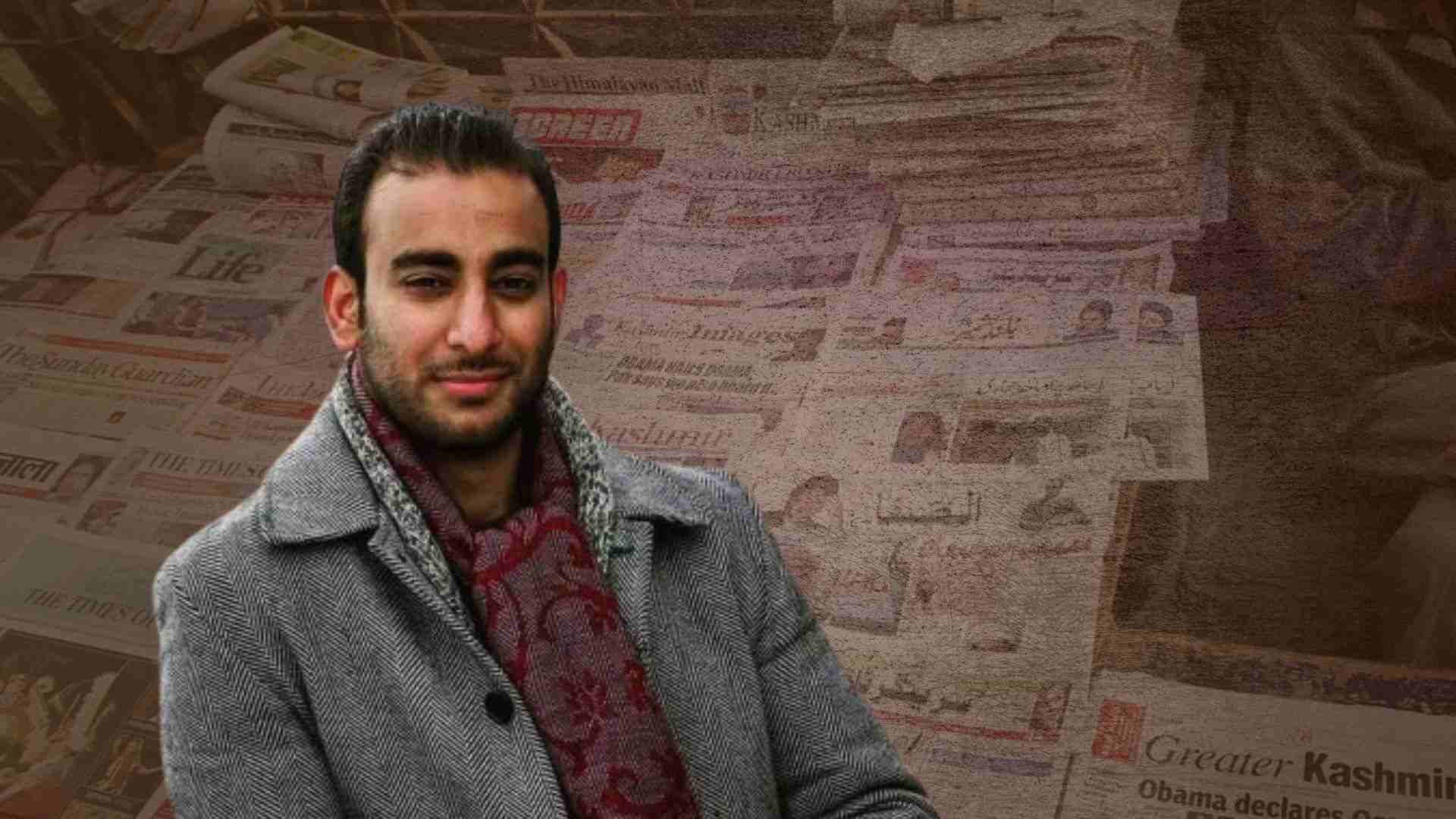
Kashmiri journalist Irfan Mehraj has completed more than 1,000 days in jail, prompting the Journalist Federation of Kashmir (JFK) to once again demand his immediate release. The federation said his prolonged incarceration shows how the “process itself has become punishment” and reflects the deteriorating state of press freedom and civil liberties in Jammu and Kashmir.
In a statement, JFK said Irfan’s continued detention is not only a personal and professional tragedy for him and his family, but also a serious warning sign for independent journalism in the region. “Journalism is not a crime,” the federation said, adding that reporting on human rights, social issues, and ground realities cannot be treated as criminal activity.
“Irfan Mehraj is a respected journalist from Srinagar. Over the years, he has built a reputation for careful, ethical and courageous journalism. His work has focused on social justice, human rights, public health and issues affecting ordinary people across Jammu and Kashmir. He is the founding editor of Wande Magazine, has served as a senior editor with TwoCircles.net, and has contributed to several local, national and international publications, including Rising Kashmir, Himal & the Deutsche Welle,” the JFK said.
Even while in prison, Irfan’s journalism has received recognition. In 2024, he was awarded the Human Rights and Religious Freedom Journalism Award for his reporting on the heroin epidemic in Kashmir.
Irfan was arrested on March 20, 2023, and has since been lodged in a Delhi jail under provisions of the Indian Penal Code and the Unlawful Activities (Prevention) Act. JFK said the continued use of harsh laws like the UAPA against journalists raises serious concerns about due process and shrinking space for independent reporting.
“The prolonged detention of a working journalist sends a chilling message to the media community,” JFK said. “It discourages reporters from doing factual, ground-level journalism and weakens the public’s right to know.”
Over the past 1,000 days, Irfan’s imprisonment has drawn concern from journalists’ unions, press freedom organisations and human rights groups in India and abroad. JFK said it stands in complete solidarity with Irfan and his family, who have suffered emotional, financial and psychological distress during this period.
“His incarceration does not just punish one individual,” the federation said. “It causes lasting harm to families, colleagues and the wider journalistic community.” JFK urged political parties, civil society groups and public figures to raise their voices and press for Irfan Mehraj’s immediate release.
The federation also expressed concern over what it described as a broader pattern of targeting journalists in Jammu and Kashmir. It condemned raids, summons and the seizure and examination of journalists’ devices, including mobile phones, referring to the recent case involving Jehangir Ali of The Wire.
Reiterating its stand, JFK said journalists must be free to express opinions and analyse issues without fear of harassment or reprisals. “Attempts to silence critical voices undermine democratic values and the fundamental principles of free expression,” it said.
Quoting former Chief Justice of India N.V. Ramana, JFK recalled his words: “Journalists are the eyes and ears of the people, and independent journalism is the backbone of democracy.” It also cited a Supreme Court observation that “India’s freedom will remain safe as long as journalists can speak truth to power without being chilled by the threat of reprisal.”