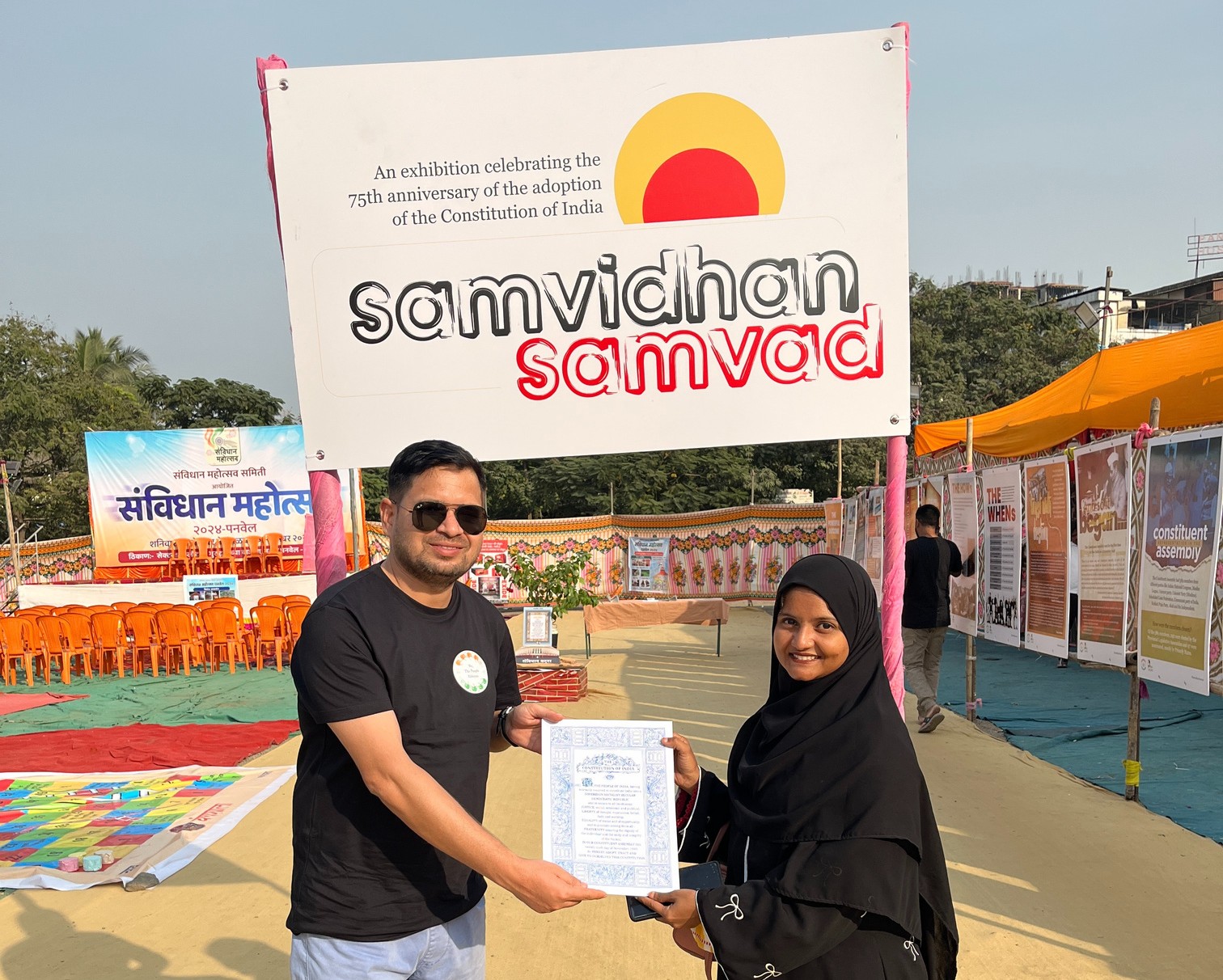
In the narrow lanes of Mumbai’s urban bastis, access to basic amenities like drinking water often remains a distant promise. For Rukhsar Mulla, a field officer with the non-profit organisation Apnalaya, this gap between policy and reality became a call to action rooted in the Constitution of India.
Rukhsar has been working closely with urban slum communities since 2013, focusing on access to water, sanitation and public services, while also building awareness about citizen rights and responsibilities. Her work took a decisive turn after she underwent training with the We, The People Abhiyan, where she learned how to link everyday civic issues with constitutional provisions and public policy.
“The Directive Principles of State Policy have been especially useful in my application writing to different government departments,” Rukhsar said. “They help frame complaints about the absence of entitled benefits in a language the State is expected to respond to.”
After the training, Rukhsar began studying the Swachh Bharat Mission policy in detail. During her research, she learned that under the ‘water for all’ provision, urban local bodies are mandated to install water pipelines at intervals of eight kilometres. In her locality, however, there were no such pipelines in place.
Using the skills she had acquired, Rukhsar drafted a formal application to the Municipal Corporation. In the letter, she cited Article 21 of the Constitution, which guarantees the right to life and has been interpreted by courts to include the right to water. She also attached relevant sections of the Swachh Bharat Mission policy to strengthen her case.

The response was encouraging. Officials from the Municipal Corporation acknowledged her application and agreed to install the water pipelines. Rukhsar says she is hopeful that construction work will begin soon, bringing much-needed relief to residents who have struggled for years without reliable access to water.
Rukhsar continues to lead a team of volunteers at Apnalaya. Together, they work to mobilise communities, promote constitutional awareness and encourage active citizenship in urban bastis. Her efforts span multiple areas, including application writing, community mobilisation and helping residents understand how to claim their rights while fulfilling their civic duties.
Rukhsar’s work aligns with several Sustainable Development Goals, including Clean Water and Sanitation, Sustainable Cities and Communities, and Peace, Justice and Strong Institutions. By demonstrating the practical use of constitutional principles and policy frameworks, she has shown how informed citizens can hold institutions accountable.