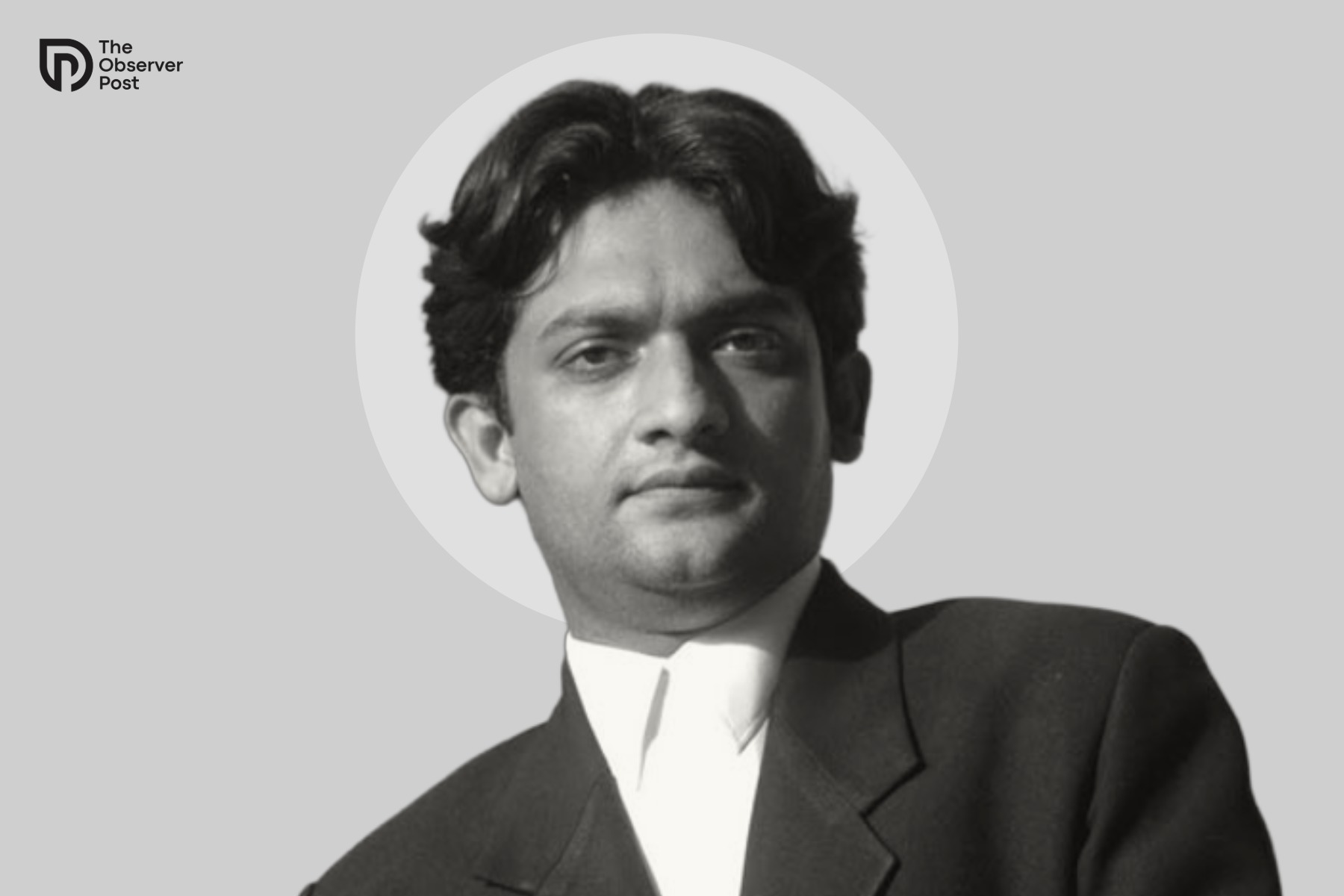
February 11 marked 15 years since the killing of Mumbai-based human rights lawyer Shahid Azmi, whose murder remains without conviction even after nearly a decade and a half. Azmi was shot dead inside his office in Kurla on February 11, 2010, at the age of 32. He was known for defending Muslim youth accused in terrorism related cases, many of whom were later acquitted by courts.
Shahid Azmi had built a reputation as a fearless criminal lawyer who took up cases of those he believed were falsely implicated in incidents such as the 7 July Mumbai train bombings, the 26 November attacks, the Malegaon bomb blasts, the Aurangabad arms haul case and the Ghatkopar blast case. His legal work led to at least 17 acquittals over seven years, which many believe made him a target.
According to the prosecution, four men, Devendra Jagtap, Hasmukh Solanki, Pintoo Dagale and Vinod Vichare, were arrested for his murder. Another accused gangster, Santhosh Shetty, a former aide of Chhota Rajan, was discharged from the case in 2014. All four accused are currently out on bail, including Jagtap, who is alleged to have fired the shots and was released in 2022 after spending 12 years in custody due to prolonged trial delays.
The case has faced several hurdles over the years. A key eyewitness, Azmi’s office peon Inder Singh, allegedly received a threat call traced to Gujarat in 2010, which is believed to have affected his testimony. The police also did not carry out forensic analysis of the murder weapon, weakening the prosecution’s case. Much of the early investigation relied on eyewitness accounts rather than strong physical evidence.
The trial has also seen repeated delays due to multiple applications filed by the accused, including bail pleas and requests to transfer the case. In 2022, proceedings were stayed for six months after the accused Hasmukh Solanki alleged bias against the trial judge. The Bombay High Court rejected this claim in February 2023. Justice P D Naik said there was no material to show that the judge was biased or that the accused would not get a fair trial.

Special public prosecutor Vaibhav Bagade later said, “Now that the stay on the trial is lifted, we will resume the trial soon. Eleven witnesses have been examined and around eight witnesses are left.”
Despite the gravity of the crime, none of the accused has been labelled a terrorist. Activists and lawyers have often pointed out that while Azmi’s murder fits the broader definition of terrorism, such labels are rarely applied when the victims are Muslims or when the accused are not from the Muslim community.
On February 10, the Social Democratic Party of India paid tribute to Azmi on his martyrdom day. The party said, “We remember not just a lawyer, but a fearless defender of justice who stood firm against prejudice and the silencing of truth. He gave his life fighting for the innocent and upholding the Constitution. His voice was silenced, but his struggle continues.”
The All India Students Association JNU also remembered him on his 16th martyrdom day. In a statement, AISA said Shahid Azmi was a noted human rights lawyer who defended people accused in terror cases, including Faheem Ansari in the 2008 Mumbai attacks, who was later acquitted. Quoting Azmi’s guiding principles, the group said his life taught the importance of fighting prejudice, resisting oppression and standing with the underdog.

Similar tributes were paid by SIO Kerala, which described Azmi as a victim of structural violence who later became a dignified martyr for the cause of justice.
The 9th Shahid Azmi Memorial Lecture was held at the Marathi Patrakar Sangh in Mumbai, drawing lawyers, activists and several people accused in UAPA and related cases who are currently on bail or were acquitted. Those present included Bhima Koregaon case accused Sudha Bharadwaj, Vernon Gonsalves, Arun Ferreira and Hany Babu.
Shahid Azmi’s journey was shaped by his own experiences with the criminal justice system. As a teenager, he was arrested during the 1992 Mumbai riots but released as a juvenile due to a lack of evidence. In 1994, he was arrested under TADA for allegedly plotting against the state and spent seven years in Tihar Jail. During his imprisonment, he studied law and later began practising as a criminal defence lawyer in Mumbai in 2003.
Recalling the night of his murder, reports state that Azmi went to his office after being told that clients were waiting. Four men were present, two inside and two outside his cabin. As he called them in, he was shot. He was rushed to the hospital but was declared dead on arrival.
After his death, his brother Advocate Khalid Azmi took over many of his cases. He said, “I appeared for some of the accused in the 26 November, 7 July and Malegaon 2006 cases.”