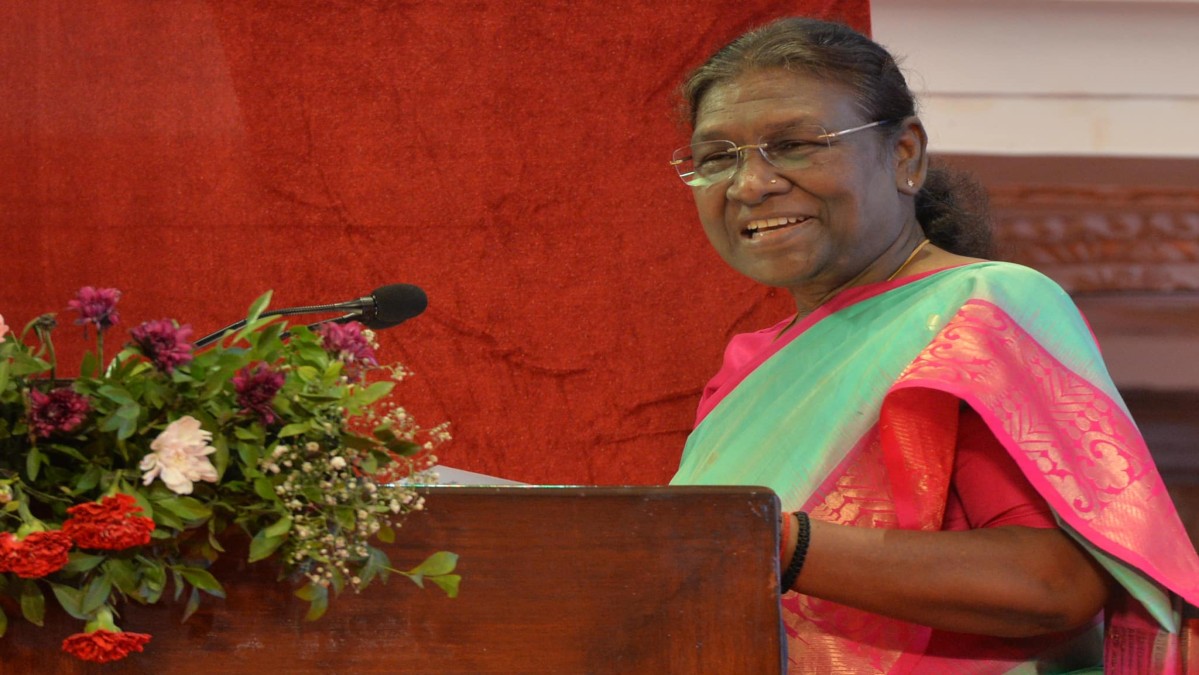
President Droupadi Murmu has given assent to the Transgender Persons (Protection of Rights) Amendment Bill, 2026, which introduces graded punishment for offences causing bodily harm to transgender persons.
According to a notification issued by the Law Ministry on March 30, the amended law will come into force on a date to be notified by the Central government.
The government has said the amendment aims to strengthen protections for transgender persons who face severe discrimination. However, the legislation has triggered sharp criticism from opposition leaders over its scope and provisions.
Opposition flags exclusion of LGBTQ+ identities
During debates in Parliament, opposition MPs criticised the bill for excluding individuals with different sexual orientations, including gays and lesbians, from its ambit.
The amended law provides a more precise definition of “transgender” and explicitly states that it does not include “persons with different sexual orientations and self-perceived sexual identities.”
Critics argue that this narrows the scope of the law and leaves out several marginalised groups within the broader LGBTQ+ community.
Concerns over right to self-identification
Another major point of contention has been the provision for setting up an authority to determine whether a person qualifies as transgender. Opposition leaders said this could undermine the right to self-identification.
They argued that the bill takes away an individual’s autonomy over their gender identity and called for the legislation to be sent to a parliamentary standing committee for wider consultations.
Government defends focus on specific community
The government, however, maintained that the law is intended to protect a specific group that faces extreme social discrimination.
“The intent, object and purpose of the Act is to protect a class of persons socially and culturally known as transgender people who face oppressive discrimination,” the bill states.

It adds that the purpose “was not to protect each and every class of persons with various gender identities or sexual orientations.”