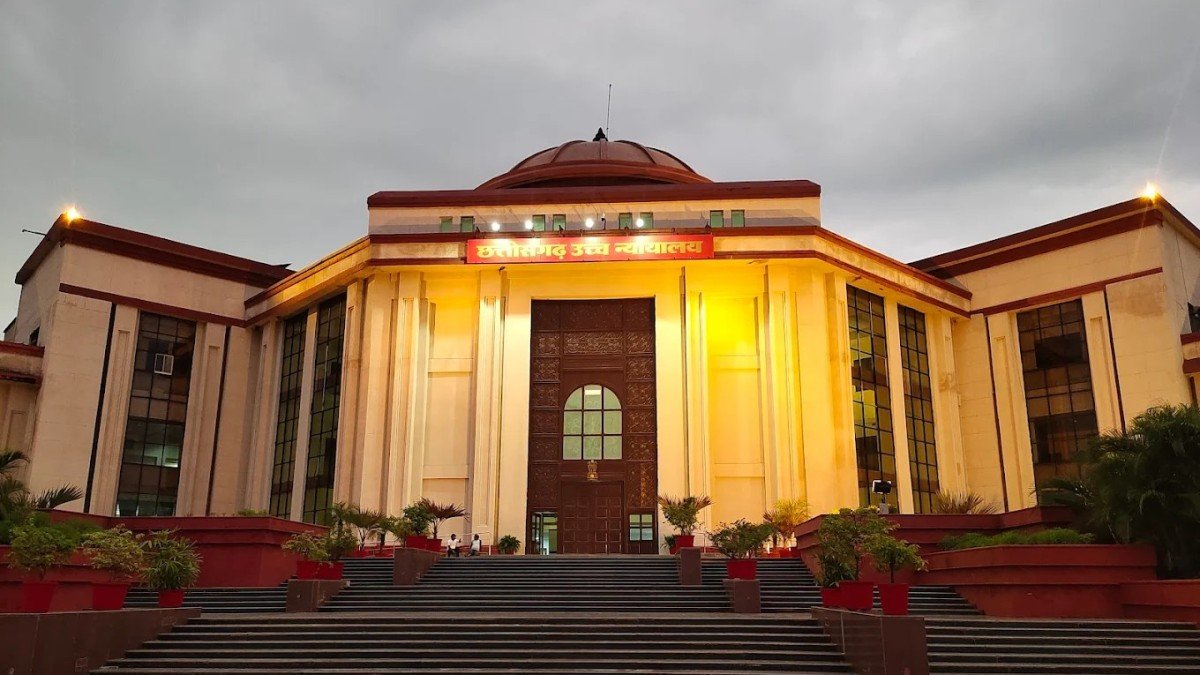
The Chhattisgarh High Court has refused to quash an FIR and criminal proceedings against a professor accused of forcing non-Muslim students to participate in offering namaz during a college camp in Bilaspur.
A bench led by Chief Justice Ramesh Sinha and Justice Ravindra Kumar Agrawal ruled on April 15 that there was enough material on record to continue the case against the accused, Dilip Jha.
“The charge sheet indicates prima facie evidence warranting trial, and there is no conclusive proof at this stage that the proceedings were initiated with ulterior motives,” the Court observed.
The judges made it clear that they cannot interfere at this stage since the investigation has already been completed and evidence has been collected.
What the Case Is About
The case relates to a seven-day National Service Scheme (NSS) camp organised by Guru Ghasidas Central University in March.
According to the complaint, Muslim students were asked to offer namaz on stage during Eid-ul-Fitr, and some non-Muslim students were allegedly forced to participate.
It was also alleged that students who objected were threatened with consequences such as cancellation of certificates.
Following a preliminary inquiry, police registered an FIR and later filed a charge sheet naming Dilip Jha, who was serving as a project coordinator.
Professor Denies Role
Jha argued before the Court that he had no operational role at the camp and was not present during the incident. He claimed that his implication in the case was baseless and an abuse of the legal process.
However, the State opposed his plea, saying the matter involves disputed facts that can only be examined during trial.

Court Rejects Quashing Plea
Agreeing with the State, the High Court said such disputes cannot be decided at the stage of quashing an FIR.
“The petitioner’s claim of absence or limited role can be examined during trial through evidence and cross-examination,” the bench noted.
The Court relied on established legal principles, including the landmark case State of Haryana v. Bhajan Lal, which states that FIRs can only be quashed in exceptional circumstances.
Since no such exceptional grounds were found, the Court dismissed the petition.