A Muslim petitioner has told the Madhya Pradesh High Court that there is no historical evidence to prove that a temple was demolished to build a mosque at the disputed Bhojshala complex in Dhar district.
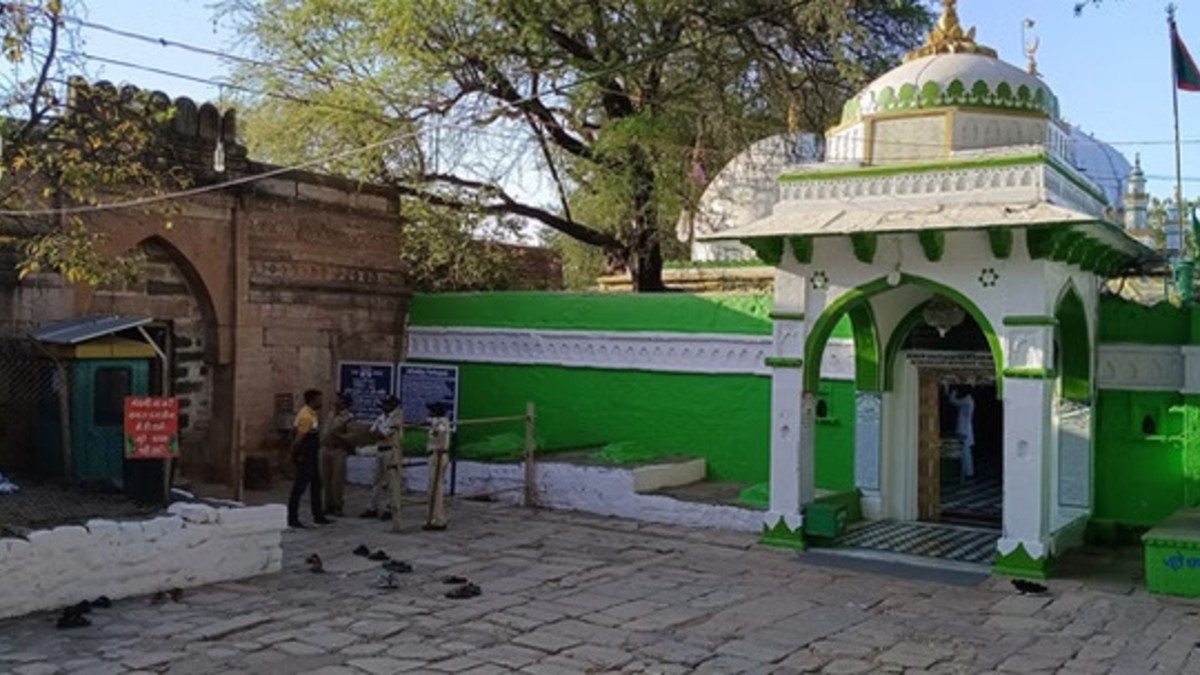
The court is currently hearing a batch of petitions concerning the original religious character of the site, which is claimed by Hindus as a temple and by Muslims as a mosque.
Senior advocate Salman Khurshid, appearing for the Maulana Kamaluddin Welfare Society, argued before a bench of Justices Vijay Kumar Shukla and Alok Awasthi that claims of temple demolition are not supported by concrete proof.
“There is no evidence that any specific temple was demolished during any specific period and a mosque was built on its site,” Khurshid told the court.
Competing claims over Bhojshala complex
The Bhojshala site in Dhar has long been at the centre of a religious dispute.

Hindu petitioners claim it is a Saraswati temple built in 1034 by Raja Bhoj of the Parmar dynasty. On the other hand, Muslims identify the structure as the Kamal Maula Mosque, associated with a Sufi saint.
Khurshid argued that the mosque was constructed during the rule of the then ruler and not through any act of force or demolition.
Questions raised over historical evidence
During the hearing, Khurshid also questioned the authenticity of historical claims made by the Hindu side. Referring to a 2003 communication allegedly sent by the British High Commission, he said that a statue kept at the British Museum, believed by some to be of Goddess Saraswati from Bhojshala, is actually of the Jain goddess Ambika.
He urged the court to carefully examine all documents and historical material submitted in the case.
“The authenticity of all documents, texts, and materials must be thoroughly scrutinised as per legal standards,” he said.
Reference to Ayodhya verdict
Khurshid also cited the Supreme Court’s judgment in the Ram Janmabhoomi–Babri Masjid dispute to argue that ownership of disputed religious sites should be determined based on established legal principles and evidence used in civil suits.
He stressed that historical narratives alone cannot be the basis for deciding such sensitive disputes.
Historical context cited in court
The senior advocate referred to historical accounts suggesting that Dhar, once the capital of the Parmar rulers of Malwa, witnessed multiple invasions and reconstructions over time.
Citing a Hindi book on Sufi saint Kamaluddin Chishti, he argued that such changes were part of broader historical processes and not necessarily linked to targeted religious destruction.
He also mentioned historical figure Ain-ul-Mulk Multani, a general under Alauddin Khilji, to argue that political control over the region did not always involve destruction of existing structures.
Hearing to continue
Khurshid concluded his arguments on Thursday. The Madhya Pradesh High Court is scheduled to resume hearing the matter on Monday, as it continues to examine multiple petitions and a writ appeal related to the long-standing Bhojshala dispute.