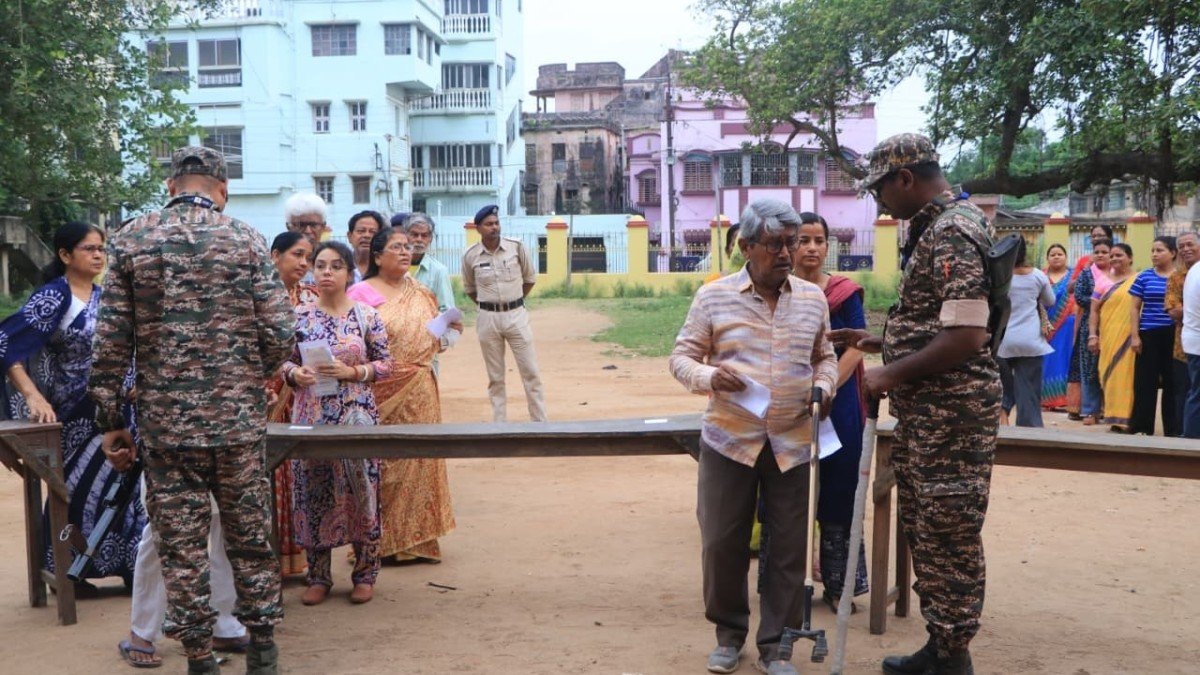
Polling for the second and final phase of the West Bengal Assembly elections was held on April 29 across 142 constituencies, with more than 3.2 crore voters eligible to cast their ballots. The phase is being seen as crucial in deciding the political future of the state, especially in regions that have traditionally supported the ruling Mamata Banerjee-led Trinamool Congress (TMC).
Several high-profile candidates, including Chief Minister Mamata Banerjee, were in the fray, along with senior leaders from opposition parties. The counting of votes is scheduled for May 4.
By afternoon, voter turnout was notably high in many districts, with several regions recording over 75 to 80 percent participation, indicating strong public engagement in this decisive phase.
Allegations of EVM Tampering and Repoll Possibility
The voting process was not without controversy. Allegations of tampering with electronic voting machines (EVMs) surfaced from multiple constituencies. Complaints claimed that tape was placed near certain party symbols, raising concerns about voter choice being affected.
State Chief Electoral Officer Manoj Agarwal said authorities are examining these complaints and did not rule out repolling. “If reports confirm tampering in a large number of booths, repolling may be conducted,” he said.
Political parties traded accusations over the issue. The BJP alleged that its voting option was deliberately blocked in some booths, while TMC leaders also raised objections in other constituencies.
Violence and Clashes Mar Polling Day
Tensions were reported from several parts of the state, with allegations of violence involving central forces and party workers. In Tarakeswar, TMC candidate Ramendu Singharay accused security personnel of carrying out an “unprovoked lathicharge” on voters, including women.
“A cancer patient was beaten and several women were injured,” he alleged, demanding strict action.
However, BJP candidate Santu Pan defended the forces, saying, “They acted to control an unauthorised crowd. Such situations can arise when gatherings become large.”
In other areas like Arambagh and Bagda, locals and TMC supporters alleged that central forces entered homes and assaulted residents. These claims remain unverified, and officials have not issued a formal response.
Political Tensions and Ground-Level Protests
In Bhangar and nearby areas, the Indian Secular Front (ISF) alleged intimidation of its polling agents. ISF leaders claimed that threats were issued to their workers, raising concerns about the fairness of the election process.
ISF candidate Arabul Islam criticised the administration, saying, “The authorities have failed to ensure a free and fair election.”
Meanwhile, BJP leaders took a more aggressive stance. A party leader said that strict action by forces was necessary if attempts were made to “loot votes”.
A Rare Moment of Political Courtesy
Amid the tense atmosphere, a lighter moment emerged from the high-profile Bhabanipur constituency. BJP leader Suvendu Adhikari visited a TMC camp office during polling and interacted with party workers.
“We need to stand together,” Adhikari said, to which a TMC worker responded, “Absolutely,” reflecting a rare moment of calm in an otherwise heated contest.