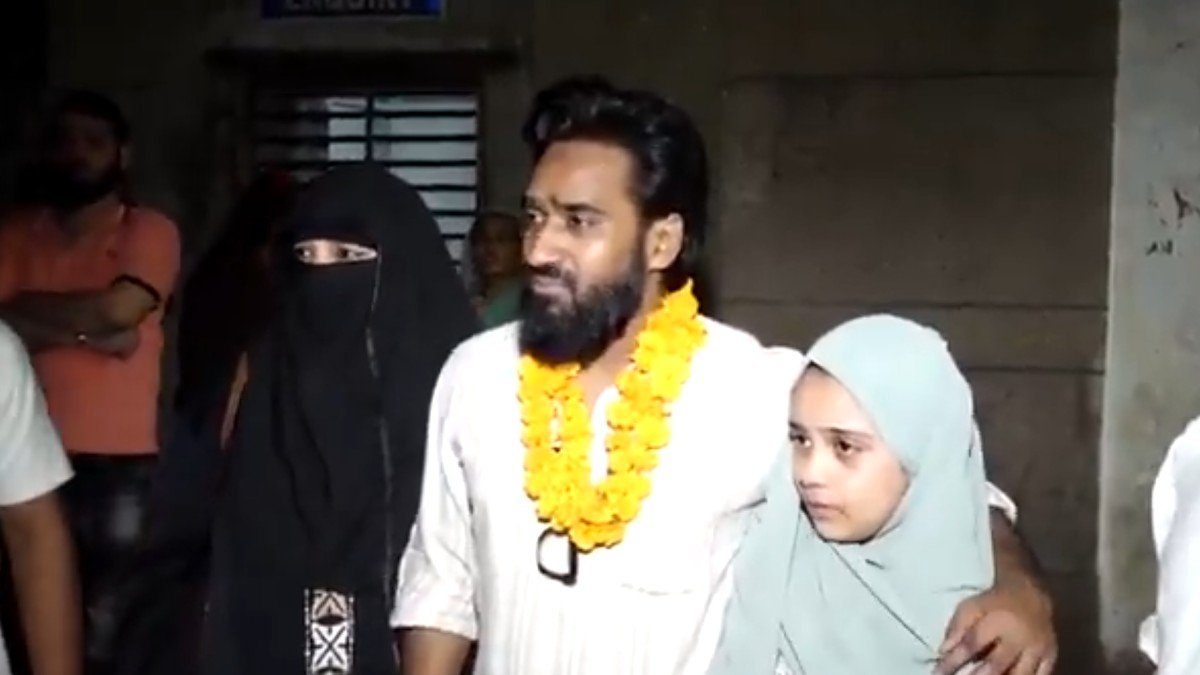
Anti-CAA activist Tasleem Ahmed walked out of Tihar Jail late Friday night after spending nearly six years behind bars, following a Supreme Court order granting him six months of interim bail in the 2020 Northeast Delhi riots conspiracy case under the Unlawful Activities (Prevention) Act (UAPA).
Family members and supporters gathered outside the prison gates for an emotional reunion. Ahmed’s wife, son, and daughter waited silently outside, hoping for his release after years of separation.
“It has been so difficult, especially for my children,” Ahmed’s wife, Fehmida Khatoon, told Maktoob while waiting outside the jail.
At around 10:30 pm, Ahmed finally stepped out of prison. His daughter, now a Class 6 student, rushed to hug him and broke down in tears. Holding her father tightly, she cried as family members and supporters welcomed him home.
“Our daughter was four years old when Tasleem was taken away,” Khatoon said. “A few days ago, our daughter refused to eat and said she would only eat when her father returned home. She started crying. I think Allah listened to her prayers.”
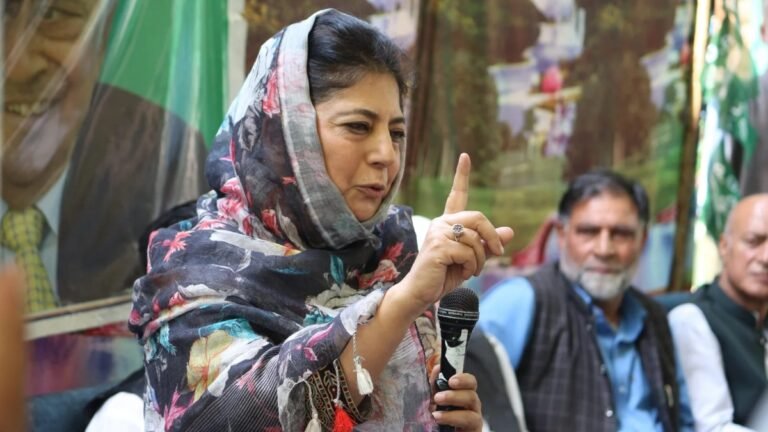
The Supreme Court also granted six months’ interim bail to Khalid Saifi, another accused in the case. Saifi’s family also waited outside Tihar Jail, overwhelmed with emotion.
His wife, Nargis Saifi, said she was relieved after years of waiting. “We have been waiting six years for this,” she said briefly, declining to speak further to the media.
Supreme Court Flags Concerns Over Long Jail Terms Without Trial
A bench of Justice Aravind Kumar and Justice P. B. Varale granted interim relief while raising concerns over prolonged incarceration and delays in trials under UAPA.
The court also referred an important constitutional question to a larger bench — whether long years spent in jail without trial should outweigh the strict bail restrictions imposed under anti-terror laws such as UAPA.

The bench observed that legal questions raised in the matter needed wider consideration. “A bench of equal strength cannot alter the foundational basis of another bench’s judgment,” the court noted while directing the matter to be placed before the Chief Justice of India.
Legal experts have called the move significant for undertrial prisoners booked under strict anti-terror laws.
Senior advocate Faizan Mustafa said the court appeared concerned that people should not remain in jail indefinitely while trials move slowly, describing it as a major constitutional issue involving liberty and due process.
Earlier, another Supreme Court bench comprising Justice B. V. Nagarathna and Justice Ujjal Bhuyan had also questioned denial of bail to activists Umar Khalid and Sharjeel Imam in a separate UAPA case.
The bench had stressed that even in terror-related cases, the legal principle of “bail is the rule and jail is the exception” should not be ignored.
Debate Over Delhi Riots Case Continues
The 2020 Northeast Delhi riots, which left more than 50 people dead, most of them Muslims, remain among India’s most sensitive criminal cases. Police have alleged a larger conspiracy linked to protests against the Citizenship Amendment Act (CAA), while rights groups and activists argue that Muslim protesters and organisers were selectively targeted.
Human rights groups have repeatedly raised concerns about prolonged detention without trial under UAPA.
The Association for Protection of Civil Rights welcomed the Supreme Court order, saying it brought “significant relief” after six years of incarceration and reaffirmed constitutional safeguards and due process.
The organisation said it hopes the interim bail would eventually turn into regular bail, adding that keeping individuals in jail for years without trial raises serious concerns about fairness, dignity and justice guaranteed under Article 21 of the Constitution.
Delhi-based activist Nadeem Khan also criticised prolonged detention, saying many accused spend years in prison before guilt is established. “The process itself becomes punishment,” he said.