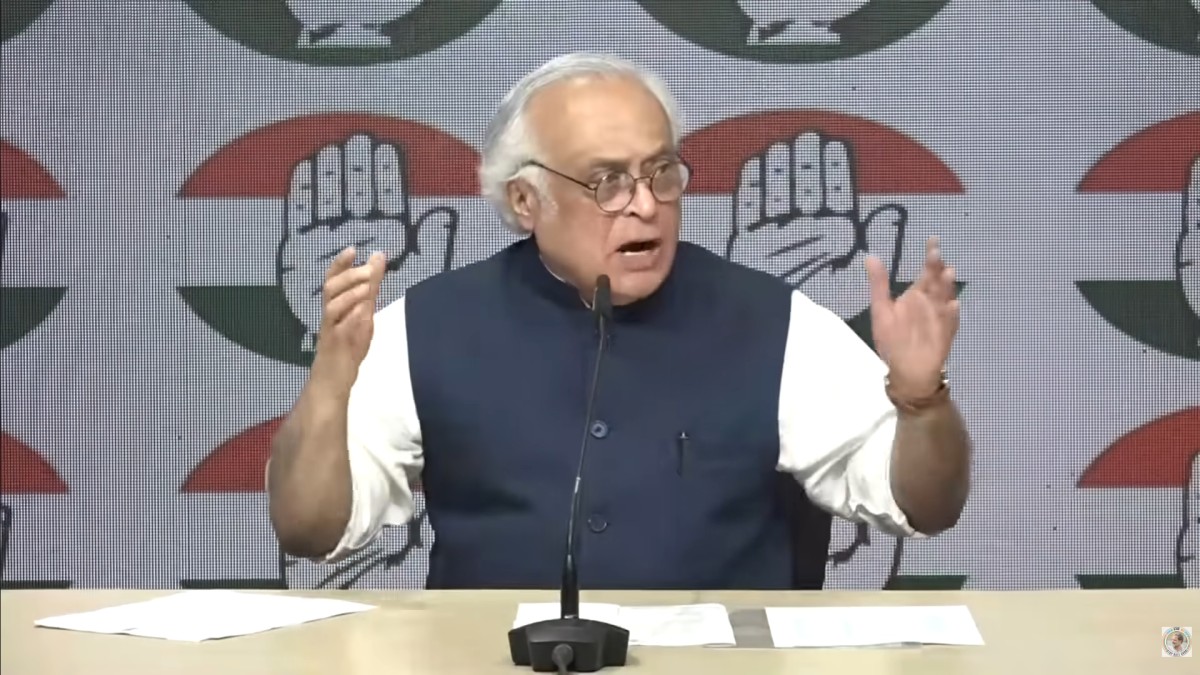
The Congress party on Monday launched a sharp attack on the Narendra Modi-led government, accusing it of pursuing an unbalanced foreign policy in West Asia and showing what it described as “blind devotion” to Israel.
The remarks were made by Congress general secretary (communications) Jairam Ramesh, who responded to reports of a possible US–Iran agreement aimed at halting hostilities in the region.
Congress Welcomes Possible US–Iran Agreement
Ramesh said reports suggesting that the United States and Iran may sign an agreement in Geneva on June 19 to reduce tensions were “welcome,” although official confirmation is still awaited.
He expressed hope that all parties, including Israel, would adhere to any such accord, even if it remains an interim arrangement.
He further said that any de-escalation in West Asia would be beneficial for global stability and for India’s economic interests, particularly in relation to energy supplies.
Strait of Hormuz and Economic Concerns
Ramesh noted that a reopening of the Strait of Hormuz would provide relief to India’s energy trade and broader economy. However, he cautioned that deeper structural economic challenges in India would persist regardless of developments in West Asia.
According to him, issues such as stagnant private investment, weak demand, and pressure on the rupee predate the current geopolitical tensions.
He also argued that rising import dependence, particularly from China, has contributed to a widening trade deficit and affected domestic manufacturing and MSMEs.
Criticism of Domestic Economic Policy
The Congress leader further criticised the government’s handling of the domestic economic environment, pointing to what he described as stagnation in real wages and weak investment sentiment.
He alleged that excessive regulatory pressure and the expanding powers of investigative agencies had created uncertainty for businesses, thereby discouraging investment.
Foreign Policy and Regional Dynamics
Ramesh also raised concerns about India’s shifting geopolitical environment, particularly Pakistan’s renewed diplomatic engagement and its strategic alignment with China.
He claimed that Pakistan, which had previously faced international isolation after the 2008 Mumbai terror attacks, was now regaining global attention and influence.
He added that China’s deep strategic presence in Pakistan presents a long-term challenge for India’s foreign policy.
Remarks on Israel Policy
Criticising the government’s West Asia approach, Ramesh said India needed a more balanced diplomatic stance, particularly regarding Israel.
While acknowledging India’s longstanding relationships in the region, he argued that humanitarian considerations and national interest require a more nuanced position.
He said, “It is too much to expect Modi to rethink his blind devotion and unconditional support to Israel,” while calling for a recalibration of India’s foreign policy priorities.
Context of US–Iran–Pakistan Statements
The comments come after Pakistan Prime Minister Shehbaz Sharif announced that a peace agreement between the United States and Iran had been reached, with formal signing expected in Switzerland.
Sharif claimed the deal would include the “immediate and permanent termination of military operations” and thanked Qatar for mediation efforts. However, no official confirmation has yet been issued by Washington or Tehran.