The Madhya Pradesh Assembly on Tuesday passed the Uniform Civil Code (UCC) Bill, paving the way for a common civil law on matters related to marriage, divorce, inheritance, succession and live-in relationships. The Bill was passed through a voice vote during the Monsoon Session amid protests by Congress MLAs, who demanded that it be referred to a select committee for further scrutiny.
With the passage of the legislation, Madhya Pradesh has become the fourth BJP-ruled state, after Uttarakhand, Gujarat and Assam, to approve a Uniform Civil Code.
The Bill will now be sent for the Governor’s approval before it comes into force.
What the MP Uniform Civil Code Bill Provides
The new law makes monogamy compulsory and bans polygamy across all religious communities. It also declares practices such as nikah halala illegal and punishable.
The Bill makes it mandatory for couples in live-in relationships to register their relationship with the local registrar within one month. Failure to register can attract imprisonment of up to three months or a fine of ₹10,000. Submitting false information or ignoring notices issued by the registrar can also lead to imprisonment and financial penalties.
The law further provides that if a married person enters a live-in relationship, they can face up to five years in jail. If consent for a live-in relationship is obtained through force, fraud or coercion, the punishment can also extend to five years’ imprisonment. Cases involving minors will be dealt with under the Protection of Children from Sexual Offences (POCSO) Act.
The legislation also makes registration of marriages compulsory down to the village level and provides equal inheritance rights to men and women.
However, Scheduled Tribe (ST) communities have been kept outside the scope of the law to protect their customs and cultural traditions.
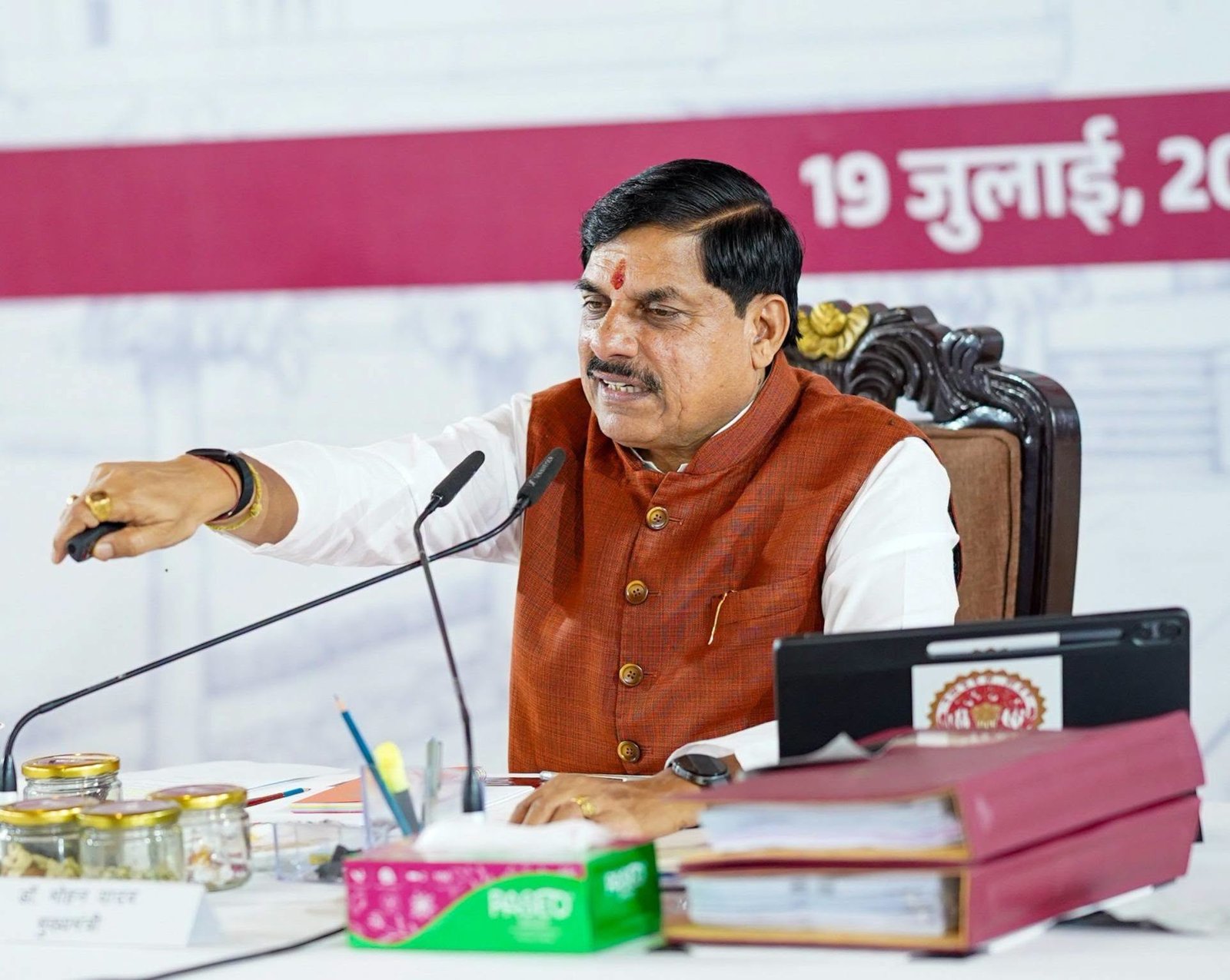
Chief Minister Mohan Yadav Defends UCC
Speaking during the debate, Chief Minister Mohan Yadav accused the Congress of opposing the Bill to appease the Muslim community.
“If Congressmen have even little respect for Babasaheb (Ambedkar), they should absolve themselves of their sins by supporting the UCC,” Yadav said.

He added, “Prime Minister Modi gave rights to Muslim women by abolishing triple talaq… We are implementing the UCC to ensure that Amar, Akbar, Anthony, Robin and Rahim live according to the same law.”
Before beginning his speech, the Chief Minister raised the slogans “Jai Shri Ram” and “Jo Hindu hit ki baat karega, vahi pradesh me raaj karega” (Whoever speaks for Hindu interests will rule the State).
After the Bill was passed, Yadav described it as a “golden day” for the people of Madhya Pradesh.
“The passing of the Uniform Civil Code Bill is truly a golden day for the 8.5 crore people of Madhya Pradesh. This move will liberate women from the suffering caused by polygamy and ensure government support for their rights,” he told reporters.
Congress Opposes Bill, Calls It Unconstitutional
Congress legislators strongly opposed the Bill and staged protests inside the Assembly, forcing proceedings to be adjourned twice. The Opposition argued that the legislation should have been sent to a select committee for detailed examination.
Congress MLA Arif Masood alleged that the law targeted Muslims.
“The UCC has been brought only to trouble the Muslim community,” Masood said.
Calling the legislation unconstitutional, he added, “My valid points were not sent to the select committee. They passed the Bill unilaterally… this is unconstitutional.”
Leader of Opposition Umang Singhar also argued that resolving the issue of 27% reservation for Other Backward Classes (OBCs) was more important than passing the UCC.
Expert Committee Prepared the Bill
The Bill was drafted by a six-member expert committee headed by retired Supreme Court judge Justice Ranjana Desai.
The Uniform Civil Code seeks to replace religion-based personal laws with a common legal framework governing marriage, divorce, inheritance and related civil matters. The BJP has long advocated for implementing a Uniform Civil Code across the country as part of its core political agenda.