The Delhi Police on Thursday said that the Union government’s decision to authorise the Delhi Police Commissioner to exercise preventive detention powers under the National Security Act (NSA), 1980, is a routine administrative measure and is not connected to the ongoing protests over the alleged NEET paper leak.
The clarification came after media reports suggested that the powers had been granted to suppress the student-led protests in the national capital.
In a statement, Delhi Police said, “Misleading information is circulating on social media claiming that the Commissioner of Police, Delhi, has been granted detention powers under the National Security Act (NSA) specifically to suppress the ongoing CJP protests.”
It added, “The order in question is a routine, quarterly extension of powers under the NSA, which is conventionally renewed every three months. The current renewal was issued on 07.07.2026 for the period effective from 19.07.2026 to 18.10.2026, predating the commencement of the CJP protests.”
The police further said, “No specific request was initiated for this order in relation to recent events. The renewal constitutes a standard administrative procedure and has been misinterpreted out of context.”
Notification Issued for Three-Month Period
According to an official notification published in the Delhi Gazette, Delhi Police Commissioner Anurag Kumar has been authorised to exercise preventive detention powers under the NSA for three months, from July 19 to October 18.
The notification, dated July 15, states that the Lieutenant Governor of Delhi exercised powers under Section 3(3) of the National Security Act to authorise the Commissioner of Police to act as a detaining authority during the specified period.
The order allows the police commissioner to issue preventive detention orders against individuals whose activities are considered prejudicial to national security, public order, or the maintenance of essential supplies and services.
What the National Security Act Allows
The National Security Act, 1980, permits preventive detention without formal criminal charges in certain cases related to national security and public order.
A person can initially be detained for up to 12 days without formal charges, with detention extendable up to 12 months after review and approval by an Advisory Board.
Unlike regular criminal arrests, preventive detention under the NSA follows a separate legal framework intended to deal with situations involving threats to national security or public order.
Clarification Comes Amid Student Protests
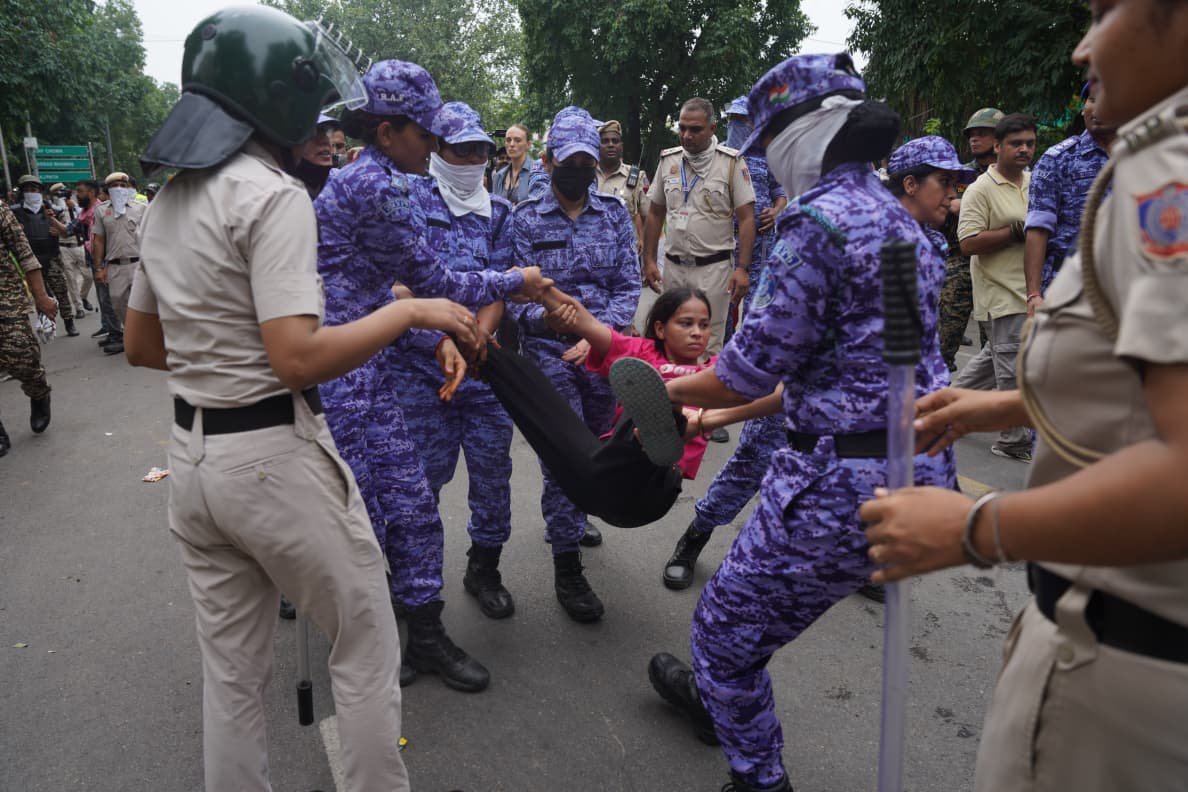
The clarification comes as protests over the alleged NEET paper leak continue in Delhi and other parts of the country, with students demanding action against those responsible and the resignation of Union Education Minister Dharmendra Pradhan.
Delhi Police maintained that the latest authorisation was issued before the protests began and was part of the routine quarterly renewal of powers granted under the National Security Act.
Officials said such renewals are a standard administrative practice aimed at ensuring that law enforcement agencies are equipped to respond swiftly to threats affecting public order and security in the national capital.