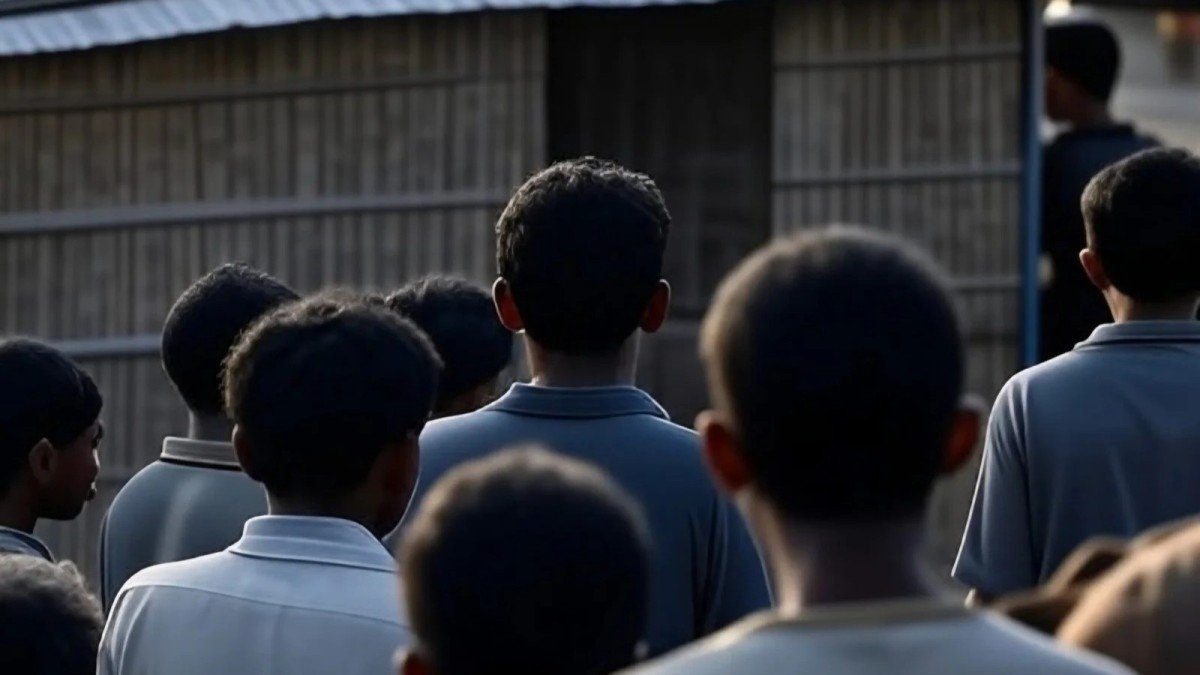
The Jammu and Kashmir government has informed the High-Level Committee on Demographic Changes (HLCDC) that 7,656 Rohingyas and 504 Bangladeshi nationals have been identified across Jammu and Kashmir.
According to government data cited by The Tribune, 6,737 Rohingyas and 46 Bangladeshis are residing across 10 districts of the Jammu region. In the Kashmir Valley, officials identified 919 Rohingyas and 458 Bangladeshis.
The data was presented to four members of the HLCDC during their first field visit to Jammu on August 10 to examine demographic changes in border and adjoining areas.
117 Cases Registered Against Rohingyas
Officials told the committee that 101 cases involving 179 men and 21 women have been registered against Rohingyas in the Jammu region. In the Kashmir Valley, 16 cases involving 41 women and four men have been registered.
Officials said the number of Rohingya settlements had increased only marginally over the past two years but claimed that their presence in border areas remained a security concern.
“There was a detailed discussion on issues related to illegal immigration in border districts and the need to strengthen monitoring and surveillance,” a source was quoted as saying.
The committee also met civil society organisations working with people living in Rohingya settlements.
Officials Raise Security and Trafficking Concerns
Security officials raised allegations of the involvement of some Rohingyas in organised crime, drug trafficking and human trafficking. These claims were presented as concerns to the committee and do not establish criminal involvement by the Rohingya community as a whole.
A senior police officer also pointed to the geographical distribution of Rohingya settlements, saying that most identified settlements in Jammu and Kashmir are located in the Jammu region rather than the Valley.
According to the officer, many Rohingyas who initially travelled to Hyderabad after leaving Myanmar later moved to Jammu, with significant movement reported during 2012 and 2017.
Officials said the settlements in Jammu have attracted particular attention because of the region’s proximity to the international border.
The report also cited allegations that some Rohingya women were taken from Jammu to Kashmir and married through informal arrangements. Officials claimed that investigations had uncovered cases involving alleged coercion and sexual exploitation.
“Several such cases of human trafficking have come to light in recent years,” a source was quoted as saying.
HLCDC Tasked With Studying Illegal Immigration
The Ministry of Home Affairs constituted the HLCDC on May 26 to study demographic changes linked to illegal immigration and other factors.
The committee has been given one year to submit its report. Its mandate includes recommending measures for an organised and permanent system for the legal and time-bound detention or deportation of immigrants residing in India.
The Rohingya are a predominantly Muslim ethnic minority from Myanmar’s Rakhine State. Large numbers fled to neighbouring countries following communal violence and military crackdowns, particularly in 2012 and 2017.