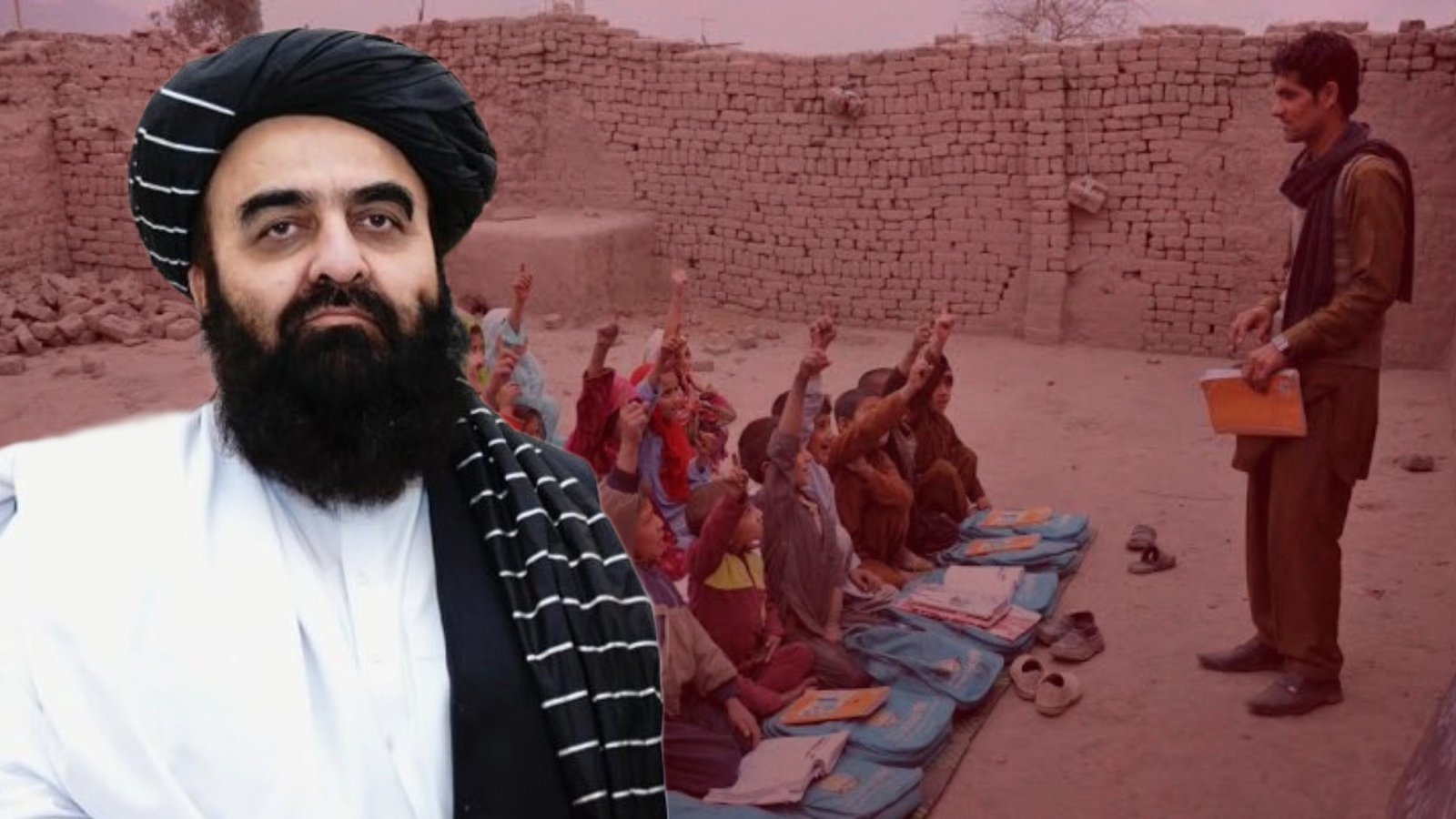
Taliban Foreign Minister Amir Khan Muttaqi has acknowledged that the closure of schools for Afghan girls remains a problem, saying both Muslim-majority and Western countries have repeatedly urged the administration to reopen them.
In an interview with BBC international correspondent Lyse Doucet, Muttaqi said the message from the international community had reached Taliban leaders.
“All countries have asked us to allow girls to go to school,” he said.
However, he argued that Afghanistan should not be judged only through a Western perspective.
Taliban Defends Its Record on Women
Muttaqi said not everything had been banned for women in Afghanistan and urged the international community to consider the country’s internal circumstances.
He claimed that around three million girls were still attending primary schools and religious seminaries. He also said tens of thousands of women continued to work in healthcare, education and small businesses.
The Taliban administration has described the closure of girls’ schools above the sixth grade and universities as temporary, but has not announced a clear date for their reopening.
More Than 2.5 Million Girls Denied Education
Human rights organisations and United Nations experts have strongly criticised the Taliban’s education policy.
According to UN assessments, more than 2.5 million Afghan girls have been prevented from continuing their education in secondary schools and universities.
Afghanistan remains the only country in the world where girls are barred from education beyond primary school.
Human rights groups have described the restrictions as part of a wider system of discrimination against women and girls.
Restrictions on Women’s Work and Movement
The Taliban’s policies have also restricted women’s employment, movement and participation in public life.
Restrictions on women working for international organisations and the United Nations, along with the closure of women’s beauty salons and other businesses, have reduced opportunities for financial independence.
Women have also faced strict dress requirements and restrictions on travelling without a male relative, known as a mahram.
Human rights organisations say these measures have limited women’s access to education, healthcare, employment and public spaces.
UN Links Recognition to Human Rights
The international community has repeatedly said that improvements in human rights, particularly women’s rights, are important for deeper engagement with the Taliban administration.
The Taliban, however, maintains that women’s rights policies are an internal matter shaped by Afghan traditions and religious values.
UN experts and human rights organisations have rejected this justification, arguing that Afghanistan remains bound by its international human rights obligations.
The restrictions have also worsened Afghanistan’s humanitarian and economic challenges. Critics say excluding women from education and employment is damaging the country’s long term development and leaving millions of girls without a clear future.