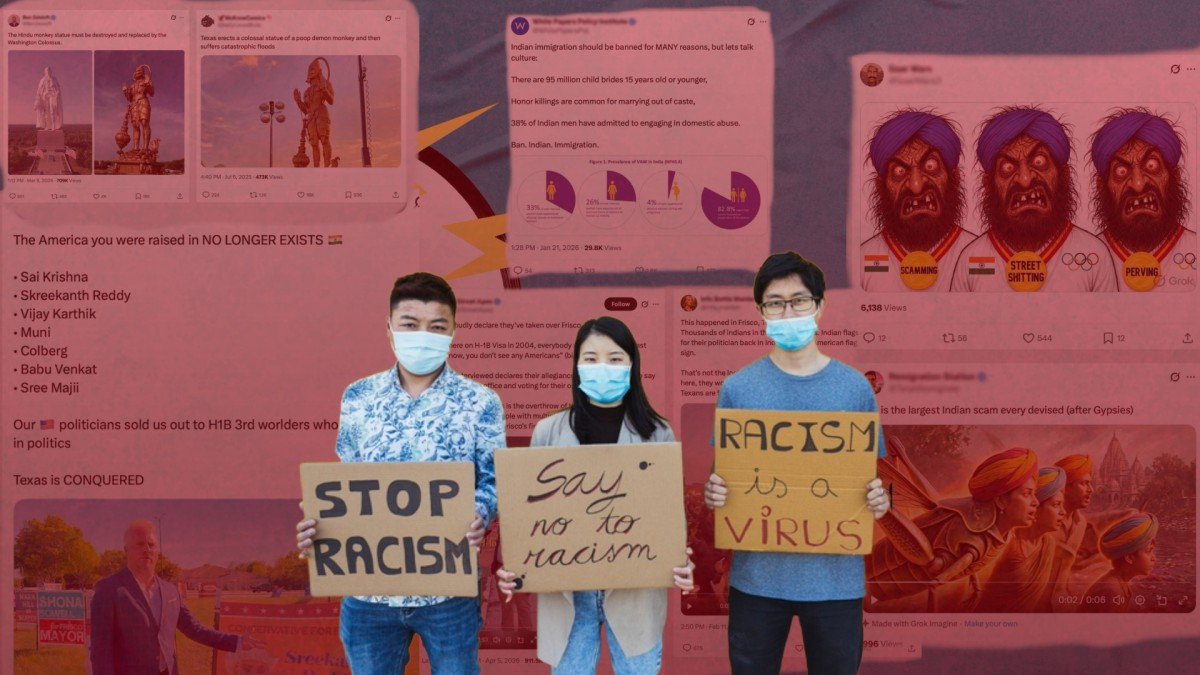
Anti-South Asian hate increased sharply across social media platforms in the United States between January 2025 and June 2026, with South Asians increasingly targeted with racist slurs, anti-immigrant claims, religious abuse and threats, a new report by the Center for the Study of Organized Hate (CSOH) has found.
The report examined anti-South Asian content on X, 4chan, 8chan and Gab. It identified about 542,360 hateful posts on X during the 18 months. Monthly anti-South Asian hate on X increased by 75% between January 2025 and June 2026.
The report also identified 397,522 hateful mentions across 4chan, 8chan and Gab during 2025. More than 90% of these came from 4chan.
South Asians Targeted Across Religious and National Identities
The report said anti-South Asian hate often ignores differences between Indians, Pakistanis, Bangladeshis and other communities. It also targets people based on their religion, including Hindus, Muslims and Sikhs.
“Anti-South Asian hate cuts across national, religious, and ethnic lines, targeting diverse South Asian communities and often collapsing distinctions among them,” the report said.
The study found that posts describing South Asians as “invaders”, job thieves or a demographic threat accounted for around 45% of anti-South Asian hate identified on X.
Racial slurs were also widespread. The report found that the slur “pajeet” and its variations appeared in about 30% of all anti-South Asian posts on X and 45% of mentions across 4chan, 8chan and Gab.
H-1B Visas Become a Major Flashpoint
Immigration and the H-1B visa programme were among the major subjects linked to online hate.
The report said Indians make up more than 70% of H-1B visa holders, making Indian workers particularly vulnerable to online attacks around the programme. Posts accused South Asians of taking American jobs, committing visa fraud and entering the country through unfair means.
The report also documented cases where social media accounts searched LinkedIn and other platforms for information about South Asians and reposted their names, photographs, employers and professional details.

Some posts encouraged users to report targeted individuals to immigration authorities, while influencers confronted South Asians at workplaces and homes and recorded the encounters for social media.
Political Events Also Triggered Online Hate
The report linked several increases in anti-South Asian content to political developments and debates over immigration.
It said anti-South Asian hate increased following political discussions around the H-1B programme, as well as attacks targeting South Asian political figures.
Former Vice President Kamala Harris, FBI Director Kash Patel, New York Mayor Zohran Mamdani, Second Lady Usha Vance and several members of Congress were among South Asian public figures targeted online.
Congressman Raja Krishnamoorthi has described the trend as a “disturbing rise in anti-Indian and South Asian hate.”

The report also found that South Asian politicians from different political backgrounds were targeted, suggesting that online abuse was not limited to one political group or ideology.
AI Is Being Used to Spread Racist Content
The study identified generative artificial intelligence as a growing tool for producing racist images and videos targeting South Asians.
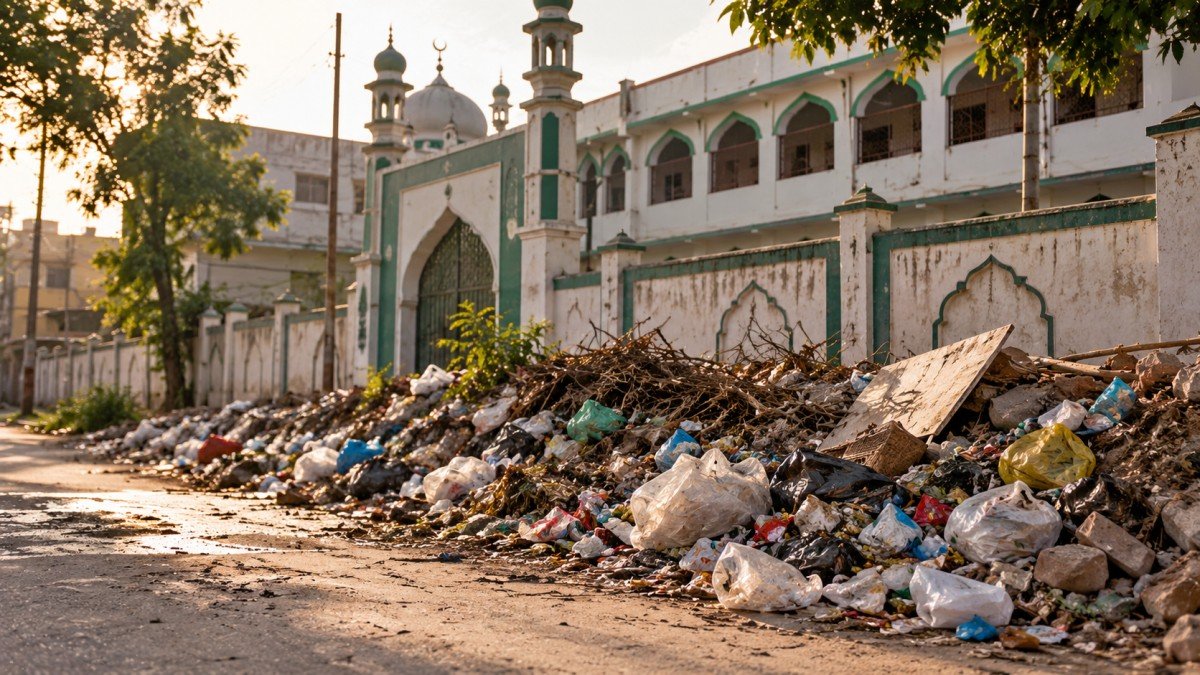
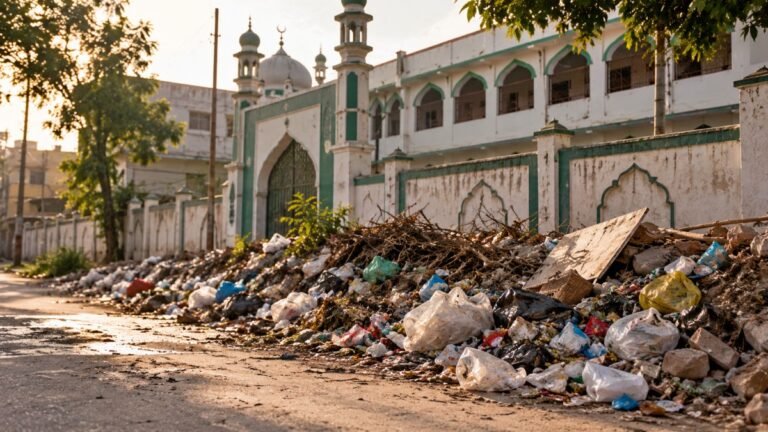
AI-generated content portrayed South Asians through stereotypes about hygiene, appearance, religion, immigration and crime. The report said these tools allow existing racist ideas to be turned into images and videos and distributed at a much larger scale.
“Generative AI has emerged as a new frontier in the production, amplification, and circulation of online hate,” the report said.
The report concluded that social media is not only reflecting existing prejudice but can also help spread and normalize it.

It said the rapid growth of online hate creates wider concerns for South Asian communities and raises questions about discrimination, civil rights, social cohesion and democratic participation in the US.