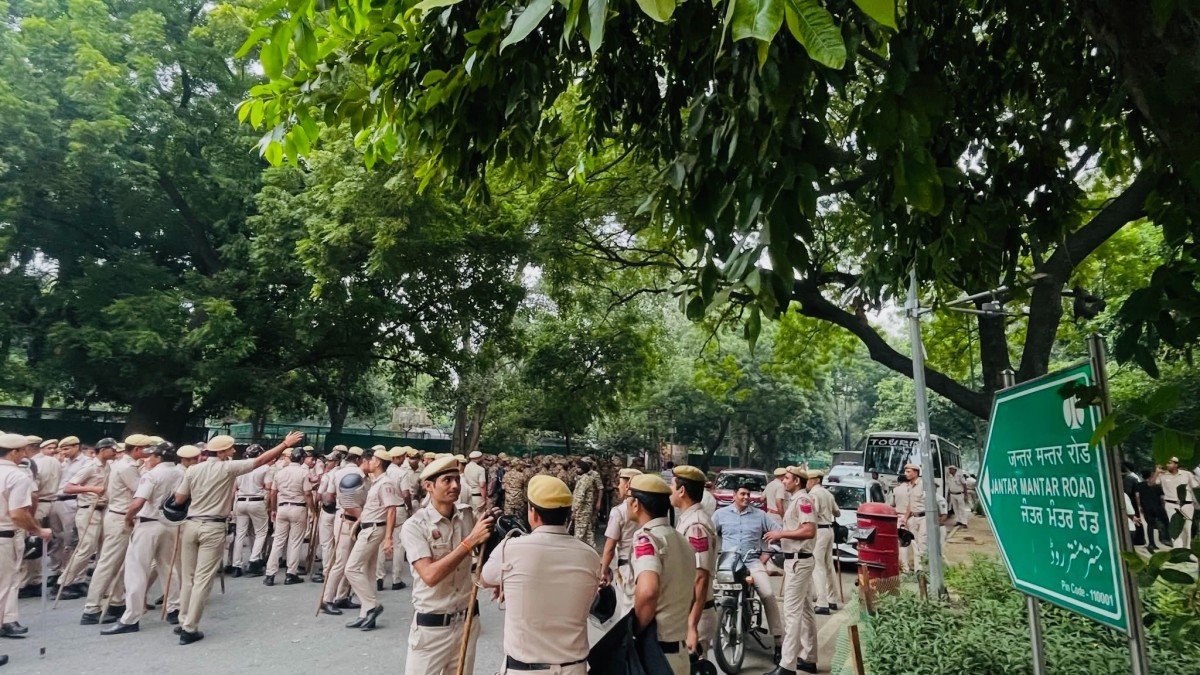
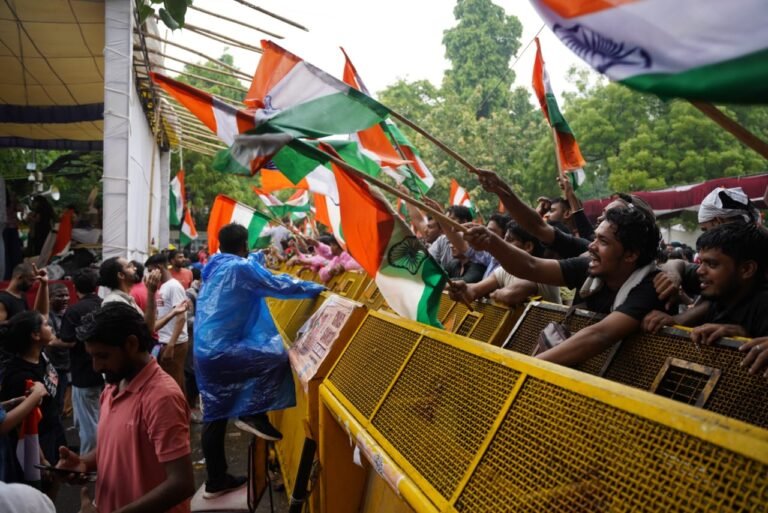
Delhi witnessed a massive police crackdown on Saturday, October 10, as thousands of protesters, opposition leaders, student activists and journalists were detained during demonstrations demanding the resignation of Chief Election Commissioner (CEC) Gyanesh Kumar and the withdrawal of the Special Intensive Revision (SIR) of electoral rolls.
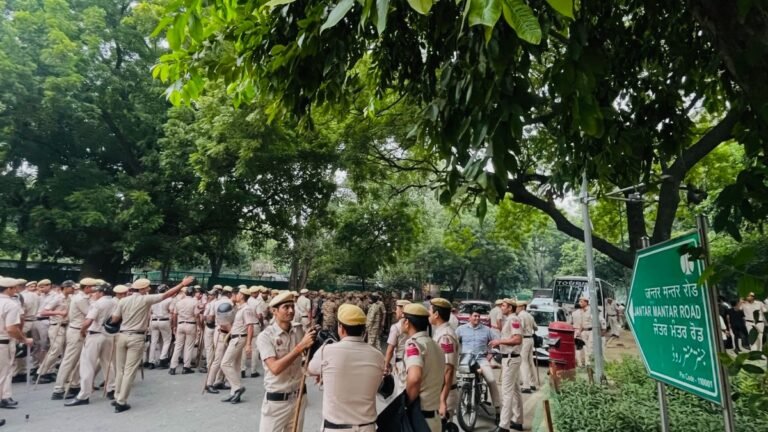
Former chief ministers Arvind Kejriwal, Mamata Banerjee, Pinarayi Vijayan and Manik Sarkar were among those detained as police blocked access to Jantar Mantar, the planned venue of the protest organised by the Cockroach Janata Party (CJP) and student groups affiliated with Left organisations.
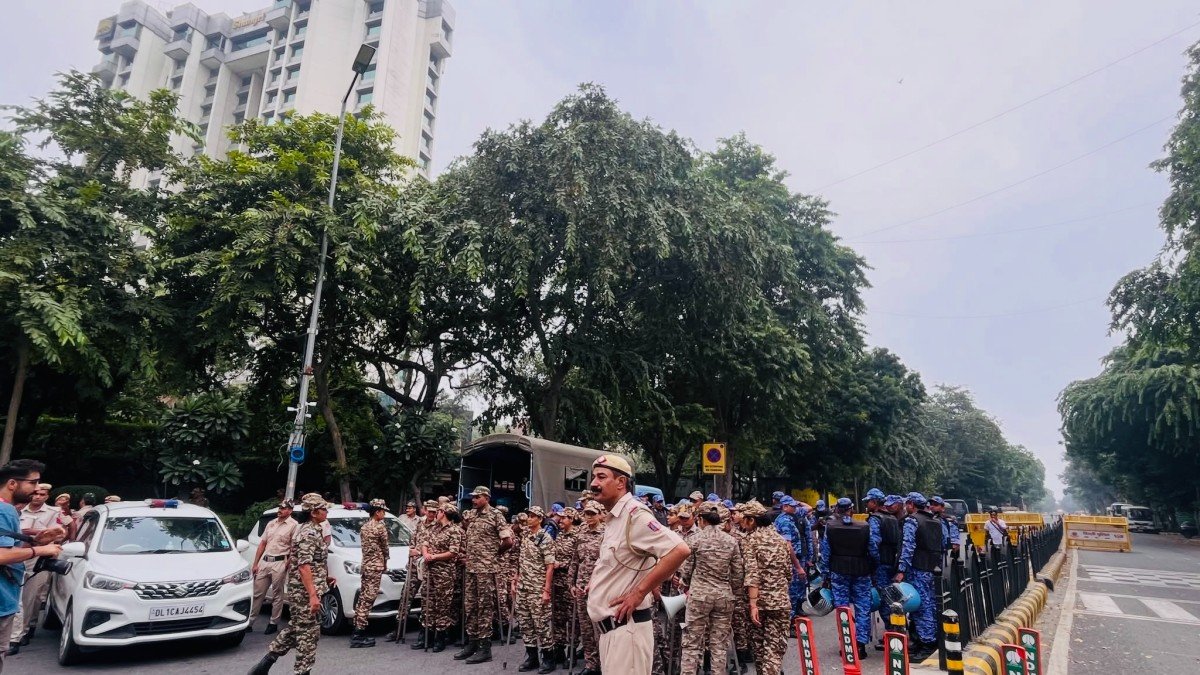
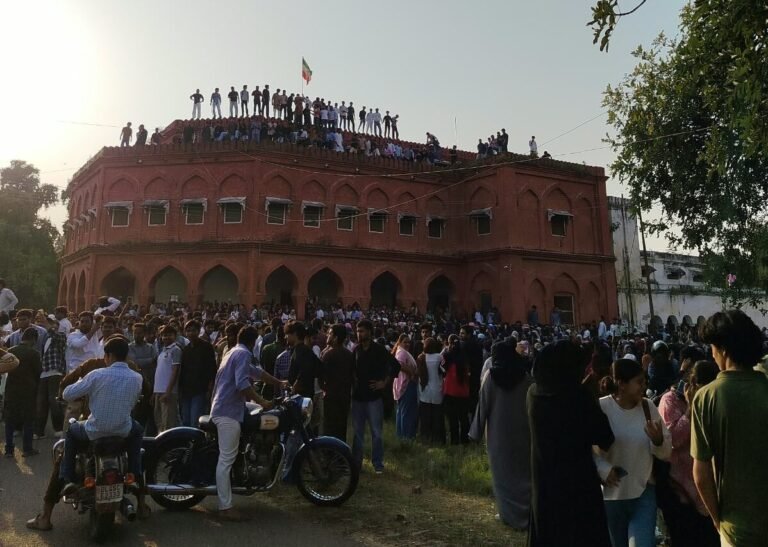
Despite heavy barricading, restrictions on public transport and a large deployment of security personnel, protesters gathered at several locations across the national capital, including Dilli Haat, Safdarjung flyover, Connaught Place, Gole Market, Sansad Marg and Rajghat.
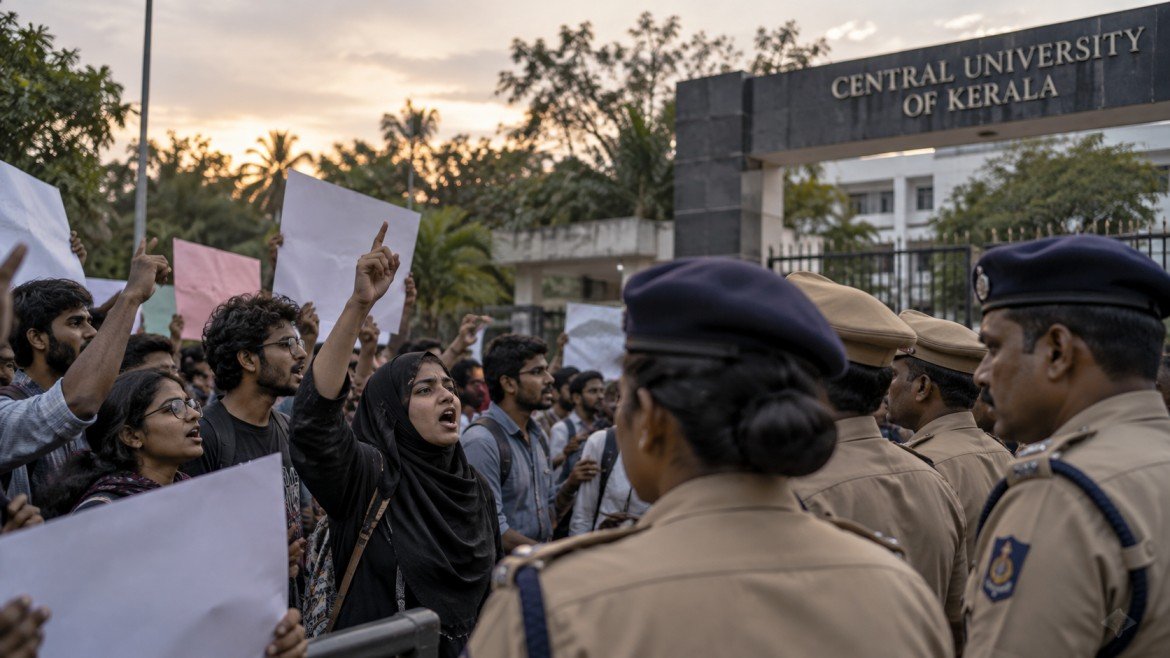
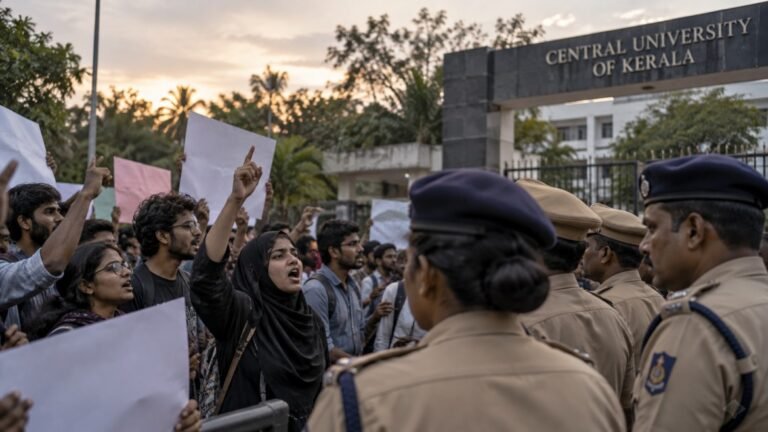
Police denied permission for the demonstration, citing security concerns and insufficient notice. The organisers and activists, however, accused the authorities of attempting to prevent people from exercising their right to peaceful protest.
Reports on the number of people detained varied during the day. Delhi Police initially reported nearly 1,500 detentions, while later reports put the figure at more than 4,000 and around 6,000 by the evening.
The crackdown also drew concern from the United Nations human rights office, which called on Indian authorities to respect the right to peaceful assembly.
Opposition Leaders Detained Across Delhi
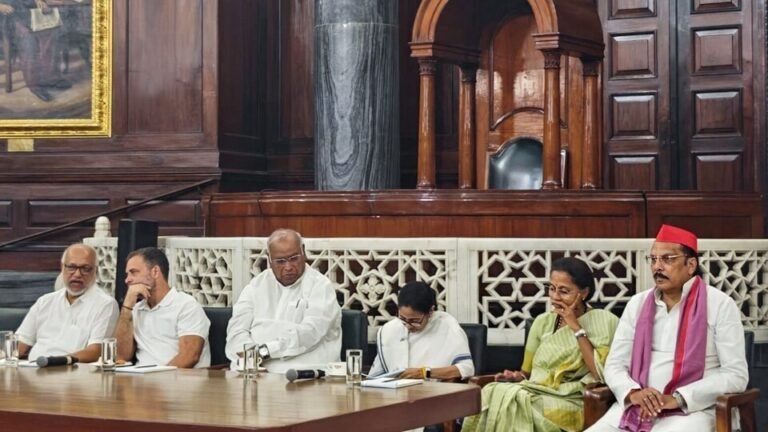
Several opposition leaders were detained as they attempted to reach the protest venue or express support for the demonstration.
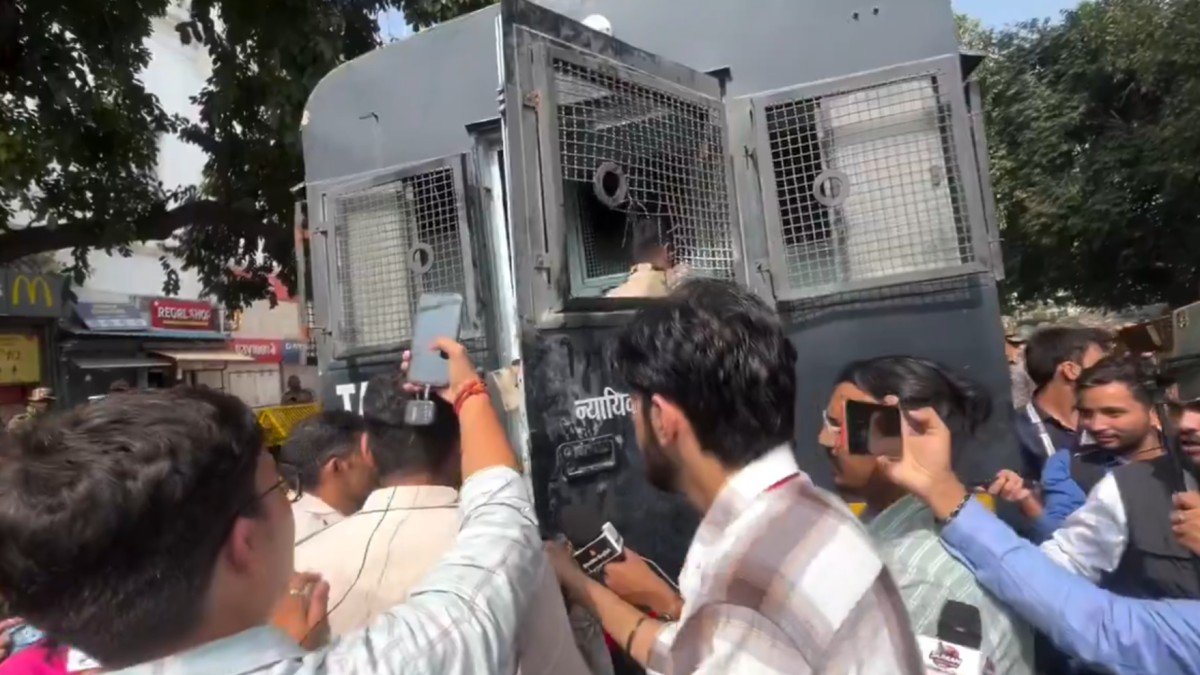
Aam Aadmi Party (AAP) leader Arvind Kejriwal was detained outside his residence while attempting to march towards Jantar Mantar, according to reports by the Press Trust of India (PTI). A video later shared by Kejriwal showed him inside a police bus alongside Rajya Sabha MP Sanjay Singh and other party members.
Reacting to the police action, Kejriwal said, “The youth of the country has awakened.”
He also accused Prime Minister Narendra Modi’s government of authoritarianism and demanded the removal of the Chief Election Commissioner.
“Prime Minister Modi’s dictatorship will not prevail. Vote thief Gyanesh Kumar will have to go,” Kejriwal said.
West Bengal Chief Minister Mamata Banerjee was also detained outside her Delhi residence along with Trinamool Congress leaders, including Rajya Sabha MP Derek O’Brien and former legislator Saket Gokhale.
Gokhale criticised the action on social media, writing, “Death to democracy in India.”
He later said Banerjee would stage a protest outside the police station in Dwarka where the detained party leaders had been taken.
Banerjee subsequently described her experience during the police action, saying that officers had stopped her group from travelling to Jantar Mantar.
According to Banerjee, party leaders initially asked police personnel outside her residence whether they would be allowed to reach the protest site. She said they were told they would be stopped along the way.
“We were sitting at the bus stand in front of our house because we weren’t being allowed to pass; we had come to show support,” Banerjee said.
She alleged that police personnel then intervened even after the group tried to maintain distance between smaller gatherings.
“We sat there, keeping a distance between our groups of three. Then, within a minute, they removed us, forcibly taking us away in a prison van, as if we were wanted criminals,” she said.
Banerjee added that the police took them from one station to another because, according to her, there was no space to accommodate them.
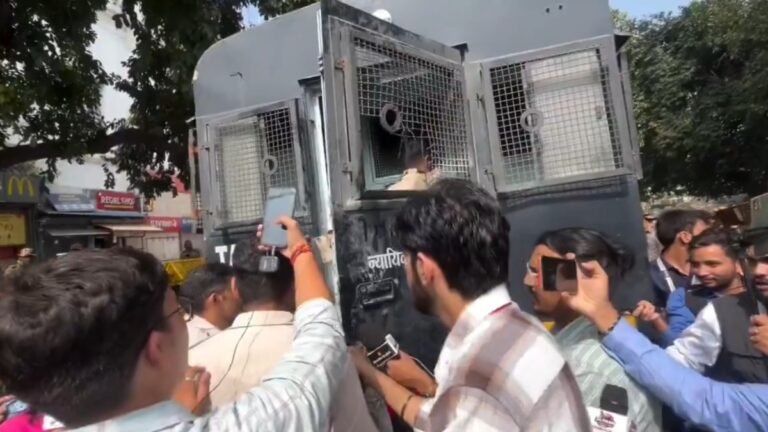
“They drove us around for two hours. We went to one police station, then another, and another; at each one, they said there was no space. Eventually, we felt like we were being kidnapped,” she said.
Former Kerala chief minister Pinarayi Vijayan and senior Communist Party of India (Marxist) leaders, including MA Baby, Brinda Karat and Rajya Sabha MP John Brittas, were also detained and taken to Chhatrasal Stadium.
Former Tripura chief minister Manik Sarkar was detained at Rajiv Gandhi Stadium in Bawana, according to the CPI(M).
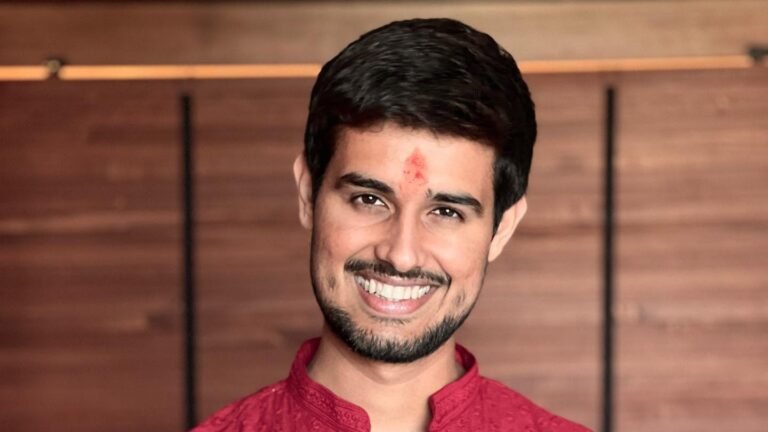
Other people detained included AISA president Neha Bora, activist Yogendra Yadav, senior advocate Prashant Bhushan and YouTuber Dhruv Rathee. Reports also said that several journalists were detained while attempting to cover the protests.
CJP Leaders Detained at Delhi Airport
The crackdown began before the demonstration could gather at Jantar Mantar.
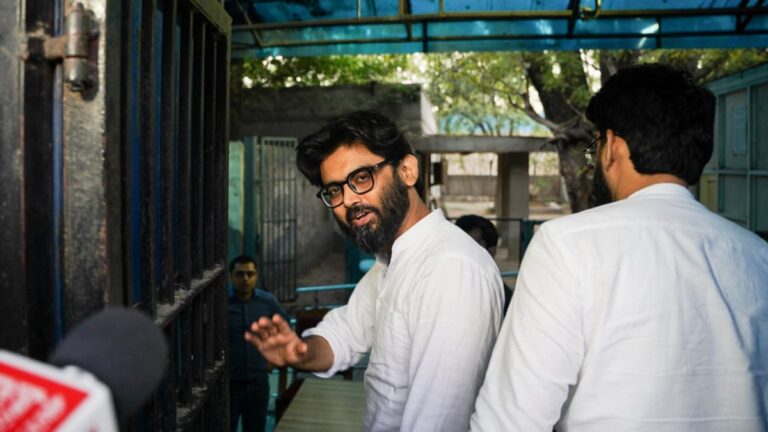
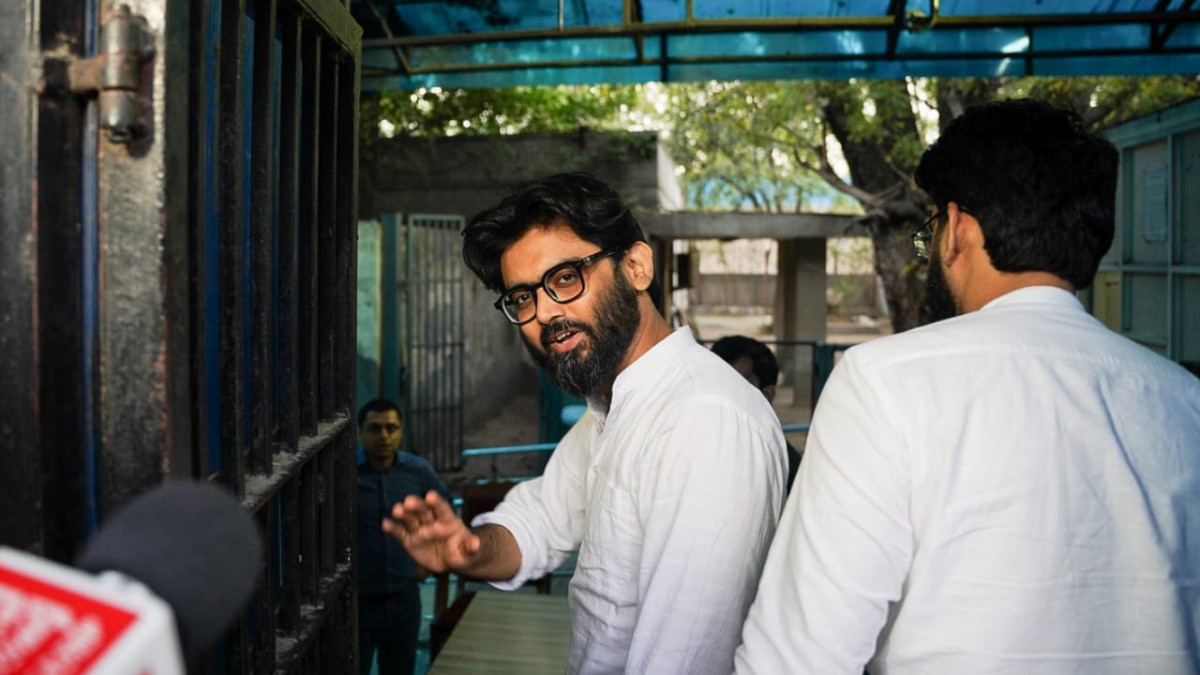
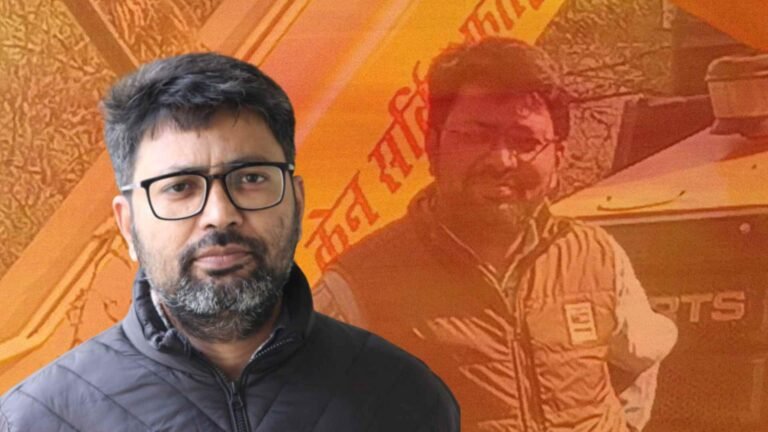
Cockroach Janata Party leaders Abhijeet Dipke, Saurav Das and Ashutosh Ranka were detained shortly after arriving in Delhi. Reports said they were taken into custody while still inside an aircraft.
The detention of the organisers created uncertainty among protesters who had travelled to the capital for the demonstration.
Ajinkya Shinde, another CJP leader who took charge of the protest after Dipke’s detention, urged supporters to continue gathering despite police restrictions.
“If Delhi Police tries to stop you, wherever they stop you will become your Jantar Mantar,” Shinde said in a video shared on X.
The CJP said the protest would continue until Gyanesh Kumar resigned.
Dipke and other organisers have accused the Election Commission of allowing large-scale manipulation of electoral rolls through the SIR exercise. The Election Commission has rejected allegations of wrongdoing, maintaining that major decisions related to the revision process were taken unanimously by the full commission.
Protesters Gather at Dilli Haat and Safdarjung Flyover
With Jantar Mantar heavily barricaded and access to central Delhi restricted, student groups and activists moved to other parts of the capital to continue their demonstration.
Around 1 pm, AISA president Neha Bora, accompanied by Yogendra Yadav, Prashant Bhushan and other activists, began marching from the INA area towards Dilli Haat.
The demonstrators carried banners demanding Gyanesh Kumar’s resignation and the scrapping of the SIR exercise. Police stopped the march near INA Market and Dilli Haat, detained the participants and took them to different police stations.
However, more protesters continued to arrive in response to AISA’s call. Police detained them as well. Officials said around 200 people had been detained near Dilli Haat by 6:30 pm. The popular market was also closed to visitors as the protest continued outside.
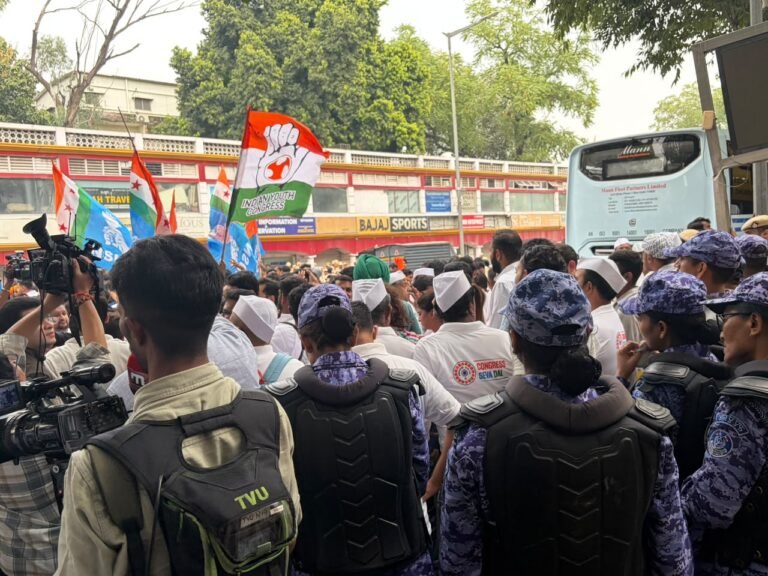
The nearby Safdarjung flyover became another protest site after police stopped Bora and other activists from moving towards Dilli Haat.
At around 3 pm, nearly 50 protesters gathered on the flyover and raised slogans demanding the CEC’s resignation.
Atul, a student from Hindu College, said the detention of student leaders would not discourage the protesters.
“They detained Neha and (CJP leader Abhijeet) Dipke and thought it would break our morale. But it will not. We will not stop till we get the resignation (of Gyanesh Kumar) this time too,” he said.
A Dalit activist identified as Bala said protesters were attempting to reach Connaught Place despite restrictions in central Delhi.
“Central Delhi might have been blockaded, but we plan to ultimately make our way to Connaught Place,” Bala said.
Police later cleared the flyover, but protesters returned and regrouped. A confrontation followed as officers stopped them with barricades. By around 6 pm, police had cleared the area and detained approximately 50 protesters, while others dispersed.
Flash Protests in Connaught Place, Gole Market
Several small demonstrations took place across Connaught Place as protesters tried to avoid police barricades and reach central locations.
At one point, around 150 people gathered in the Outer Circle. Most were detained within minutes, while some managed to escape.
Another group of nearly 100 protesters gathered at a different location in Connaught Place. Police personnel from the Rajiv Chowk Metro Station moved towards them and chased them away.
Sidharth, a 23-year-old protester from Noida, said the extensive police deployment had made it difficult to sustain demonstrations.
“The police are busting every attempt and detaining everyone here. We came prepared with protein bars, water and masks, but they weren’t of much use today,” he said.
Members of the Students’ Federation of India (SFI) also attempted to move towards Jantar Mantar through barricades near the Press Trust of India office on Sansad Marg.
Around 50 protesters pushed through the barricades at approximately 1 pm, overturning some of them. Police responded by using batons and detained around 30 people.
A second demonstration took place near Gole Market at around 2:45 pm, when approximately 100 protesters attempted to march towards Jantar Mantar. They clashed with Central Reserve Police Force personnel who stopped them.

Some protesters managed to move a short distance while raising slogans of “Inquilab Zindabad” and “Jai Bhim”.
At around 4 pm, another group of nearly 20 protesters sat in the middle of Shankar Road near Ram Manohar Lohia Hospital, demanding the CEC’s resignation. Police quickly removed them and put them inside a bus.
A separate group of 50 to 70 protesters marched towards Rajghat along Ghata Masjid Road before police detained them at a traffic signal.
The protesters had reportedly spent the morning moving between parks and other public spaces to avoid detention before assembling for the march.
Ashish, one of the protesters, said the demonstration was about protecting people’s democratic rights.

“I’m here fighting for basic rights, which have been stolen from the people, the right to vote and the right to freedom,” he said while distributing pamphlets to street vendors.
The protesters carried banners describing the SIR exercise as unconstitutional and illegal and called for its withdrawal.
Police Deploy Thousands, Restrict Metro and Train Services
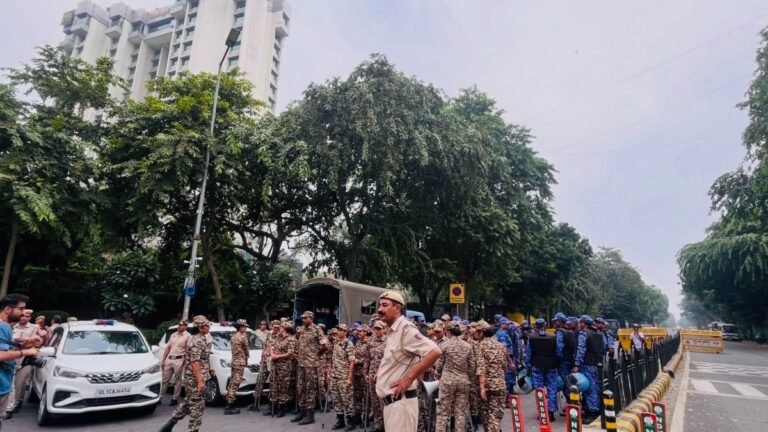
Delhi was placed under heavy security ahead of the planned demonstration. Police personnel and paramilitary forces were deployed across sensitive areas, while barricades and other restrictions were introduced on roads leading to Jantar Mantar.
Reports gave different figures for the security deployment. Delhi Police said more than 15,000 personnel had been deployed, with around 26,000 central force personnel expected to be present in the city. Other reports put the combined deployment at more than 40,000 personnel.
The restrictions extended to public transport.
The Delhi Metro Rail Corporation initially announced restrictions on entry and exit at 57 stations from Friday night. The list was later revised to 45 stations, with restrictions remaining in place through Saturday.
The Railways also cancelled mail and express trains scheduled to arrive at New Delhi and Hazrat Nizamuddin railway stations between 4 am and 2 pm on October 10, citing the possibility of heavy road congestion.
The Sarai Kale Khan and New Ashok Nagar stations of the Namo Bharat train service were also scheduled to remain closed from Friday night until 10 pm on Saturday.
Retail liquor outlets across Delhi were ordered to remain closed on October 9 and 10, although licensed restaurants, bars and clubs were allowed to continue serving liquor.
Access to Jantar Mantar was restricted, with reports also indicating that media personnel were denied entry to the protest site.
The organisers criticised the restrictions, arguing that they prevented protesters from reaching the designated venue and forced them to gather in smaller groups across the city.
Sonam Wangchuk Warns of Hunger Strike
Climate activist Sonam Wangchuk expressed concern over the detention of opposition leaders and protesters and warned that he might begin another hunger strike or a march if those detained were not released.
In a video message shared on social media, Wangchuk said he had supported the demonstration and had hoped that political leaders would help lead the movement.
“Yesterday when I posted a message appealing for unity and peace in today’s protest, I had never imagined that the biggest democracy in the world would be under an undeclared EMERGENCY,” he wrote.
Wangchuk said he was unable to attend the protest in person and had expected the presence of several political leaders to help the movement.
“I was happy there were so many leaders to lead the movement, but I now learn that they have all been arrested,” he said.
Meanwhile, AISA president Neha Bora was released from detention later in the evening. She said on X that police had taken her phone during her detention and that it had subsequently been returned.
CJP legal affairs head Ratna Singh, however, said in a social media post at around 7:13 pm that she remained in detention.
“I am still detained. Since 9AM. There are 30 police official for one woman,” she wrote.
The differing accounts of releases and detentions added to concerns about the treatment of activists and the large number of people held during the demonstrations.
UN Human Rights Office Raises Concern
The United Nations human rights office expressed concern over reports of mass detentions during the protests in Delhi.
In a social media statement, UN Human Rights said it was concerned about the detention of demonstrators, protest organisers, civil society members, lawyers and journalists before and during the demonstrations.
“We call on the authorities to ensure that the right to peaceful assembly is fully respected and fulfilled,” the office said.
The statement added an international dimension to the debate over the police response and the restrictions imposed on the planned protest.
In a separate development, the Supreme Court was scheduled to hold a special hearing on Sunday, October 11, on a contempt petition concerning the shutdown of transit corridors and Metro stations across Delhi, according to reports.
Why Is the Cockroach Janata Party Protesting?
The CJP and its supporters have been demanding the resignation of Chief Election Commissioner Gyanesh Kumar over alleged irregularities in the Special Intensive Revision of electoral rolls.
The SIR exercise involves reviewing voter lists to identify and correct inaccuracies. Critics have raised concerns about the possibility of eligible voters being removed from electoral rolls and the transparency of the process.
CJP founder Abhijeet Dipke has alleged that around 13 crore voters have been removed from electoral rolls since 2024. He has argued that changes on such a large scale could affect electoral outcomes, particularly given the narrow vote-share difference between the National Democratic Alliance and the Opposition INDIA bloc in the 2024 Lok Sabha elections.
These claims remain disputed. The Election Commission has rejected allegations of manipulation and said major decisions concerning the SIR exercise were taken unanimously by the full commission.
The controversy intensified following an investigative report by The Indian Express, which reported that Election Commissioners Sukhbir Singh Sandhu and Vivek Joshi had raised objections at least 14 times over 10 months regarding decisions and procedures linked to the SIR exercise.
The CJP had also held a demonstration in Mumbai on October 2 and called for further protests across the country.
Delhi Chief Minister Rekha Gupta criticised the CJP, describing it as the “B-Team” of the Congress and the AAP. She also said the national capital would not be “held hostage” by the demonstration.