Ibn Habeeb
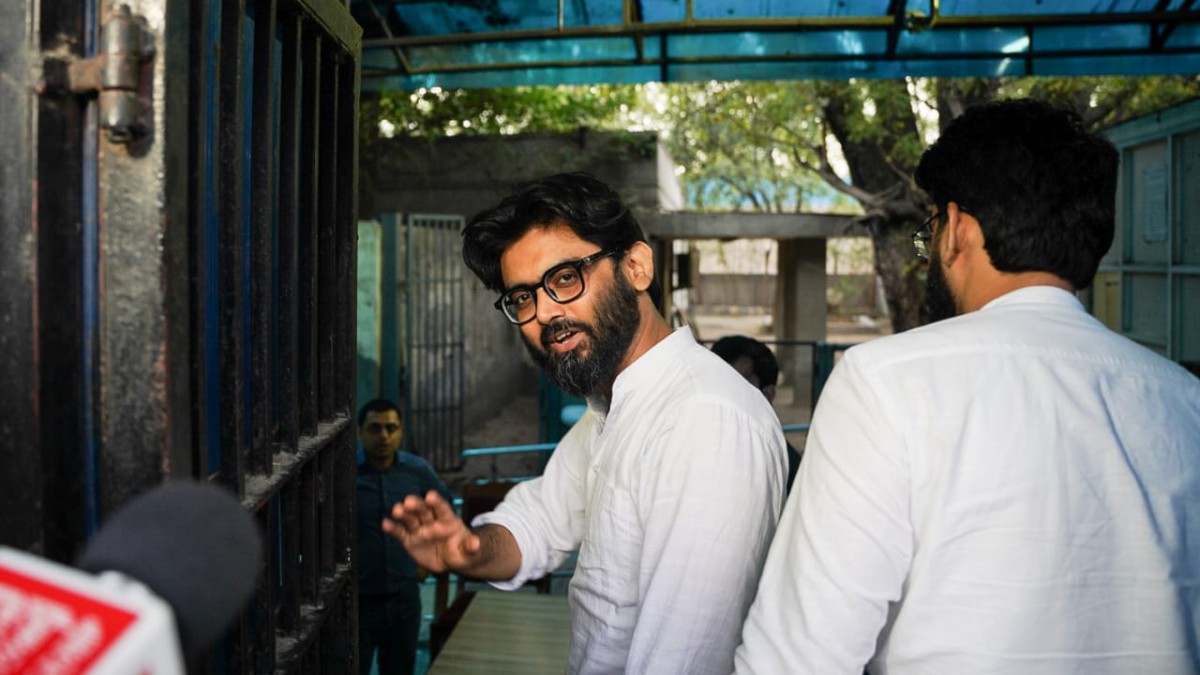
The article published in “The Print” in response to Sharjeel Imam’s interview raises important questions about the relationship between religious identity and citizenship, the limits of community autonomy, and the responsibilities of liberal politics. Unfortunately, it repeatedly substitutes suspicion for demonstration when addressing these questions.
I agree that Imam should have the right to question established political views and stress the need for Muslims to shape their political thinking and political future. I am not convinced that all the historical interpretations he presents are absolutely correct. Nor do I think autonomy alone can solve the problems facing the Muslim community. These issues matter and require more careful discussion and serious debate.
The Print characterises Imam’s interview as an Islamist manifesto, interprets his proposed autonomy as a move to create Pakistan within India, and treats liberal silence as evidence of complicity. It also moves beyond Imam to make sweeping assertions about Muslim political attitudes and thinking. These are considerable claims, and they carry substantial burdens of proof.
To make an argument, one must state what is proposed, explain the likely consequences, and assess them. A label cannot do all three.
It is necessary to distinguish between institutional autonomy and territorial sovereignty. Granting an institution authority over certain matters differs greatly from establishing a sovereign state. Although both may raise difficult questions, criticism should target the arrangement being proposed. Even the Constitution of India provides for a certain degree of institutional self-rule for minorities. Article 30 grants religious and linguistic minorities the right to establish and administer their own educational institutions. However, this does not mean that all demands put forward in the name of autonomy are valid. It does show that, in principle, minority self-administration and membership in the Indian constitutional framework are compatible and open to debate.
A serious critic should consider which powers should be decentralised and distributed, who should hold them, and what restrictions should apply when an institution’s independence could threaten individual rights or equal citizenship. Only by raising such questions can meaningful scrutiny take place. Simply referring to another Pakistan makes scrutiny harder because it treats the conclusion as final and closes the discussion.
The same care is necessary when discussing Imam’s relationship with the Constitution. His interview rejects the idea that preserving the present framework is sufficient and describes it as an obstacle to minority dignity. That is a radical position and invites strong criticism. But dissatisfaction with existing arrangements must still be distinguished from opposition to constitutional government itself. Imam should not be painted as anti-national without examining his actual arguments.
Disagreement over the Constitution’s design is inevitable. Otherwise, amendments would be seen as admissions of disloyalty. A citizen may value enforceable rights, representative government, and the rule of law while believing that some institutions distribute power unfairly and are historically discriminatory.
The most effective reply to Imam should point out the protections he omits, where his diagnosis is wrong, and why his alternatives could lead to worse outcomes. It should also recognise the difference between rights stated in a document and the real ability to enforce them.
A historical point needs greater clarity. While The Print overlooks the decentralising nature of the Muslim League’s demands, the Cabinet Mission’s May 1946 statement proposed an Indian Union in which the central government would have limited powers over foreign affairs, defence, and communications. All other subjects and residual powers would be left to the provinces. It also included provisions for provincial groupings. Decentralisation was a real element of the constitutional negotiations, regardless of conclusions about the parties’ motivations.

This does not prove Imam’s broader claim that Congress alone was responsible for Partition. The Mission’s statement also addressed the League’s demand for a separate sovereign Pakistan. The historical record should lead us to examine the various demands and the failed negotiations as a whole. It is wrong to omit the decentralised proposal to simplify a contemporary argument.
Above all, modern citizens should not inherit the political guilt of historical organisations. An Indian Muslim’s right to equal citizenship does not depend on defending or rejecting Jinnah or accepting the established interpretation of 1947. Historical responsibility rests with specific individuals and decisions, while citizenship concerns people living today.
The generalisations made by The Print about Muslims are particularly concerning in this regard. It claims that a common religious identity leads to a shared political ideology among both the elite and ordinary people. This assertion eliminates the possibility of disagreement, which any serious examination of political life must consider.
You cannot deduce a person’s views on electoral systems, federalism, welfare, clerical authority, or the rights of others from their religious affiliation. Such views must be examined on their own merits. Inferring them from religious identity turns political analysis into collective suspicion.
It also makes the debate impossible to resolve. If an outspoken Muslim is seen as revealing the community’s concealed intentions, while a Muslim who disagrees is dismissed as hiding them, no evidence can challenge the underlying assumption.
Religious language also merits more detailed examination, since Imam bases his political views on Islamic thought. Readers have the right to ask whether his approach offers protection to those who do not share his beliefs.
The decisive questions concern institutional consequences. Would non-Muslims enjoy equal rights? Could Muslims disagree with religious authorities? Would women participate equally in decision-making? Could a person challenge a community institution without fear of coercion?
A religiously expressed devotion to justice does not automatically answer these questions. Neither does religious language prove that the answers must be oppressive. We must examine the proposed rules and safeguards.
Here, my disagreement with autonomy as a sufficient solution becomes most important.
Muslim political power is not inherently accountable. The fact that some countries have Muslim majorities does not mean that a common religious identity ensures justice, prosperity, or freedom. A Muslim official, politician, or religious authority must meet the same rigorous standards of competence and accountability as anyone else.

An organisation may be independent of the state yet remain beyond the reach of the people it is meant to represent. Its financial situation may be opaque. Its leadership may be confined to a small circle. Its decisions may disregard poorer members, women, or internal critics.
Under such circumstances, autonomy might transfer power without sharing it.
A community empowerment plan must state how leaders are chosen and dismissed, how funds are audited, how decisions can be challenged, and how vulnerable members are safeguarded. It should also clarify how individual rights will be maintained, even if the organisation claims to represent the community.
As a Muslim, I see these requirements as part of a leader’s ethical responsibility. Religious identity cannot excuse injustice. Invoking local solidarity should increase scrutiny of authority because authority exercised in the community’s name carries a special obligation to serve it.
While political representation matters, its success should be measured by education, employment, safety, and access to public institutions. A representative is valuable only if they enable people to make real choices and ensure fair treatment. Visibility alone does not guarantee these outcomes.
This is a constructive disagreement with Imam: the demand for a stronger political voice is legitimate, but the design of that voice matters more.
His interview also complicates the suggestion that his politics amounts to an indiscriminate rejection of secular allies. He explicitly identifies the BJP-RSS as more dangerous than the Congress, advocates alliances with regional and left parties, and warns against electoral interventions that help the BJP by dividing opposition votes. One may dispute his strategy, but any fair criticism should keep these distinctions visible.
A clearer criterion should be established for the charge of liberal silence. Liberals ought to consider the arguments put forward by those whose rights they support, and no one should be exempt from criticism simply because they belong to a minority or face state prosecution.
That is not the same as supporting a person’s political programme. Due process would offer little protection if it depended on agreement with the person’s ideology.
The absence of public condemnation does not mean approval. If a critic claims that there is widespread complicity, they must show which propositions were supported and explain why that support is objectionable. Without such evidence, silence becomes a demand that people constantly prove their innocence by condemning others.
We should support Sharjeel Imam because Muslim political thought and activism deserve the same serious engagement afforded to other political traditions. That includes rigorous disagreement, attention to evidence, and scrutiny of consequences.
We should create space for Sharjeel Imam to explain how each of his proposals for collective empowerment advances individual liberty and internal accountability. I also want his critics to distinguish between his actual proposals and the intentions they attribute to him.
Muslim dignity requires protection against discrimination and against unaccountable leadership within the community. A meaningful debate should pursue both. It should give Imam’s questions a hearing, examine his answers carefully, and resist turning disagreement with one Muslim thinker into an indictment of Muslims as a people.
The information presented in this article represents the personal viewpoints of the author and does not necessarily reflect the opinions of The Observer Post.