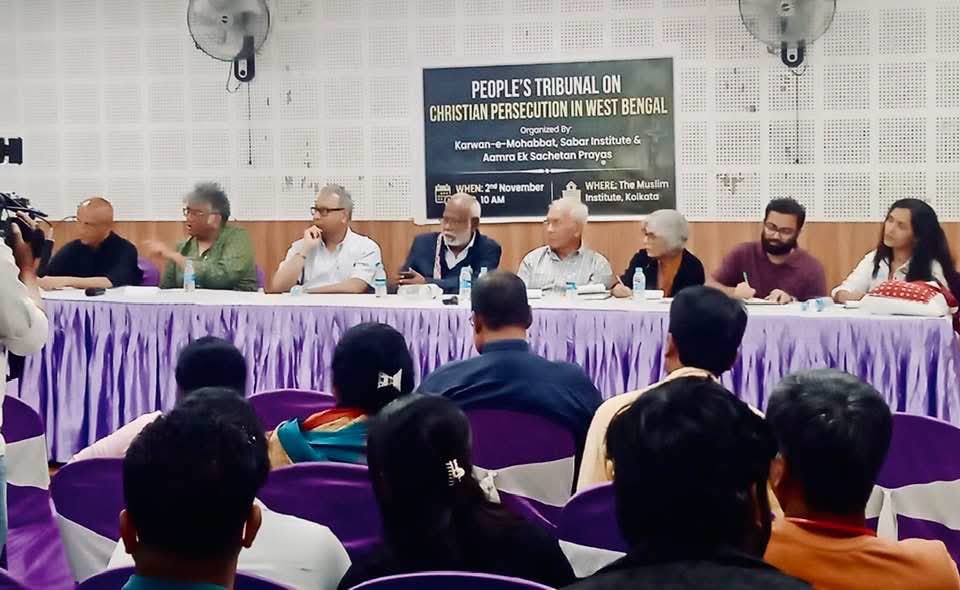
Allegations of harassment, physical assaults, vandalism and threats of social boycott against members of the Christian community in different parts of West Bengal were presented at a public tribunal in Kolkata on Monday.
The hearing, held at the Muslim Institute under the initiative of Karwan-e-Mohabbat, brought together victims, social workers, former public representatives and civil society members to document complaints concerning religious freedom and minority security.
The tribunal heard testimonies from 10 am to 5 pm. Several complainants alleged that even small prayer gatherings inside private homes had come under scrutiny, with accusations of religious conversion sometimes followed by intimidation, disruption of worship and violence.
Organisers said the testimonies and complaints would be compiled into a report and submitted to the state and central governments, along with the appropriate judicial authorities. They also said they were considering legal assistance and broader social support for those reporting harassment.
Woman From Hingalganj Alleges Prayer Meeting Was Disrupted
Among those who testified was a woman from Hingalganj in North 24 Parganas, who alleged that a group of people she identified as associated with the Hindu Jagran Manch arrived at her residence on August 30 while a prayer gathering was underway.
She said the group accused her of attempting to convert others, an allegation she denied.
According to the woman, she regularly prayed at home with a small group of acquaintances who shared her faith in Jesus. She added that some friends who had studied at Jadavpur University also visited her to learn musical instruments.
She alleged that the gathering was disrupted, household property was damaged and several attendees, including women, were assaulted.
The woman said that after she contacted the police, she and others were taken to the police station and questioned from around 11.30 am until 7.30 pm.
She further claimed that her life in the village had become difficult since the incident. She alleged that she could no longer organise prayer meetings at home, acquaintances were discouraged from visiting her, and people who had attended the gatherings faced monitoring and threats.

She also said that those who came to her for music lessons had been prevented from visiting.
Harsh Mander Calls for Wider Social Support
Writer and social activist Harsh Mander, who attended the hearing, expressed concern over what he described as a growing atmosphere of hostility towards religious minorities in West Bengal.
He said Christians, alongside Muslims, were facing instances of targeting and intimidation. Mander argued that small prayer groups operating outside established churches, particularly those involving women and economically vulnerable communities, were especially exposed to such pressure.
“This is not just a problem for Christians, it is a problem for the entire society,” he said.
Referring to Bengal’s pluralistic and liberal traditions, Mander invoked the legacies of Swami Vivekananda, Rabindranath Tagore, Kazi Nazrul Islam and Lalon Fakir, saying communal hostility threatened the inclusive social ethos associated with these figures.
He called on people from all communities to speak out whenever a religious group faced an alleged attack. Alongside legal assistance for victims, he stressed the need for a broader social initiative to support those facing intimidation.
Christian Council Reports More Than 50 Complaints
Reverend Dr Arpan Rana, state secretary of the National Christian Council, alleged that small churches and Christian fellowships in several districts had repeatedly faced attacks and disruptions.
He said representatives of the organisation had met the Governor to raise the issue. Although the organisation had repeatedly sought an appointment with the Chief Minister, it had not yet received an opportunity to meet her, he claimed.
Rana said complaints had also been submitted to the President, Prime Minister, Supreme Court and Human Rights Commission.
According to him, the organisation had received more than 50 complaints or reports of incidents, including 28 from Purba Medinipur alone.
He alleged that in some cases, complaints brought to the attention of district Superintendents of Police had not resulted in the action expected by complainants.
Rana further claimed that people accused in some incidents had identified themselves as representatives or members of the BJP, Bajrang Dal or RSS. These allegations have not been independently established.
“One of the objectives of this tribunal is to document the statements of the victims and convey them to the administration,” Rana said.
Jawhar Sircar Alleges Police Inaction in Many Cases
Former MP Jawhar Sircar also raised concerns about the alleged attacks in a social media post following the hearing.
“Sad to sit through the painful hearings of the People’s Tribunal on Christian Persecution in West Bengal today in Kolkata, listening to case after case of helpless Christians who have been attacked in the state over the past six months. Forty-eight incidents of violence against Christians have been recorded in six months, but in most cases, the police have refused to register FIRs. In most cases, small churches and prayer groups meeting in the homes of poor people have been the targets,” Sircar wrote.
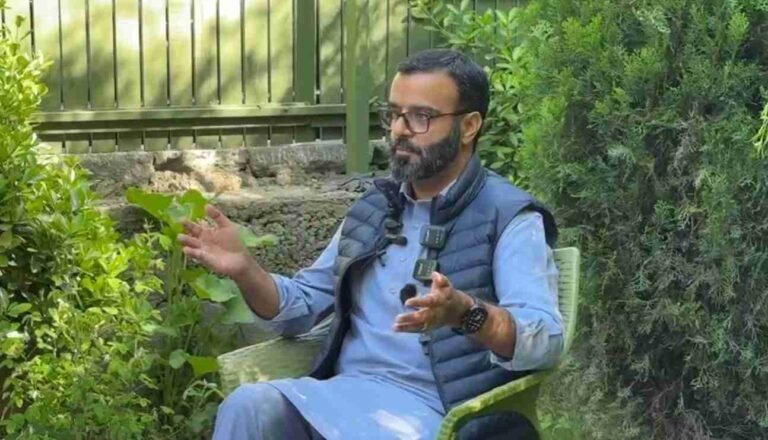
He also alleged that political competition and shifts in political allegiance had contributed to the situation, accusing sections of local political networks and police personnel of enabling or failing to prevent attacks.
Sircar further claimed that those involved in the alleged violence believed they could act without facing legal consequences.
The allegations regarding the incidents, police response and political involvement remain claims made by the speakers and have not been independently verified.
The tribunal sought to bring together accounts of alleged harassment and examine concerns over the ability of Christian communities to practise their faith without intimidation. Organisers said the proposed report would document the testimonies and complaints and be shared with relevant authorities.