Anusreeta Dutta
The most disturbing thing about an illegal mine cave-in in Jharkhand’s coal belt is not the collapse itself. And that is what happens next. There is a command sequence when the roof caves in inside a licensed mine. The staff is properly registered. There is an operator on the mine. There are safety records. Inspectors can tell where it is. Rescuers know their environment. Families deserve answers. An illegal mine exists in another reality.
The employees may be part-time. There might be no formal records of the excavation. The mine may be abandoned on paper, but it is still operating underground. Coal miners may be working for a few middlemen. It becomes very difficult to know how many people were inside when the earth gives way. That’s where the saying “no body, no crime” takes on a sinister meaning. Just because a body is missing doesn’t mean a crime occurred. It can’t. But without a believable record of who entered an unlawful mine, a death can become an allegation, a rumour, or a disputed number rather than a confirmed workplace death. This uncertainty can help the black market.
When the mine is invisible
The situation became clear in July 2025, when reports came in of a possible collapse at an abandoned coal mine in Jamunia, Dhanbad’s Baghmara district. Some residents and political figures suggested that several people may have been inside illegally collecting coal. They were said to number anything from nine to a dozen. But first, the police, administration, and Bharat Coking Coal Limited said they found no evidence of a collapse. The uncertainty was unprecedented. When a registered miner disappears, there is an employer, a roster, and a workplace. Who was the official inside an illegal pit? Maybe nobody knows.
A few days later, the National Disaster Response Force and BCCL’s rescue wing began searching for survivors. But the teams found no survivors or any bodies. Officials said the operation was made difficult by heavy weather, and they had no firm evidence that anyone was stranded. The incident illustrates the key problem with the illegal mining economy: the same informality that makes it hard to regulate also makes it hard to count victims. It’s easier to forget people you can’t count on.
The black market doesn’t need a death certificate
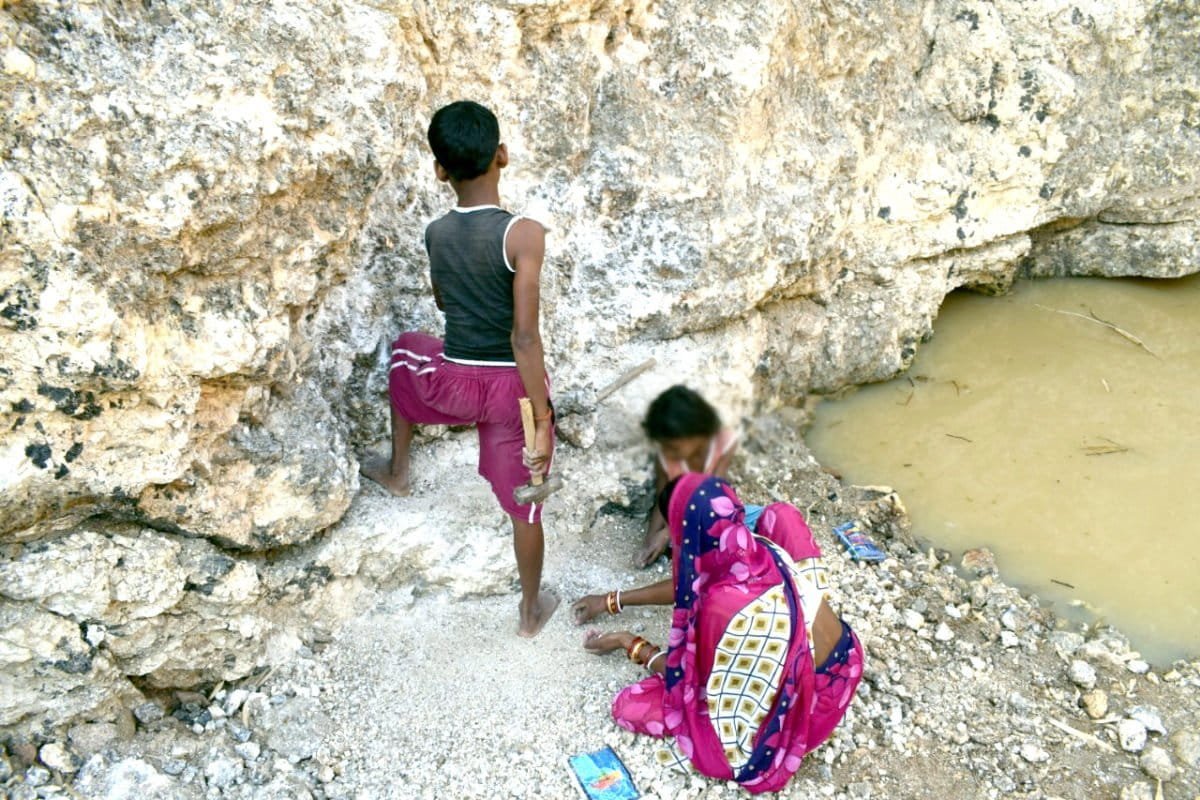
The illegal coal industry in Jharkhand doesn’t exist because people choose to work in unsafe pits. It’s part of a larger network. Coal is sourced from abandoned or otherwise unobtainable locations. Men are brought in. The coal is transported through local grids. Transporters transport it. Traders know it. At the end of the day, consumers buy coal that could have been illegally brought into the market. At the bottom of this hierarchy are those who face the greatest risk of physical harm and have the least institutional protection.
A labourer may be employed in a pit for a day’s hire. Those who make a living moving coal may never have to set foot inside one. There is a strong asymmetry here. If the mine collapses, the labourer will be trapped underground. But the economic chain that incentivised entry into that pit can stay on the ground. That’s why it’s not enough to put the spotlight on the person who went into the mine. Illegal mining is more than an employment hazard. It is a political economy of extractivism.
Jharkhand has seen the pattern repeatedly
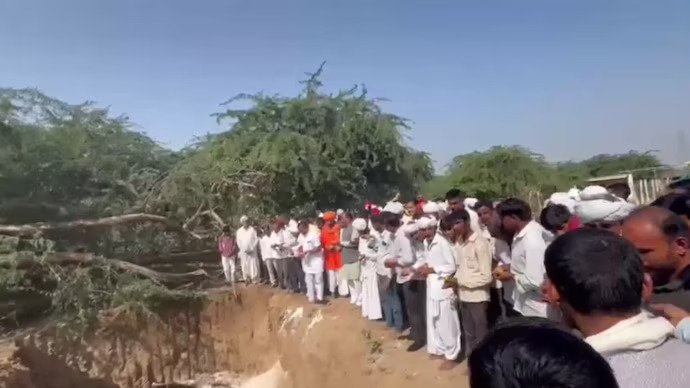
The Ramgarh district incident shows how quickly illegal mining can turn deadly. In July 2025, four people were killed and four others injured when part of an abandoned Central Coalfields Limited mine in the Karma project area caved in during alleged illegal mining. Police said people are scavenging coal from the abandoned mine. Md Imtiyaz, Rameshwar Manjhi, Wakil Karmali, and Nirmal Munda were the four people killed. The next year, Ramgarh had another tragedy.
In June 2026, four guys died after entering an illegal coal mine near Argada. Police say the deaths were due to a lack of oxygen or exposure to dangerous gases in a 40-foot-deep trench. All four bodies were recovered and sent for postmortem examination. The cases differ in their circumstances, but they share one commonality: workers entered into dangerous conditions created by an illicit extraction industry. And the danger doesn’t end with death.
What happens to the family?
A death from illegal mining may present families with a second problem: proving the death was on the job. This is particularly hard when there is no formal employer, job contract, attendance register, or safety record. A family may know a son, husband, or brother has gone to dig coal. But knowledge isn’t always proof. If the body is not found, the family will be left with even more heartbreaking uncertainty.
The absence of a response can stall anything from compensation claims to lawsuits. That’s why mine safety has to be included in documentation. A worker’s existence is invisible to the formal economy and can become invisible again after death.

The ugly side of abandoned mines
Jharkhand’s abandoned mines pose a unique governance challenge. A mine may be legally idle in terms of coal production, but that doesn’t mean it’s economically worthless. Unchecked, remaining coal reserves may lead to illegal extraction. And the physical geography itself can make enforcement difficult: ancient pits, underground galleries, overgrown areas, unstable ground, and dispersed excavation sites all create spaces where illicit activity can be difficult to monitor consistently.
A 2025 analysis of Ramgarh’s economy, which is heavily dependent on coal, found that illicit coal gathering continued on a large scale and that local households and businesses had strong economic ties to the coal industry. It also highlighted the communities’ dependence on coal companies for infrastructure and services. This matters because illicit mining is not just a matter of greed. For some workers, it’s a matter of survival. When there is little formal work to be found, abandoned mines can become informal workplaces. This makes the work dangerous. It makes the system more susceptible to exploitation.
People who disappear aren’t just statistics
There is a tendency to talk about unlawful mining in tons. How much coal did they steal? How much revenue did the company lose? How many unlawful pits were discovered? How many raids were there? These are important questions to consider. However, the human cost might be obscured. Every illegal pit has an employment tale. Someone entered because they saw an opportunity to profit. He got a job. The coal was transported somewhere. It has been purchased.
A family waited for him to return. When the mine collapsed, the last person in the chain was generally the one with the least power. That’s why the missing-body issue matters. A body is more than just evidence. It is a person’s last connection to the state.
The state cannot govern what it does not count
The answer is not simply to have more raids after an accident. Jharkhand needs to put in place a more robust system to identify and monitor abandoned and vulnerable mining sites, especially those with repeated instances of illegal excavation. But enforcement has to be accompanied by documentation and social support. Local governments need tools to track missing personnel after suspected mining mishaps. Families should have a simple way to report missing persons. Instead of determining whether an event took place based on competing claims, sites of illegal mining accidents should be evaluated independently. There is also an economic problem to solve.

If communities around abandoned mines have no viable alternatives, closing one illegal pit without addressing the conditions that created the labour supply may push extraction elsewhere. So the move away from coal can’t be limited to mine closures. It means creating job opportunities that decrease the need for illegal mining. The true black market thrives on obscurity.
Anusreeta Dutta is a columnist and climate researcher with experience in political research analysis, ESG research and energy policy.
The information presented in this article represents the personal viewpoints of the author and does not necessarily reflect the opinions of The Observer Post.