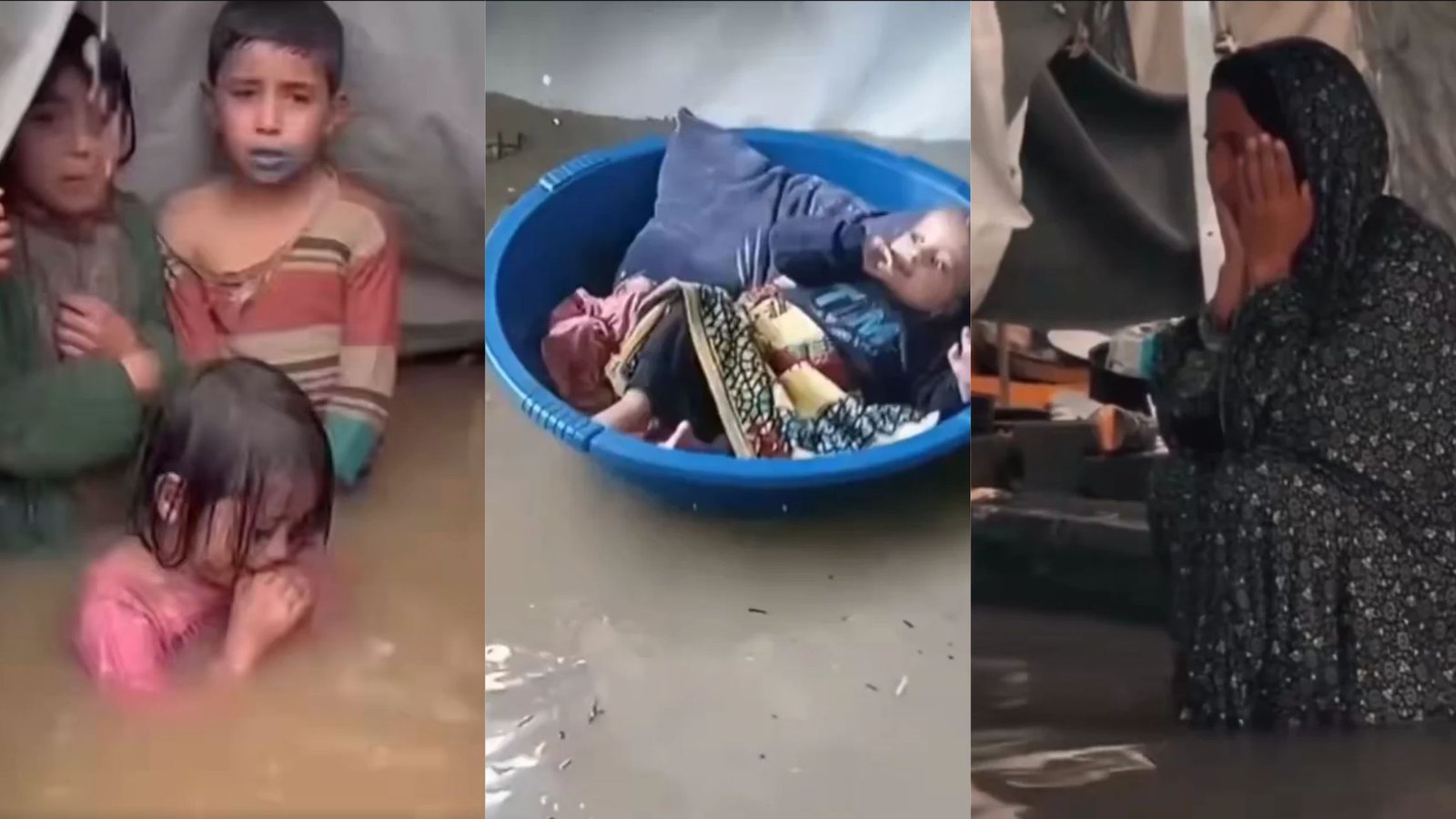
A nine-month-old Palestinian infant has died from hypothermia in a displacement camp in southern Gaza, as thousands of families struggle to cope with falling temperatures, heavy rainfall and inadequate shelter.
Kinan Ahmed Raqiq died in Khan Younis after overnight temperatures dropped, his father and a doctor told the AFP news agency on Thursday.
A doctor, who spoke on condition of anonymity, confirmed that the infant had died from hypothermia.
His father, Ahmed Raqiq, said he woke up to find his son’s skin had turned blue and rushed him to Nasser Hospital, but the child had already died.
“I woke up only to see his skin had turned blue so I rushed him to Nasser Hospital, but he had already died from hypothermia and frozen to death,” he told AFP.
“I am in complete shock. I found myself holding my son wrapped in a burial shroud,” he said outside the hospital.
Gaza Civil Defence spokesperson Mahmoud Basal also confirmed the infant’s death following exposure to extreme cold, according to Palestinian news network Al-Quds.
Flooding and damaged shelters leave families exposed
The death comes as Gaza faces worsening humanitarian conditions following heavy rainfall and flooding that damaged thousands of makeshift shelters.
The UN Office for the Coordination of Humanitarian Affairs (OCHA) said storms had affected around 26,000 households as of November 8. Around 65 per cent of Gaza’s population continues to live in tents or other temporary shelters.
Five people, including three children, were also killed after a sandy embankment collapsed onto tents following the recent rainfall.
Karl Baker, head of the International Organization for Migration’s (IOM) Gaza programme, said he witnessed the impact of flooding during visits to displacement sites around Gaza City.
“Worn-out tents have collapsed. Children are wading through knee-deep, contaminated floodwater. Families have lost what few belongings they had left,” Baker said.
He said IOM had delivered thousands of tents and tarpaulins in recent weeks, but supplies remained far below the scale of need.
Baker called for stronger and longer-lasting shelter options, including timber emergency shelter kits, prefabricated relief housing units and caravans, to be funded and allowed into Gaza.
Aid agencies seek access to winter supplies
Baker also highlighted the need for drainage systems and better site management to protect displaced families from flooding. IOM teams and partners have been building drainage channels and using sandbags to protect pathways and shelters in some locations.
However, he said most displaced people did not have access to such support. The agency also has deflooding pumps, community toolkits and tens of thousands of sandbags awaiting entry into Gaza.
“We urgently need funding and in-kind donations of tents, tarpaulins and blankets to meet the needs of displaced families,” Baker said, urging countries to help remove restrictions on humanitarian supplies entering the territory.
Meanwhile, the United Kingdom, Qatar and Jordan led a coalition of more than 50 countries and organisations calling on Israel to allow the immediate entry of essential shelter materials, fuel, water, sanitation and medical supplies.

The coalition warned that many Palestinians remained without adequate shelter and faced the risk of hypothermia, respiratory infections and waterborne diseases.
UNICEF spokesperson James Elder said the recent flooding and cold were an indication of the conditions Gaza could face as winter approaches.
“It’s very important to know how bad things are in Gaza. It’s not yet winter,” Elder said. “We’re weeks away from winter, so we are getting unprecedented rain and cold.”
Israeli caretaker Prime Minister Benjamin Netanyahu said Israel had allowed supplies, including 91,000 tents, into Gaza and blamed Hamas for the suffering of Palestinians.