The International Court of Justice (ICJ), the United Nations’ top court, on Thursday ruled that Myanmar committed genocide against the Rohingya Muslim minority during military operations in 2016 and 2017.
The landmark judgment is the first time in its 80-year history that the court has held a state responsible for genocide.
In its ruling, delivered by a nine-to-six majority, the ICJ found that Myanmar’s security forces carried out indiscriminate killings, sexual violence, executions of men and the deliberate burning of Rohingya homes in several locations in Rakhine state.
The court said security forces killed thousands of Rohingya civilians, committed widespread sexual violence and carried out extreme acts of violence against children. It also found that Rohingya fleeing towards Bangladesh were attacked.
The court said the estimate that around 10,000 Rohingya were violently killed during the 2017 military operations was supported by the evidence.
Presiding judge Iwasawa Yuji said the scale and nature of the atrocities went beyond what would have been required to punish the population and indicated an intention to destroy a substantial part of the Rohingya community.
“The court is of the view that the only reasonable inference that can explain Myanmar’s actions is an intention to destroy” the Rohingya population in northern Rakhine state, he said.
Myanmar had argued that its military operations were legitimate counter-terrorism measures targeting a Rohingya armed group. The court rejected this defence, finding that the military had not distinguished between militants and civilians.
The Gambia Filed Case Against Myanmar
The case was brought against Myanmar by The Gambia in 2019, alleging violations of the 1948 UN Genocide Convention.
The Gambia argued that Myanmar’s military had committed mass killings, sexual assaults, torture, enforced disappearances and the destruction of Rohingya villages during operations in 2016 and 2017.
Myanmar had attempted to challenge the court’s jurisdiction, but the ICJ rejected its objections in 2022.
The Rohingya, a predominantly Muslim ethnic minority, have faced decades of discrimination and persecution in Myanmar. A 1982 citizenship law effectively excluded most Rohingya from recognition as citizens, leaving many stateless.
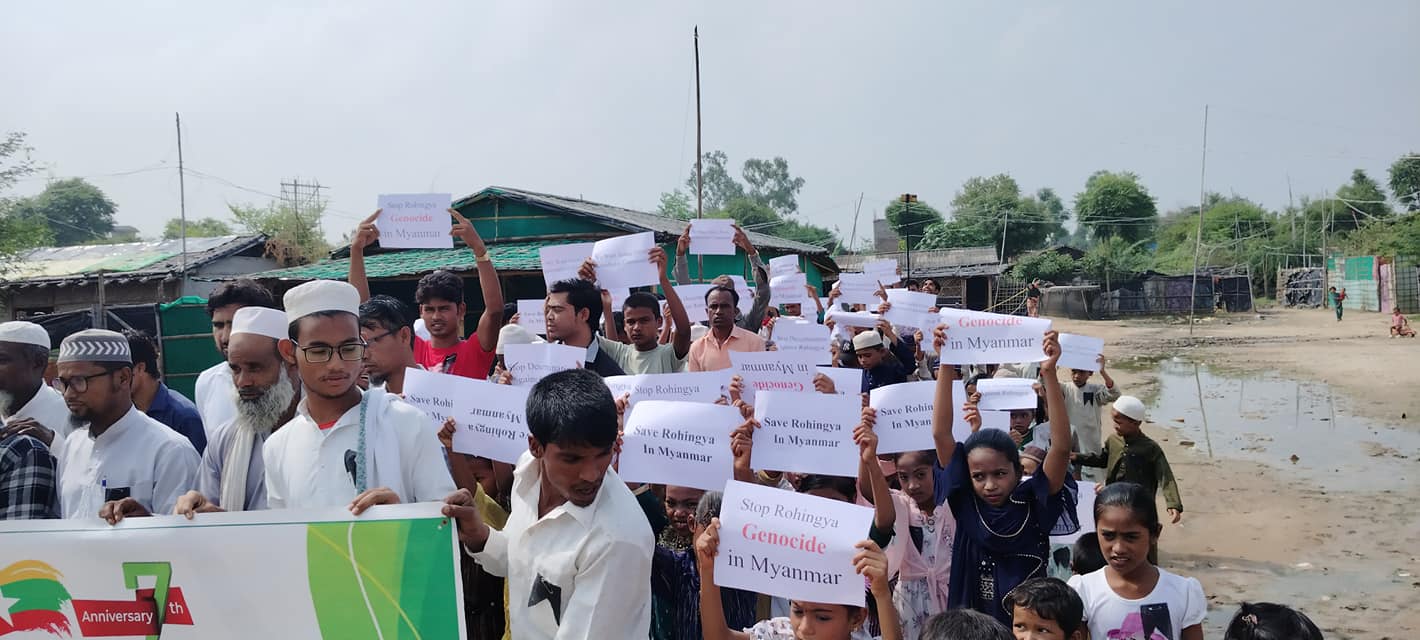
During the 2017 military crackdown, more than 740,000 Rohingya fled to neighbouring Bangladesh. More than a million Rohingya refugees are now living in the country, many in camps around Cox’s Bazar.
Court Orders Myanmar to Make Reparations
The ICJ directed Myanmar to provide reparations to the Rohingya, including measures to facilitate their safe, voluntary and dignified return to their places of residence and the reunification of families.
It also ordered the country to return property that had been lost or damaged and ensure the community’s protection against future discrimination and persecution.
The court’s rulings are final and binding, with no right of appeal. However, the ICJ does not have its own enforcement mechanism or the power to impose criminal penalties. Its decisions can be referred to the UN Security Council, which may consider measures to implement them.
Myanmar’s compliance with the latest ruling remains uncertain. The country’s military leader, Min Aung Hlaing, who was in charge of the armed forces during the 2017 operations, is now the country’s leader after overthrowing the elected government in a 2021 coup.
Meanwhile, much of Rakhine state is controlled by the Arakan Army, an ethnic armed group that has also faced allegations of abuses against civilians. The region remains affected by Myanmar’s ongoing civil war, raising further concerns about the safety and conditions Rohingya refugees would face if they returned.
Significance for International Justice
The ruling is being viewed as a significant development in international efforts to hold states accountable for genocide. It also comes amid growing scrutiny of the ICJ’s role in other cases involving allegations of genocide, including the case brought by South Africa against Israel over its military campaign in Gaza. Israel denies the allegations.
The United States and Canada had previously recognised the atrocities against the Rohingya as genocide.

UN High Commissioner for Human Rights Volker Türk welcomed the judgment, praising the courage of victims and survivors whose testimonies and experiences were presented before the court.
For Rohingya survivors, the ruling carries significance beyond its legal implications. Murshid Alam, who fled Myanmar as a child and now advocates for young people in Bangladesh’s refugee camps, described it as a turning point.
He said the judgment showed that the world recognised the community’s suffering and would not allow it to be erased.