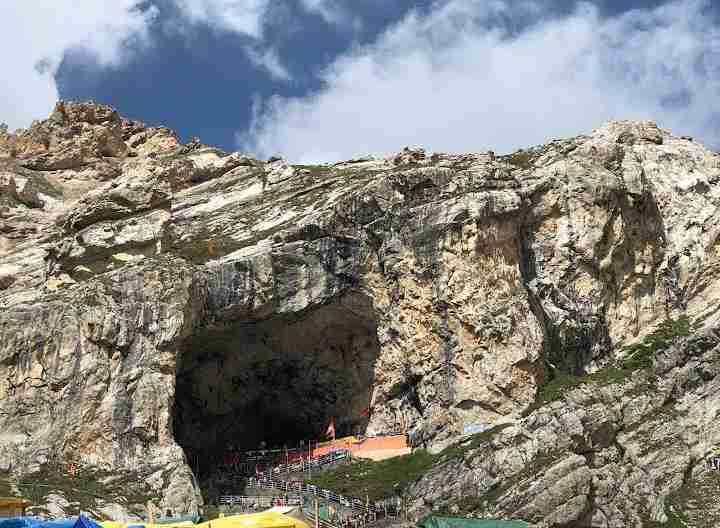
A new scientific study has found that more than 84 per cent of the mapped slopes along the Amarnath pilgrimage corridor in Jammu and Kashmir are at moderate to high risk of landslides, with 16.2 per cent classed as highly susceptible.
The study was published in the journal Scientific Reports on November 10. It looks at the Baltal–Amarnath Cave–Panjtarni–Poshpathri corridor in the upper Sind catchment of the Kashmir Himalaya.
According to Greater Kashmir, 68.1 per cent of the mapped slope facets fall in the moderate-susceptibility category and 15.7 per cent in the low category. These percentages show how slope facets are distributed and not the share of the corridor’s total land area, a distinction the paper makes itself.
Researchers recorded 49 landslide events along the route, including 28 debris flows, 15 rockfalls, two debris slides, two rockslides, one creep zone and one rock topple. About 71.4 per cent of them occurred in areas the study had classed as high-risk.
The study names rainfall as a major trigger. The pilgrimage runs in July and August, when snow cover is at its lowest and the monsoon brings heavy rain. It refers to several cloudburst events along the Sonamarg–Baltal–Amarnath–Poshpathri corridor, including incidents in 2015 and 2021 and two in 2022.

Steep slopes and fragile rock formations add to the danger, and the researchers say that human activity makes things worse, in particular road widening and other construction. Climate data used in the study showed annual mean temperatures rising by an estimated 0.05 degrees Celsius a year, which the authors list as another reason for concern.
The study proposes eight specific measures to improve slope stability and reduce the risks along the yatra corridor, and calls for safer facilities for pilgrims.
Between 3.5 lakh and more than 5 lakh people visit the Amarnath cave each year. The findings are significant because most of them follow the corridor over a few weeks when slope failures are most likely.
An earlier assessment by the National Remote Sensing Centre, from 2013, had also found that the Sonamarg–Baltal route has more landslides than the longer Pahalgam–Chandanwari route.