Sayima Ahmad
As November is almost over, the whole month was marked as Islamophobia Awareness Month (IAM) across the globe. During the month, members and volunteers of non-profit organisations raised awareness of the discrimination and hostility experienced by members of the Muslim community. The messages for change were amplified through seminars and programmes held at universities, schools, council offices, workplaces, mosques, churches, synagogues, and community halls.
The month-long campaign takes place every November, and the 2026 theme was “Don’t Let It Slide”, which emphasises that challenging Islamophobia is everyone’s responsibility. The organisers stressed that whether in the classroom, the workplace, our communities, or everyday interactions, we should not overlook discriminatory comments, behaviours, or assumptions.
Small actions, such as speaking up, challenging stereotypes, listening to others, and showing solidarity, can make a meaningful difference.
In November 2025, Islamophobia Awareness Month was marked under the theme “Flip the Script”. Attendees, in collaboration with the organisers, discussed flipping the script by challenging stereotypes and reframing the narratives surrounding Islam and members of the Muslim community.
This year’s November theme was selected after thinking about the origins of hate and negative narratives against Muslims. Later, the organisers figured out that prejudice emanates from small things we let slide every day. These include stereotypical jokes cracked in the office or classroom, WhatsApp forwards people share without verifying, the slurs we hear on the streets or on a bus, and the suspicion we raise after noticing anyone wearing a skull cap or hijab. These things are enough to understand how small acts of hate, when left unchecked, turn into bigger hatred that results in violent attacks and large-scale discrimination.
I will discuss Islamophobia Awareness Month very briefly. The initiative was launched in the United Kingdom in 2012 by a coalition of organisations, including Muslim Engagement and Development (MEND), human rights organisations, and other British organisations.
The month is dedicated to saying one simple thing: hate and prejudice against Muslims anywhere will not be tolerated or ignored. The month encourages us to replace fear with empathy and build a society where everyone is respected, valued, and free from discrimination. Speakers at events also highlight Muslim history, culture, and societal contributions.
While welcoming the programme at the University of Bradford in the United Kingdom, Professor Shirley Congdon lauded the initiative, saying, “We recognise that true change begins with understanding. This Islamophobia Awareness Month, let us plant the Seeds of Change by fostering dialogue, compassion, and respect within our university community. Together, we can challenge prejudice and nurture a culture of acceptance that allows every individual to thrive”.
The small campaign that began in the UK has now become a global movement observed across the world, including the United States, Canada, and Australia. This year, the awareness programme was not limited to events and seminars. Muslim youth took this opportunity to take it to the next level by narrating their stories on social media platforms. They shared how they are stopped at airports, asked, “Where are you really from?”, and mocked for wearing hijab or fasting. The youth expressed that this is not about victimhood but about visibility.
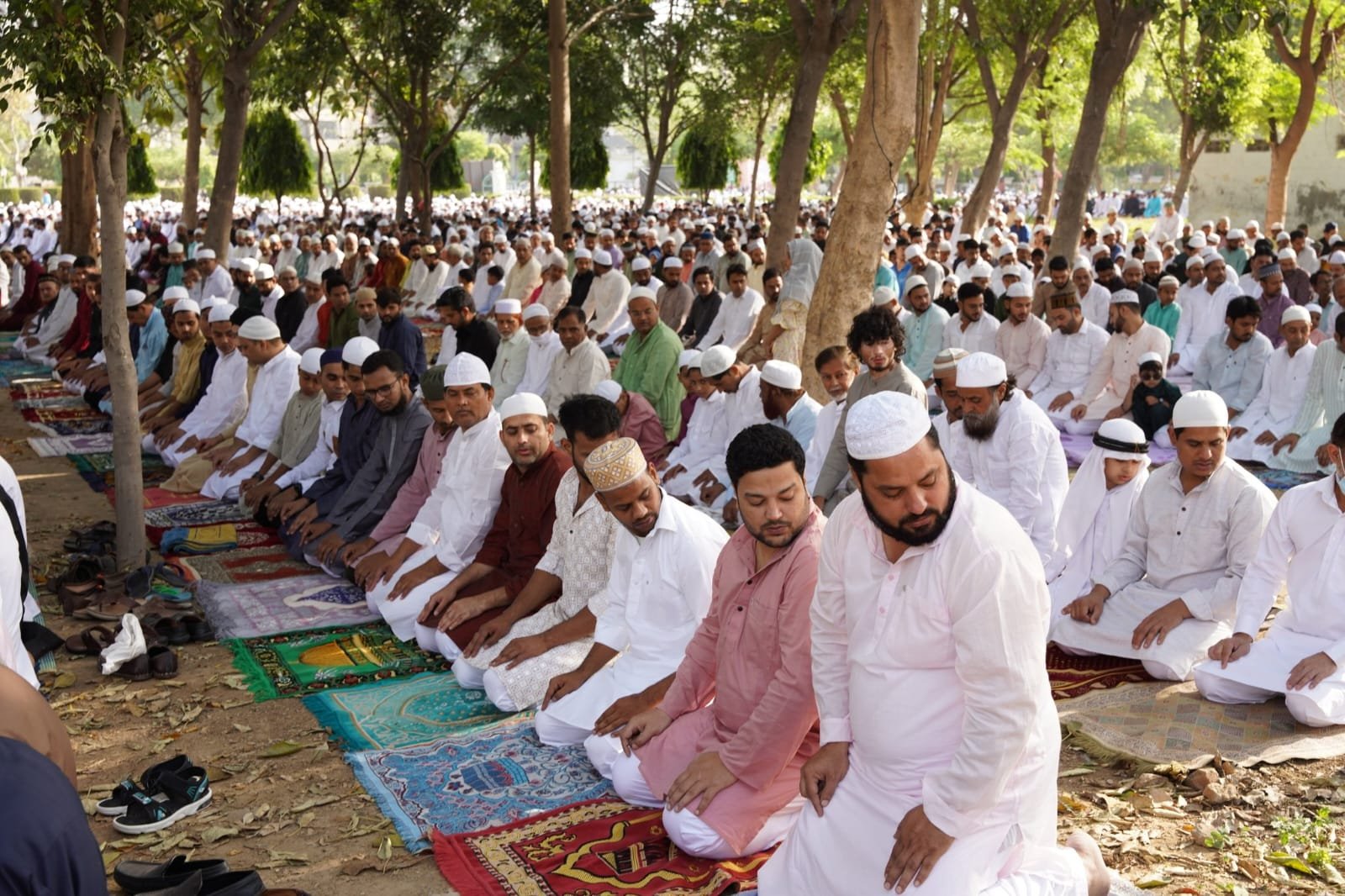
Now, here is the reason behind the whole story. When the world was observing Islamophobia Awareness Month, no such programmes were held in India. This is an alien concept for people living in India. Why does this matter in India? Because Muslims are India’s largest religious minority and second-largest religious group, making up roughly 14 per cent to 15 per cent of the country’s population. Currently, the majority of reports of hate crimes against Muslims are emerging from India, but unfortunately, not even Indian Muslims are aware of the campaign.
While organisers were putting their heart and soul into the initiative, educating people on how to eradicate anti-Muslim hate and rhetoric from society, the opposite was being taught in India. Not shockingly, hundreds of reports of hate crimes against Muslims emerged across India in the very same month.
In one incident, a school named St. Mary’s School, located in southern Kerala, hosted an event in which children were made to perform a play on stage, portraying other children dressed in typical Arab attire as thieves and terrorists. The play concluded with children in Muslim dress being shot down on stage in front of everyone. Parents clapped; teachers watched, but no one stopped it. All the children present there, both those who performed and those who watched, were being taught hate as entertainment.
Similar incidents were reported from other schools across Indian states. In the past, APJ Abdul Kalam Prathmik Shala, a primary school located in Gujarat’s Bhavnagar, made female students wear black burqas and carry toy guns, depicting them as terrorists. Think about it: what do students and children learn in that moment? They are being brainwashed into believing that anyone seen in a skull cap or a burqa is dangerous and deserves to be killed. And that killing them is something to celebrate.
In other disturbing incidents that emerged during festival seasons in India, pandal themes were installed where men wearing skull caps and kurta pyjamas were shown as terrorists. The narratives were spun to portray Muslim men as those who lure and rape women.
However, the reality differs from these staged dramas. Annual reports from the National Crime Records Bureau (NCRB) show that offenders are typically immediate family members, relatives, neighbours, employers, or acquaintances within the survivor’s daily social and economic circles. Additionally, a recent report released by the Association for Democratic Reforms and National Election Watch revealed that 134 sitting MPs and MLAs in India face accusations in cases involving crimes against women. Among these, the BJP has the highest number of sitting MPs and MLAs with such cases, at 44.
In other pandals, a bunch of women were seen performing a play on stage and hunting down men wearing Muslim dresses. The audience was heard whistling, cheering, and filming the act. Here, hate was celebrated as a festival theme.
Ultimately, these propagandist events create prejudice against Muslims that leads to brutal attacks. Over 30 fatal mob lynchings have been reported in 2026 so far alone. Highlighting a few cases, a Muslim man identified as Sikandar Khan, a resident of Charkuppa village in Bihar’s Aurangabad district, was beaten to death at a hospital in Rafiganj, where he had gone to donate blood to a Dalit woman.
In the same state, a 65-year-old man named Abdul Salam was beaten to death with an iron rod after he was accused of stealing bricks belonging to a resident, Manish Kumar Ram. That is not a mistake; it is a pattern.
In a case from a few days ago, a Muslim teacher identified as Mohammad Afzal was assaulted in Uttar Pradesh’s Barabanki because of his religious appearance. Afzal claimed that while he was riding his scooter, attackers threw bricks at him, and one person attempted to pull his beard.
Ironically, the country that needed this month most did the opposite. People here not only watched as mute spectators but also allowed hate to be performed on stage in schools, colleges, and pandals. Educational institutions should have taught tolerance and harmony through seminars and programmes, not hate.
The Indian mainstream media should have maintained its ethical journalism and promoted brotherhood during the whole month instead of creating a scenario in which Muslims are portrayed as a threat in India. Leaders should have really implemented “Sabka Saath, Sabka Vikas” on the ground rather than fear-mongering by targeting the Muslim community during their election rallies and campaigns. We cannot be a Vishwaguru while ignoring what the world is learning.
Hence, the theme of the year, “Don’t Let It Slide”, fits India more than anywhere else. We are all well aware of the fact that we often let the joke slide; we let the stereotypical jokes made about Muslims slide as we are pressurised to accept these things as “comedy”. We let the hate speech by political leaders slide; we let the fake WhatsApp forwards that target Muslims slide. Then, one day, we wake up and see a lynching of a Muslim man and wonder, “How did this happen?”
The story concludes that it happens because we let it slide.
November is almost over. But it’s still not too late to begin, and it’s not too late for Indian Muslim youth to observe this month. Indian leaders should decide whether they will continue to teach hate as entertainment or an obligation for votes, or whether they will finally join the world and teach respect as a value.
The information presented in this article represents the personal viewpoints of the author and does not necessarily reflect the opinions of The Observer Post.