
















































The Allahabad High Court has strongly rebuked the Uttar Pradesh administration for restricting the number of Muslim worshippers at a mosque in Sambhal district to just 20 during the holy month of Ramadan, saying the State is duty-bound to maintain law and order and cannot use perceived security concerns as a justification for limiting religious practice.
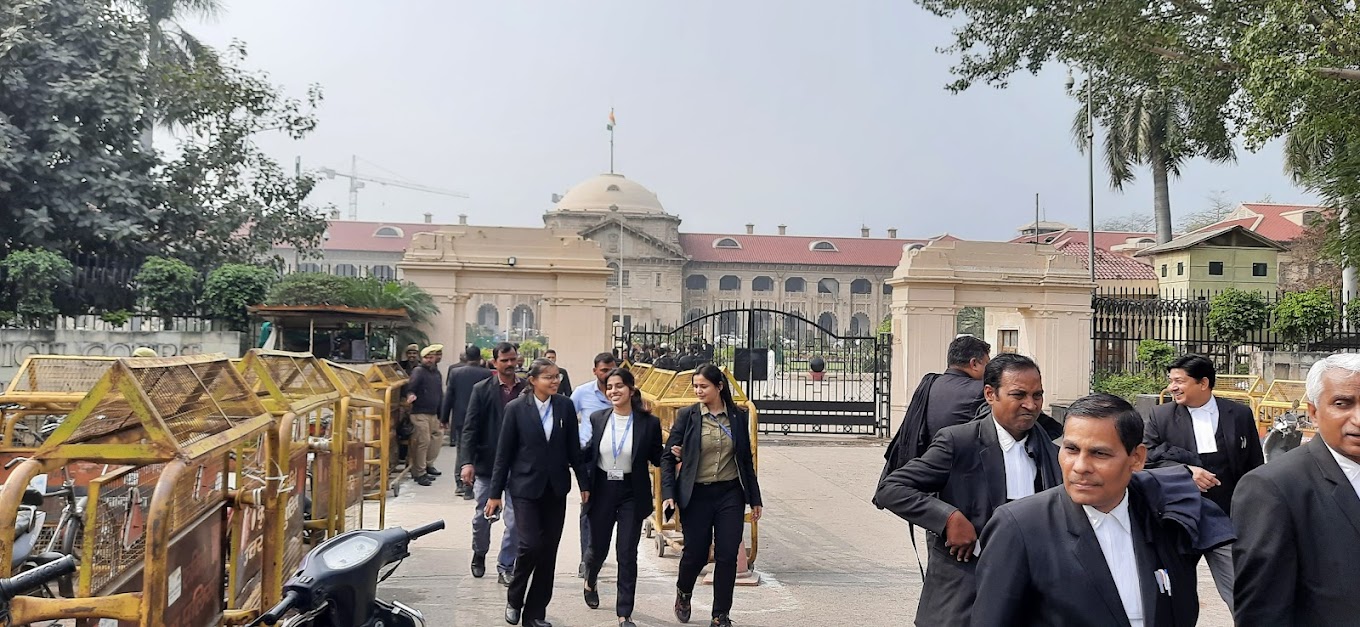
A Division Bench of Justice Atul Sreedharan and Justice Siddharth Nandan, while hearing a petition filed by one Munazir Khan, made sharp observations against the Superintendent of Police and District Collector of Sambhal, telling them they should either resign from their posts or seek a transfer if they felt incapable of enforcing the rule of law.
“If the local authorities, i.e. Superintendent of Police and Collector, feel that a law and order situation could arise because of which they want to limit the number of worshippers within the premises, they should either resign from their post or seek transfer outside Sambhal if they feel they are not competent enough to enforce the rule of law,” the bench said in its order passed on February 27.
What the Petition Said
The petition filed by Munazir Khan alleged that state authorities were preventing Muslims from attending prayers at a mosque on Gata Number 291 in Sambhal during Ramadan. He said only 20 worshippers had been permitted to offer Namaz at the site, despite a significantly larger number of devotees expected to gather during the holy month.
State Cites Law and Order, Court Rejects It Outright
The State defended the restriction by arguing it had been imposed due to a perceived law and order situation. The court rejected this justification in unambiguous terms. “We outright reject the contention put forth by the learned counsel for the State. It is the duty of the State to ensure that the rule of law prevails under every circumstance,” the bench said.
The court reiterated that every community has the right to offer worship peacefully at a designated place of worship, and that if the property is private, no permission from the State is required at all. It clarified that State involvement becomes necessary only when religious gatherings are held on public land or when they spill over onto public property.
Ownership Dispute Raised, Petitioner Asked for Documents
The State also raised a separate objection regarding the ownership of the land in question, submitting that revenue records show the property in the names of Mohan Singh and Bhooraj Singh, sons of one Sukhi Singh. The court noted that the petitioner had not yet produced photographs establishing the existence of the mosque or place of worship at the site.
The bench asked the petitioner to place on record photographs and relevant revenue documents at the next hearing, while the State was directed to obtain further instructions. The matter has been listed for the next hearing on March 16. Advocate Wahaj Ahmad Siddiqui appeared for the petitioner.