Nabiha Omar
Muslims make up about 14 per cent of India’s population, according to the 2011 Census. Yet only 24 Muslims were elected to the 18th Lok Sabha in 2024, which amounts to barely 4.4 per cent of the House. The gap has not always been this wide. In 1980, when Muslims were about 11 per cent of the population, they still held 9 per cent of the seats; by 2024, however, parties together fielded just 94 Muslim candidates, an all-time low. Such a decline is not a Muslim problem alone, because a democracy in which a seventh of its people barely appear in Parliament is a democracy that hears less of itself.
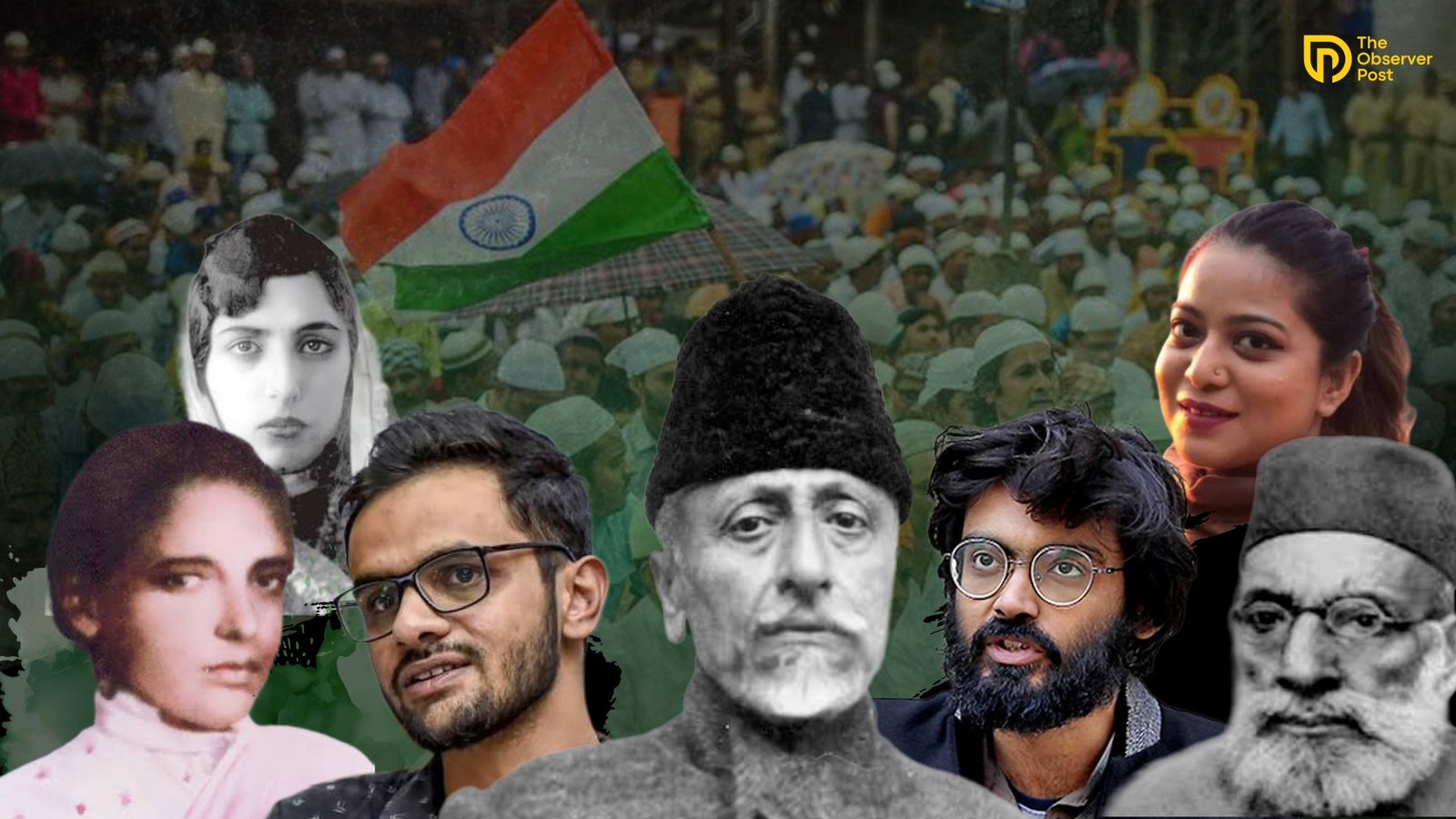
This gap, however, raises a question far older than any election: what kind of leadership does a minority need, and what does a plural democracy need from it in return? Indian history offers an answer, although it is one that is easily forgotten. Its most consequential Muslim leaders came from their own community and carried its concerns into public life. At the same time, they spoke for Indians of every faith and caste, and it is this double role that explains why representation matters and what is lost when it shrinks.
Leadership Beyond the Community, 1910–1940
Bihar offers perhaps the clearest example of such leadership. Maulana Mazharul Haque was one of the founders of the Muslim League, and yet he stood with Gandhi during the Champaran Satyagraha of 1917, a struggle for justice for the indigo farmers of north Bihar. His commitment went beyond protest. He donated land on the Patna-Danapur road for the Sadaqat Ashram and the Bihar Vidyapith, and he insisted that Hindus and Muslims were in the same boat, bound to sail or sink together. It is little wonder, then, that when he died in 1930, Gandhi mourned him as a great patriot.
Where Haque built bridges in Bihar, Hasrat Mohani, an Urdu poet educated at Aligarh, pushed the national movement to raise its sights. At the Ahmedabad session of the Congress in 1921, he moved, with Swami Kumaranand, the first demand for complete independence. Gandhi opposed the resolution, and the Congress would adopt the goal only years later. The slogan Mohani coined that same year, “Inquilab Zindabad”, travelled even further: it was later taken up by Bhagat Singh, and thus a Muslim leader’s words became the cry of Indian revolutionaries of every faith.
Leadership in these years, however, did not always come with a podium or an office. Abadi Bano Begum, known as Bi Amma, had no formal schooling. Even so, in 1917 she addressed a political gathering from behind her burqa, and she is recorded as the first Muslim woman to do so. From there she went on to work alongside Begum Hasrat Mohani, Sarojini Naidu, Basanti Devi and Sarala Devi Chaudhurani, raising money for the Tilak Swaraj Fund and calling Hindus and Muslims the two eyes of India.
Her son, Mohammad Ali Jauhar, carried that conviction to the very top of the national movement. A founding member of the Muslim League, he nevertheless presided over the Congress at Kakinada in 1923, where he declared that India’s swaraj must be “Sarvaraj”, the rule of all. Nor was he the first Muslim to lead the Congress in those years, since the Ahmedabad session that heard Hasrat Mohani had itself been presided over by Hakim Ajmal Khan while C. R. Das was in jail. Ajmal Khan, a Delhi physician, was also among the founders of Jamia Millia Islamia, an institution born of the Non-Cooperation movement. These leaders often disagreed with one another; what they shared was a conviction that representing one’s own people and serving the whole nation were not opposed tasks.
Representation Within the Community
That shared conviction, however, left a harder question unanswered: who, within a community, gets to do the representing? From the late 1930s, the Momin Conference answered it from below. Under Abdul Qaiyum Ansari, it mobilised the Muslim weaver castes against the Muslim League, which it characterised as a high-caste Ashraf formation. In doing so, it rejected both Hindu and Muslim nationalisms. Ansari made the point forcefully at the Bihar Provincial Momin Conference in Patna in April 1940, calling it “a defeat of Islam to run away from the battle of life”. His politics also won votes. In 1946, his party took six seats in the Bihar Assembly against the League, and he went on to become the first Momin minister in Bihar. It was later at his initiative that the first All India Backward Classes Commission was appointed in 1953.
Ansari’s career therefore carries a lesson that is easy to miss: representation is not achieved simply by placing a Muslim in office. Leadership drawn from one narrow class tends to speak for that class, and the weavers of Bihar organised precisely because they felt unheard by those who claimed to speak for them. Their demand for dignity, in turn, found common cause with backward communities of every faith. It was this wider idea of representation, built across communities rather than walled within them, that the framers of the Constitution would soon try to write into India’s electoral system.
The Constituent Assembly and the Promise of Joint Electorates
The Constituent Assembly, however, first moved in the opposite direction. In August 1947 it approved reserved legislative seats for religious minorities, but it later reversed itself and abolished them, and Muslim members themselves helped make that case. On 26 May 1949, as the Assembly adopted Vallabhbhai Patel’s motion ending such reservations, Tajamul Hussain named the Muslim members of the committee who had backed abolition: Maulana Azad, Maulana Hifzur Rahman, Begum Aizaz Rasul, Hussainbhoy Laljee and himself. Among them, Begum Aizaz Rasul made a strong pitch for removing reservations and creating joint electorates. Naziruddin Ahmad supported the same course, arguing that joint electorates would encourage Hindu candidates to take up Muslim concerns. Not everyone was convinced, however. Zahirul Hasnain Lari proposed proportional representation instead, because he feared that Muslims would be overlooked under first-past-the-post.
The bargain these members struck was both generous and deeply democratic. Muslims would not be fenced into separate seats; in return, every representative would answer to every citizen. Seven decades on, however, that bargain has been honoured only in part. Research cited by the political scientist Mirza Asmer Beg found that between 1999 and 2017, Muslim MPs raised 22 per cent of the parliamentary questions about Muslims, even though they never held more than 6 per cent of the seats. The imbalance is sharper still for women, since only 25 of the 690 women elected to the Lok Sabha since Independence have been Muslim. In this light, Lari’s fear has proved more prescient than his colleagues’ hope.
Young Leaders and the Cost of Dissent
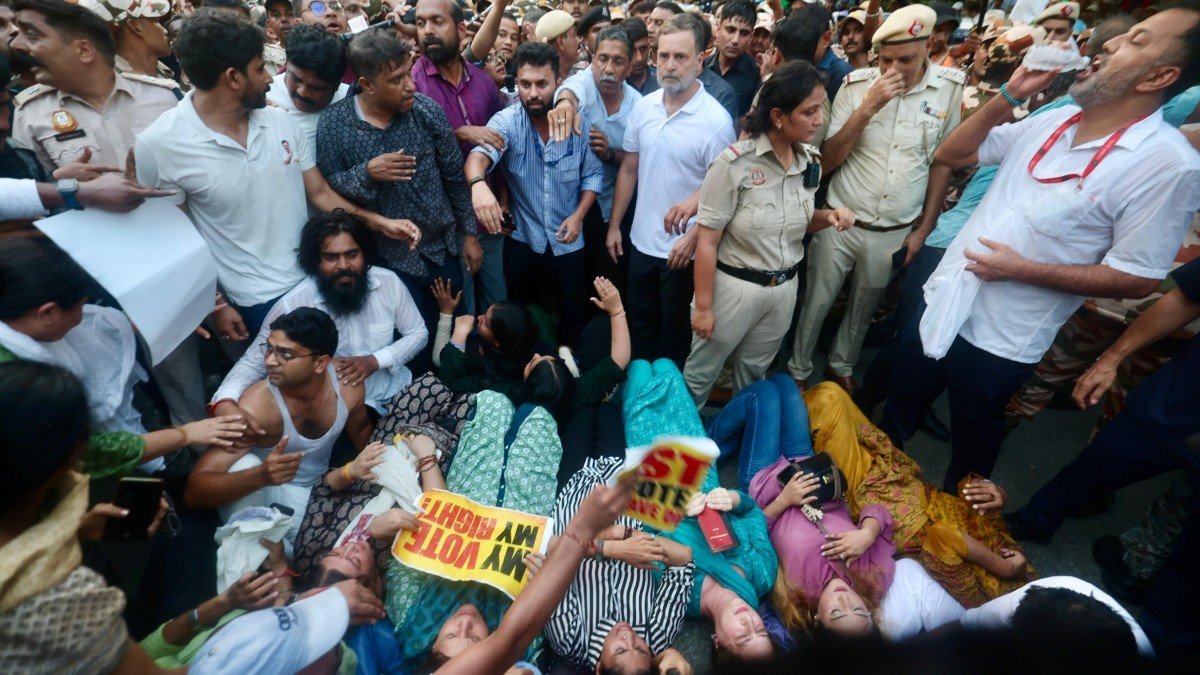
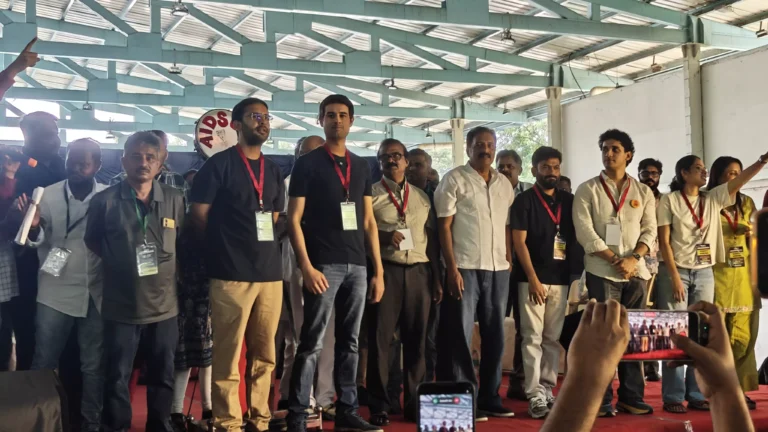
Nowhere is the cost of this imbalance clearer than in the fate of the next generation of leaders. That generation came of age in the protests against the Citizenship (Amendment) Act in 2019–20, and several of its most visible young Muslim voices have since faced prosecution. Sharjeel Imam, an IIT Bombay graduate and JNU doctoral scholar in modern Indian history, is one of them. On 16 January 2020, he spoke at Aligarh Muslim University, calling for mass road blockades that would cut off the North-East, although he later said he meant a peaceful chakka jam. Five states then filed sedition and UAPA cases against him. One may judge that speech reckless and still note what followed: in May 2024, after about four years in detention, the Delhi High Court granted him bail in the sedition case. Even then, he remained an accused in the Delhi riots conspiracy case.
The same case has held Umar Khalid since he was arrested in September 2020. His story makes the argument of this essay in a single life. His doctoral research at JNU concerned the Adivasi communities of Singhbhum in Jharkhand, which means that a young Muslim intellectual chose to write the history of another marginalised people. Yet on 5 January 2026, the Supreme Court found a prima facie case against Khalid and Imam under the UAPA and refused them bail, even as it granted bail to five co-accused, including Gulfisha Fatima and Meeran Haider. In April, it also declined Khalid’s review plea, and the trial itself has not concluded.
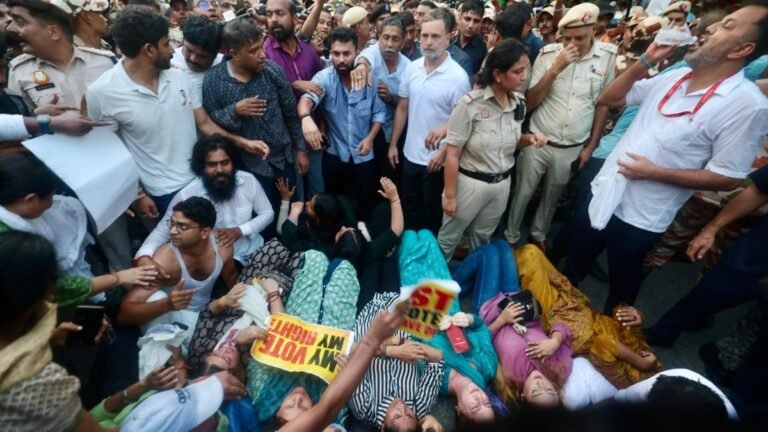
The protests, and the prosecutions that followed, were not confined to one community. Safoora Zargar of the Jamia Coordination Committee was freed in June 2020, when she was more than five months pregnant, on humanitarian grounds. A year later, while granting bail to the Jamia student Asif Iqbal Tanha along with Natasha Narwal and Devangana Kalita, the Delhi High Court warned that the state, in its anxiety to suppress dissent, was blurring the line between the right to protest and terrorist activity. That warning carries an uncomfortable echo of the past. Mohammad Ali, too, served a two-year sentence for a speech at the Karachi Khilafat Conference of 1921. The difference is that he was sentenced by a colonial state, whereas these young Indians have waited, untried, in a republic.
Representation as a Democratic Necessity
Taken together, these stories show that the thread running from Mazharul Haque to Umar Khalid is not religion alone. It is, rather, the idea that a community produces leaders who carry its concerns into the common life of the nation, and that a democracy is strongest when it welcomes them there. When that pipeline narrows, through fewer tickets, fewer seats and, for some, long years in prison, the loss is therefore not confined to Muslims. Every community loses voices that once argued for indigo farmers, for complete independence, for weavers and backward classes, and for Adivasis whose histories had gone unwritten.
Representative democracy, then, asks two things. First, it asks minorities to produce leaders who speak beyond their own community, as Indian Muslims have done since before Independence. Second, it asks the majority, and the parties that court it, to make room for those leaders rather than treat them as a risk. The members of the Constituent Assembly who gave up reserved seats trusted that India would keep this second promise. Honouring their trust is not a favour to one minority; it is what Mohammad Ali meant by Sarvaraj, a democracy that represents all of its people.
The views expressed in this article are the author’s own and do not necessarily reflect the policy of the platform.