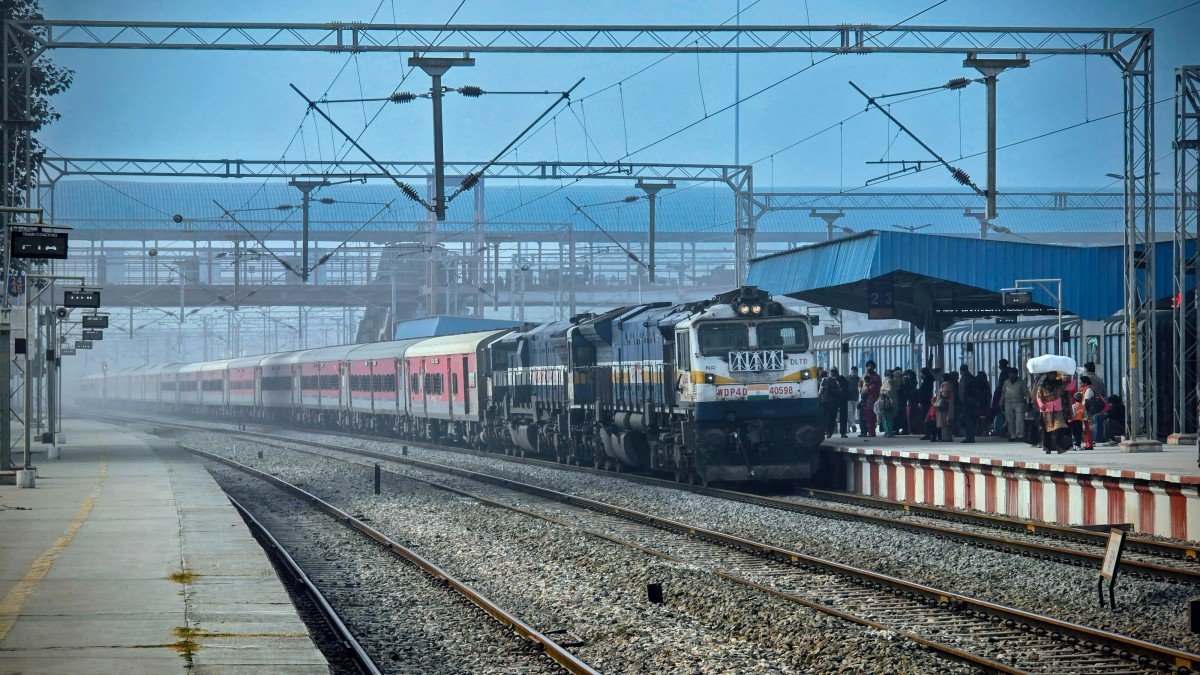
The Comptroller and Auditor General of India (CAG) found E. coli in water cooler samples at eight railway stations across four zones.
The stations include Coimbatore and Palakkad Junction in Southern Railway, Hyderabad in South Central Railway, Chhatrapati Shivaji Maharaj Terminus, Bhiwandi Road, Kalyan and Lonavala in Central Railway, and Madhupur in Eastern Railway.
The audit also found bacterial contamination in drinking water collected from platform taps.
“Test results of drinking water samples collected from taps in platforms at 49 stations in eight zones during 2022-23 and 56 stations in nine zones during 2023-24 indicated presence of Total coliforms bacteria (including E-coli),” the CAG report said.
The audit further found that bacteriological testing beyond total coliforms was inadequate at eight stations across four railway zones in 2022-23 and 11 stations across five zones in 2023-24.
The report noted that some strains of E. coli can cause food poisoning and diarrhoea and, in serious cases, may lead to kidney failure.
89% of audited stations lacked basic amenities
The CAG examined passenger amenities and sanitation at 512 non-suburban railway stations across different railway zones.
Of these, 458 stations, or more than 89 per cent, were found deficient in providing Minimum Essential Amenities (MEA). The facilities were either missing or below the standards prescribed by the Railway Board.
The Railway Board had issued guidelines in April 2018 requiring essential facilities to be provided at all stations by August 31, 2018.
These included drinking water, waiting halls, seating, platform shelters, toilets, urinals, fans, foot overbridges, dustbins, clocks and public announcement systems.
However, the audit found that several stations continued to fall short of these requirements.
Major railway stations also found deficient
The shortcomings were not limited to smaller stations. Major NSG-1 stations, including Chhatrapati Shivaji Maharaj Terminus, Howrah, Sealdah, New Delhi and Mumbai Central, were also found lacking in some basic passenger facilities.
The CAG reported shortages involving drinking water taps at 12 NSG-1 stations, while fans and water coolers were deficient at eight stations each. Five stations were also found to have inadequate signage.
An analysis of the Passenger Amenities Management System showed shortages of latrines at 201 stations, urinals at 403 stations and water taps at 2,035 stations.
CAG asks Railways to improve water testing
The audit covered findings from test audits conducted between 2019-20 and 2023-24, along with some earlier cases and instances identified after 2023-24 where necessary.

The CAG said Indian Railways operated more than 7,424 non-suburban passenger trains every day in 2023-24 and carried around 292.4 crore non-suburban passengers during the year.
The report called for stronger monitoring of railway water supply systems and more comprehensive testing of drinking water.
The CAG urged the Railways to “ensure compliance with prescribed protocols for inspection of water supply systems and comprehensive testing of drinking water quality, including all parameters under the Uniform Drinking Water Quality Protocol.”