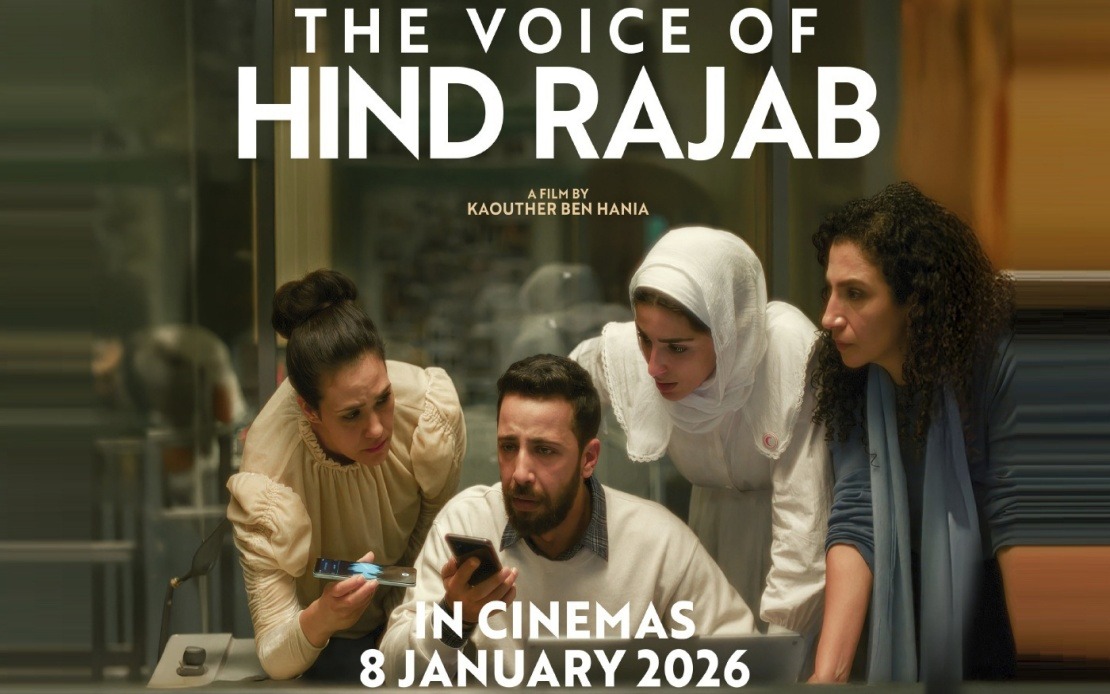
The much-anticipated Indian theatrical release of Kaouther Ben Hania’s Oscar-nominated film, The Voice of Hind Rajab, has been blocked by India’s Central Board of Film Certification (CBFC), according to the movie’s local distributor. The film, which tells the harrowing story of a five-year-old Palestinian girl killed during an Israeli attack in Gaza, was slated for release this month but is now denied certification for political reasons.
Manoj Nandwana, head of Mumbai-based Jai Viratra Entertainment and the film’s distributor in India, told Variety that the CBFC informed him that releasing the film could “break up the India-Israel relationship.” Nandwana said he submitted the film to the CBFC in February, hoping for a March 6 release ahead of the Oscars on March 16, but approval was not granted.
“I told them: the India-Israel relationship is so strong that it’s idiotic to think this movie will break it,” Nandwana said, emphasizing that the film has already been released in the U.S., U.K., Italy, France, and other countries with diplomatic ties to Israel. “But they want to censor it anyway.”
Storyline and Global Reception
The Voice of Hind Rajab recounts the true events of January 2024, when Hind Rajab and her family were trapped in Gaza City during a bombing. The film uniquely incorporates the real audio of Rajab’s panicked calls to emergency operators, bringing a chilling realism to her story.

The film has received widespread critical acclaim internationally. It premiered at the Venice Film Festival in September 2025, earning a 23-minute standing ovation and winning the festival’s Silver Lion. It was subsequently released in the U.S. through Willa, the distribution arm of the production partners, after other U.S. distributors declined.

The movie was also nominated for the Academy Award for Best International Feature Film alongside It Was Just an Accident, The Secret Agent, and Sentimental Value.
CBFC and Political Sensitivities
Under Prime Minister Narendra Modi, India has strengthened ties with Israel, with Modi making an official visit in February 2026, the first by an Indian Prime Minister in 25 years. The CBFC’s rejection appears to reflect concerns over potential diplomatic repercussions rather than the film’s content alone.
Nandwana said he anticipated some resistance, noting that Indian authorities had previously refused clearances for international film festivals such as the Bengaluru International Film Festival and the International Film Festival of India in Goa. In contrast, the film did screen at the Kolkata International Film Festival.
This is not the first instance of the CBFC halting the release of politically sensitive films. In 2025, Sandya Suri’s Oscar-shortlisted film Santosh faced a similar ban despite having prior shooting approval and government incentives. The CBFC has routinely asked for cuts or withheld certification for films addressing real-life political events or progressive social commentary.
Voices of Protest
Congress MP Shashi Tharoor described the CBFC decision as “disgraceful,” emphasizing that freedom of expression is a cornerstone of democracy. “Screening a film is a reflection of our society’s freedom of expression and has nothing to do with government-to-government relations,” he said, adding that banning films to protect foreign relations is “unworthy of a mature democracy.”
Legal and Distribution Challenges
Nandwana purchased the Indian rights for The Voice of Hind Rajab for roughly ₹1 crore during the Venice Film Festival, before the film became an Oscar contender. He expressed disappointment at the CBFC’s decision, noting that the producers were “shocked” and that he had little confidence in the revising committee, claiming it comprised the same members responsible for the initial denial.
The distributor also highlighted that in past cases, the CBFC has selectively censored films with progressive political messages while right-wing films largely retain their intended messaging, raising questions about consistency and political influence in the certification process.