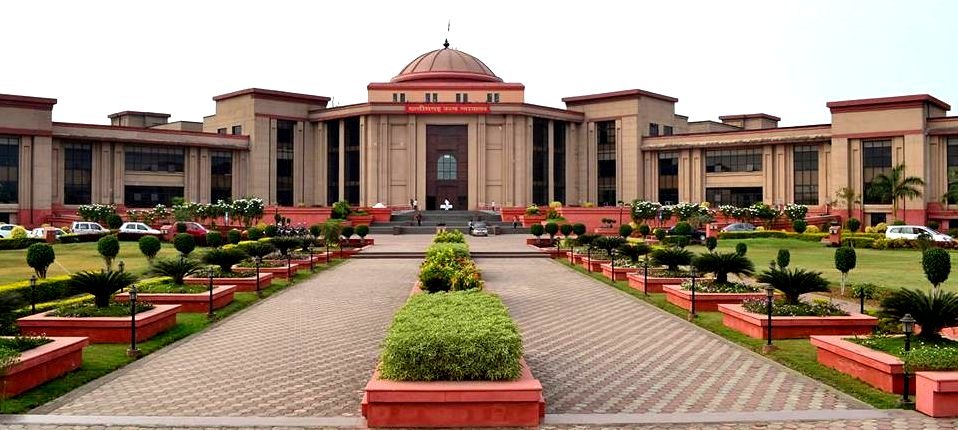
The Chhattisgarh High Court on Thursday ruled that no child can be compelled to recite Hindu prayers in government schools, while disposing a petition that challenged a state government circular directing schools to conduct daily recitations of Hindu religious texts and prayers.
Justice Amitendra Kishore Prasad, hearing the matter, recorded the state government’s submission that although the School Education Department’s June 12 circular had been issued, it had not yet been implemented in schools. In light of that assurance, the court disposed of the petition while granting liberty to the petitioners to approach it again if any child is compelled to participate in the prayer recitations.
The court further observed that appropriate action would be taken if any instance of such compulsion was brought to its notice.
What the Circular Mandated
The June 12 circular, issued by the state’s School Education Department, directed government schools across Chhattisgarh to conduct the recitation of the National Anthem and National Song — as well as the Deep Mantra, Saraswati Vandana, and Guru Mantra — during morning assemblies. It also mandated the reading of biographies of eminent personalities, the recitation of the Bhojan Mantra before mid-day meals, and the Gayatri Mantra and Shanti Mantra before students dispersed at the end of the school day.
The Petition
The petition was filed by former Chhattisgarh Waqf Board chairman Abdul Salam Rizvi, former Minority Department chairman Mahendra Chhabda, and Bilaspur-based social activist Shafique Ahmed. It was argued by advocates Aamir Khan and Sitara Khan.
The petitioners challenged the constitutional validity of the circular on the grounds that the mandatory inclusion of the Saraswati Vandana, Gayatri Mantra, Guru Mantra, and Shanti Mantra amounted to religious instruction in state-run schools. They argued that this violated the constitutional principles of secularism and the fundamental rights of students from non-Hindu communities.
The petition contended that the circular failed to provide any exemption mechanism or protection for the freedom of conscience of students who did not wish to participate in religious observances. It further argued that by prescribing prayers associated with one religion while excluding others, the state had created an unconstitutional preference based on religion, and had compromised its obligation to maintain religious neutrality in public education.
Reactions
Senior advocate Prashant Bhushan welcomed the court’s order, saying it was good to see judges standing up against what he called a communal government.
AIMIM chief and Hyderabad MP Asaduddin Owaisi said the circular was another example of what he described as the Sangh Parivar’s approach to cultural nationalism, which he said was contrary to Indian nationalism.

The Association for Protection of Civil Rights had, prior to the court’s ruling, described the circular as patently unconstitutional and said it blurred the line between cultural activities and religious observance in state-funded schools.