











































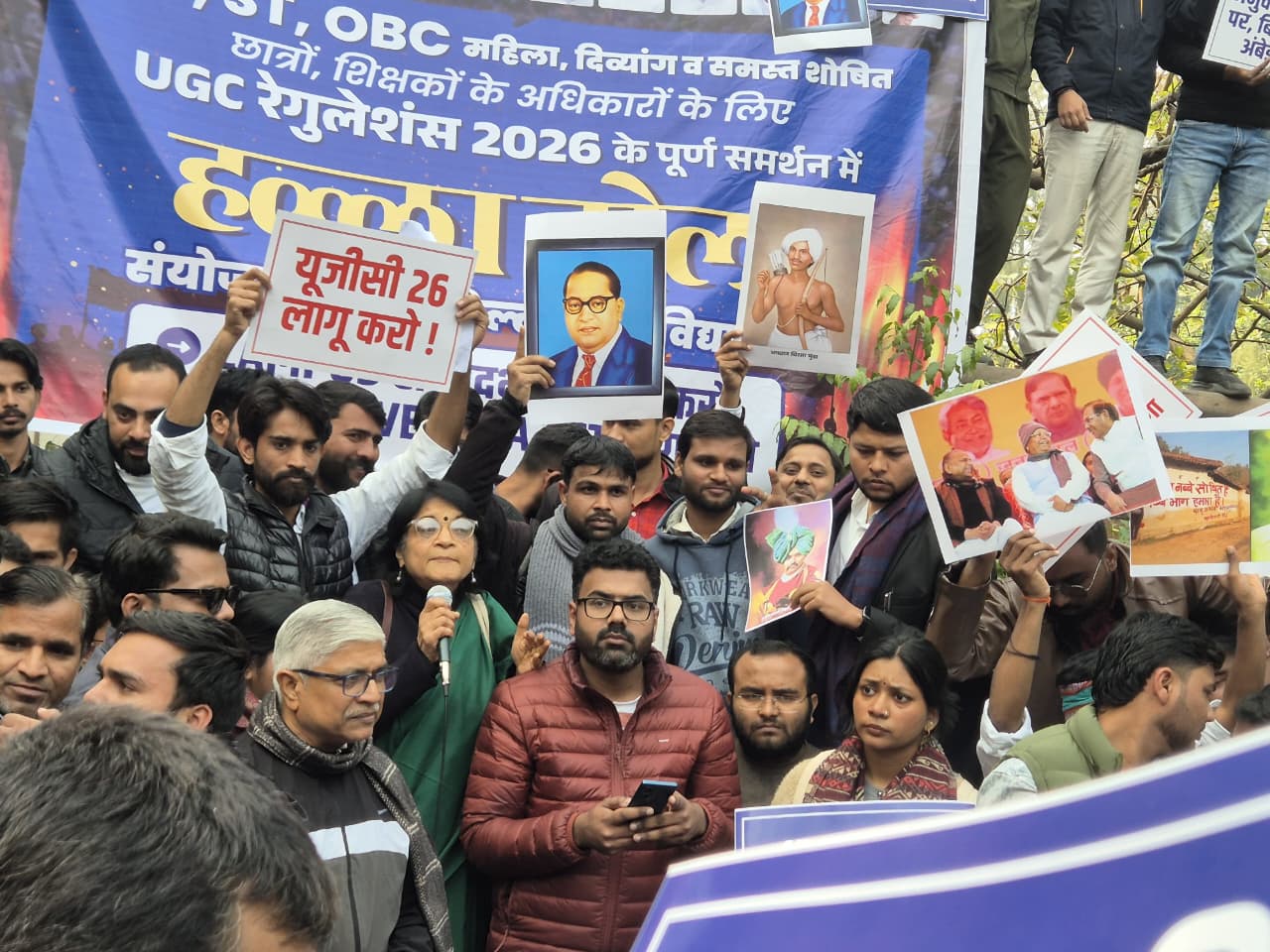
Hundreds of students on Monday marched through Delhi University’s North Campus, demanding the immediate implementation of the UGC Equity Regulations in line with what they called the Rohith Act, after a recent judicial stay stalled the guidelines.
The protest, organised by the All India Students’ Association along with other progressive student groups, was held under the banner of an “Equity March”. Students said the regulations were crucial to address caste-based discrimination and ensure institutional accountability for the safety and dignity of SC, ST and OBC students in higher education.
The march was a response to the Supreme Court’s stay on the UGC Equity Regulations 2026, which protesters described as the outcome of decades of student struggles against exclusion and discrimination on campuses. Participants stressed that the regulations were not merely administrative measures but a hard won step towards social justice in universities.
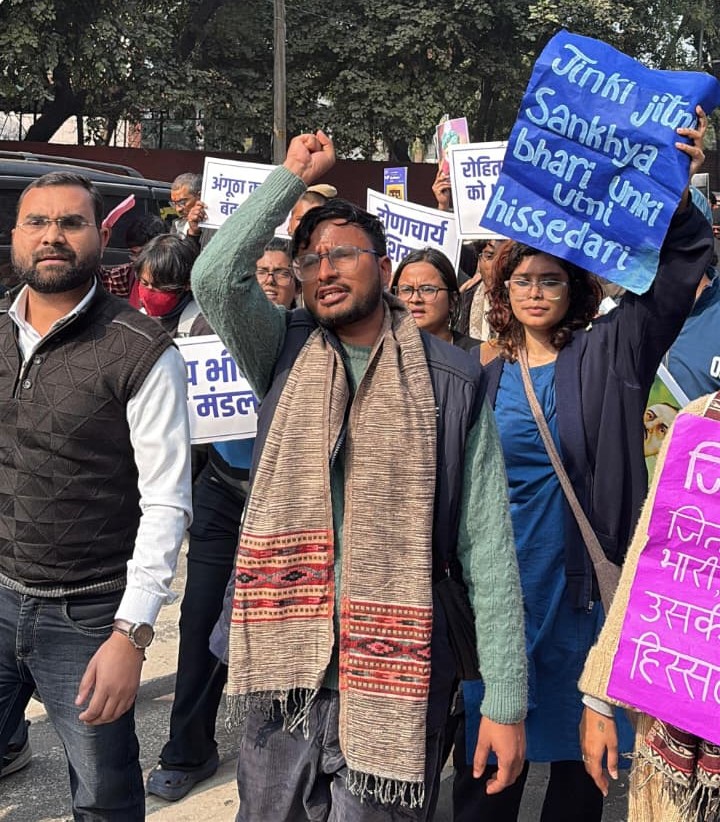
Addressing the gathering, former JNUSU president Nitish said the stay on the regulations showed how deeply caste discrimination remains embedded in academic institutions. “After years of struggle on the streets, we forced the UGC to bring in regulations that spoke the language of accountability. The stay on these guidelines shows that casteism is still deeply entrenched. This is a fight for the soul of our universities, and we will not stop until real equality is achieved,” he said.
AISA Delhi University secretary Anjali linked the demand to the deaths of Rohith Vemula, Payal Tadvi and Darshan Solanki, which have become symbols of alleged institutional discrimination. “The UGC 2026 guidelines were not a gift from the state. They were written in the sacrifices of Rohith Vemula, Payal Tadvi and Darshan Solanki. We are not just fighting for rules, we are fighting against centuries of exploitation,” she said.
She also accused the BJP-RSS government of protecting privileged structures at the cost of marginalised students’ lives. “Campuses have turned into graveyards of Dalit and Adivasi dreams. We will not forget and we will not forgive institutional murders,” Anjali added.
The protest ended with a call to intensify the movement nationwide. AISA said the struggle would continue on the streets until legally binding UGC equity guidelines, as demanded under the Rohith Act, are fully implemented.