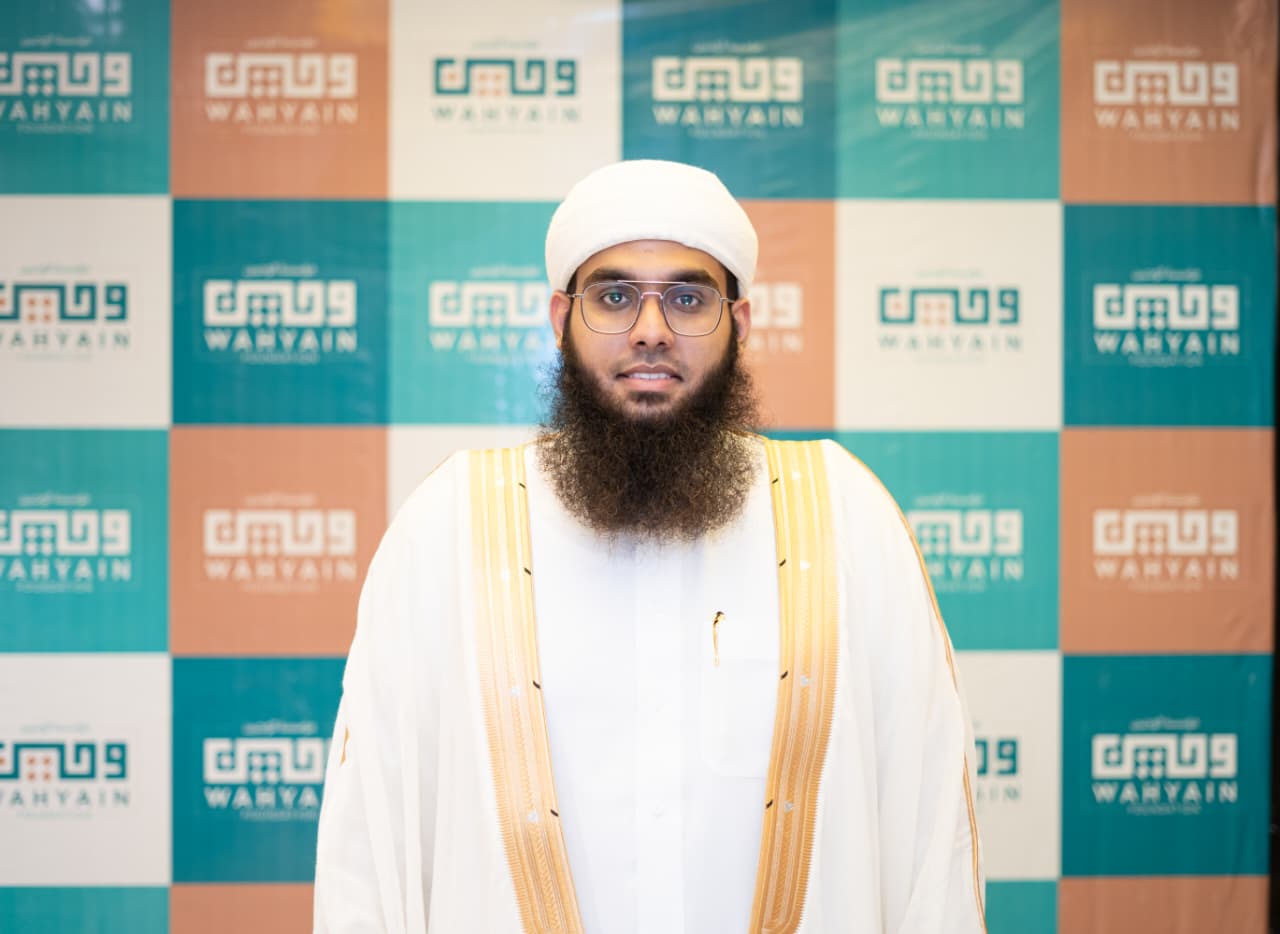
As the hall inside the Constitution Club of India fell quiet on the morning of December 20, the question on stage was not merely theological. It was civilisational.
“Does God exist?” asked the title of the public debate. But beneath it lay deeper concerns about reason and belief, science and meaning, and whether faith can still speak confidently in modern public life.
The event brought together two sharply contrasting figures. On one side was veteran poet and lyricist Javed Akhtar, one of India’s most prominent self-declared atheists. Facing him was Mufti Shamail Nadwi, a young Islamic scholar whose influence among Muslim youth has grown steadily through digital platforms and public lectures.
Moderated by journalist Saurabh Dwivedi, editor of The Lallantop, the discussion quickly moved beyond slogans or point scoring. Following the debate, short clips and quotes circulated widely on social media, drawing sharp reactions from different quarters. Viewers split along familiar lines of faith and scepticism, belief and science, morality and reason.
As the arguments were replayed and dissected, attention gradually shifted to a quieter but more persistent question. Who exactly is Mufti Shamail Nadwi, and why did his words strike chords with so many?
A scholar grounded in tradition, speaking to the present
Born and raised in Kolkata, Mufti Shamail Nadwi, whose full name is Mufti Shamail Ahmad Abdullah Nadwi, grew up in a religious environment where the Qur’an and classical Islamic texts were part of daily life.
The Qur’an was not only recited but lived. Classical texts were introduced early, shaping both his intellectual grounding and moral outlook. Those formative years, spent balancing traditional learning with life in a diverse Indian city, would later influence the way he speaks about faith: rooted in scripture, yet attentive to the questions of the modern world.
Many viewers sensed this balance during the debate. Nadwi appeared confident without being combative, firm in belief, while engaging doubt without hostility.
His early education took place at Jibreel International School in Kolkata, an institution known for combining modern education with Islamic values. During his school years, Nadwi displayed strong oratory skills and a deep engagement with religious texts, often participating in school programmes and public speaking events.
Alongside formal schooling, he memorised the Qur’an at a young age, completing Hifz while still in his early teens. His academic journey later took him to Darul Uloom Nadwatul Ulama in Lucknow, one of South Asia’s most respected institutions of Islamic learning.
Nadwi went on to specialise in Qur’anic exegesis, Qur’anic sciences and Ifta, the formal discipline required to issue Islamic legal opinions. He also holds an MPhil in Islamic jurisprudence.
He is currently pursuing a PhD in Islamic Revealed Knowledge and Human Sciences at the International Islamic University Malaysia, with completion expected in 2028.
A growing reach online and offline
What sets Nadwi apart from many traditionally trained scholars is not only his academic background but also his reach.
In 2021, he founded Markaz al-Wahyain, an online learning initiative providing accessible Islamic education using clear language and contemporary examples. The platform has since attracted tens of thousands of learners across India and abroad, particularly young Muslims navigating questions of faith in increasingly secular and polarised environments.
In 2024, he also established the Wahyain Foundation, a Kolkata-based charitable trust working in education, welfare and community support.
Offline, Nadwi serves as a khateeb and Qur’anic commentator at the historic Kobi Bagan Mosque, where his weekly sermons and Tafsir sessions regularly draw large audiences.
Much of his growing prominence stems from his digital presence. On YouTube, Instagram and Facebook, his lectures frequently address atheism, science, feminism, morality and Western philosophy, subjects often avoided in traditional religious settings.
His tone is measured and restrained. Rather than emotional appeals, Nadwi relies on structured arguments, analogies and philosophical clarity. Supporters say this approach has helped many young Muslims feel intellectually confident in defending their beliefs without hostility.
That same composure was visible on the Constitution Club stage.
A clash of methods, not tempers
Over nearly two hours, the exchange unfolded less as a clash of tempers and more as a clash of methods.
Nadwi, arguing from belief, relied primarily on logic and reason to make the case for a Supreme Being. Akhtar, approaching the question as an atheist, leaned on ethical dilemmas, lived experience and historical suffering to question the very idea of faith.
Nadwi framed his argument around classical philosophical reasoning rather than scripture. “If the universe is contingent, then it must have a first cause,” he argued, adding that denying such a cause leads to the fallacy of infinite regress, where explanations never truly begin. That first cause, he said, is what believers call God.

He stressed that the existence of God cannot be tested through science or empirical observation. Science, Nadwi argued, is limited to the physical world. God, by definition, belongs to the metaphysical realm and must therefore be examined through rational inquiry rather than laboratory methods. In his telling, belief in God was not a rejection of reason but a conclusion drawn from it.
Akhtar approached the question from a different moral register. He repeatedly returned to human suffering and the violence carried out in the name of religion, questioning why belief should endure in the face of such realities.
“Why is it that everything stops at this idea of God?” he asked. “Why must we stop all questions?” Referring to the killing of children in Gaza, Akhtar argued that a God who allows such suffering, if He exists at all, offers little moral reassurance. “If He allows that, He may as well not,” he said.
As the debate progressed, it became clear that the two speakers were not only disagreeing on God’s existence but operating within entirely different frameworks. Nadwi was addressing whether God must exist. Akhtar was questioning whether such a God, even if logically argued for, is morally acceptable.
How the debate came to be

Another dimension that drew public attention was how the debate itself came about.
The event had been nearly four months in the making. On August 30, the West Bengal Urdu Academy abruptly cancelled a four-day festival after some Islamic groups protested Akhtar’s invitation. He was scheduled to speak on the role of Urdu in Hindi cinema. The cancellation was widely criticised across India as an assault on free speech.
In the aftermath of that controversy, Nadwi issued a public challenge to Akhtar on social media, inviting him to debate the existence of God openly rather than through cultural or political flashpoints. That challenge eventually led to the Constitution Club stage in New Delhi.
In that sense, the debate was not only about belief and disbelief. It reflected a broader moment in Indian public life, where questions of faith, dissent and free expression increasingly intersect, and where younger religious voices are seeking engagement rather than withdrawal.
Public debates on belief are not new in India. What made this encounter stand out was the confidence with which a traditionally trained Islamic scholar articulated faith in a mainstream, secular forum, without defensiveness or confrontation.
For many Muslim viewers, particularly younger audiences, Nadwi’s performance was seen as a rare example of religious scholarship engaging critics on equal intellectual footing. For others, the exchange mirrored a wider global conversation about the limits of secular rationalism in addressing questions of meaning and purpose.
Long after the hall emptied, the discussion continued online.
And while opinions remain divided, one outcome is clear. The New Delhi debate has firmly established Mufti Shamail Nadwi as a contemporary Muslim thinker capable of engaging one of humanity’s oldest questions calmly, confidently and in public.