Adeena Navaid
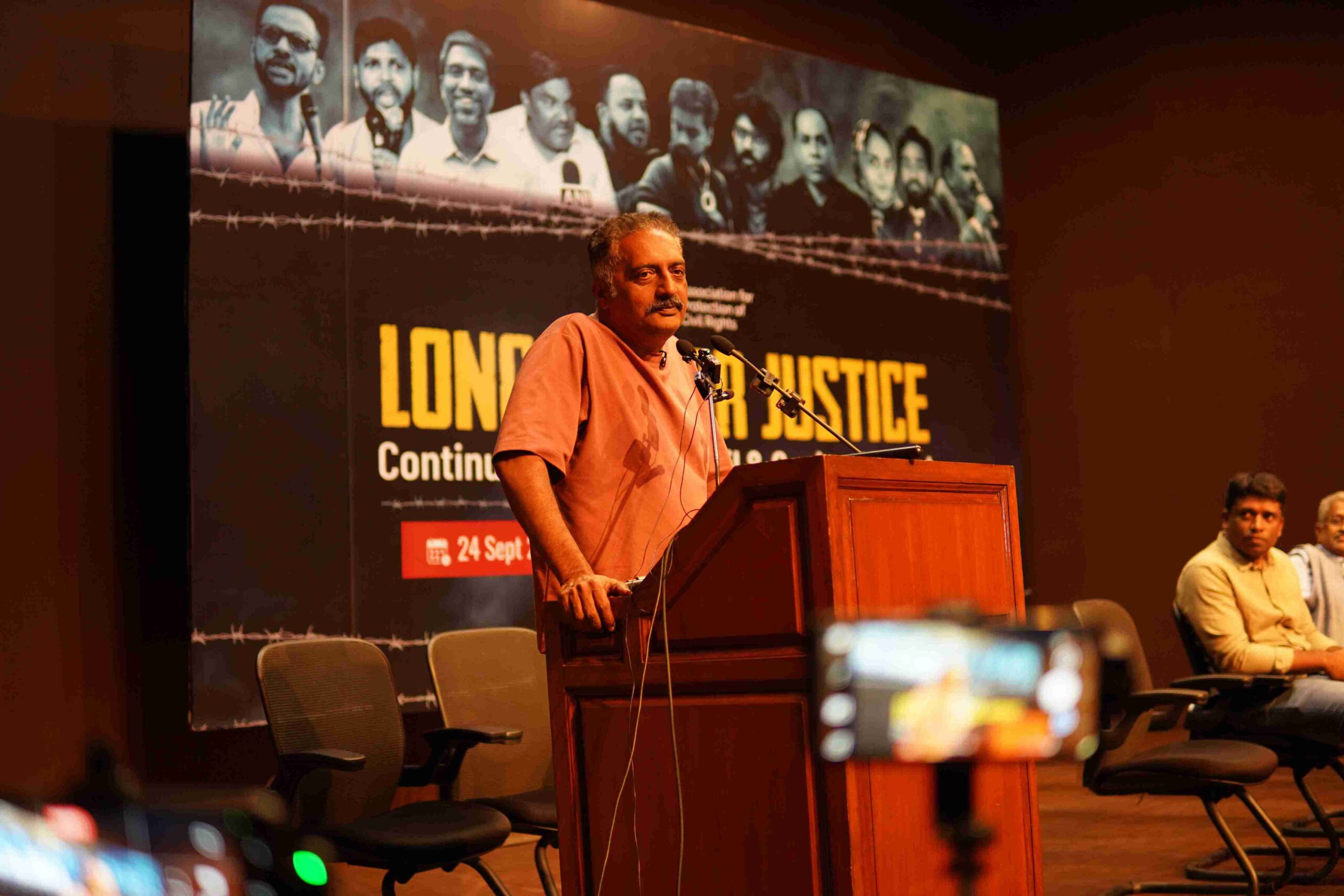
With Navratri’s flair breezing in, the cultural festivities of Garba night are now being viewed with much vigour and vigilance, too. But why the vigilance? The spike in communal hatred in India has engulfed festivities, too, in the flames of disgrace. This symbolic occasion of Navratri has been used as a factory of intimidation through sexualisation by the Janta’s Neta (Leader of the People).
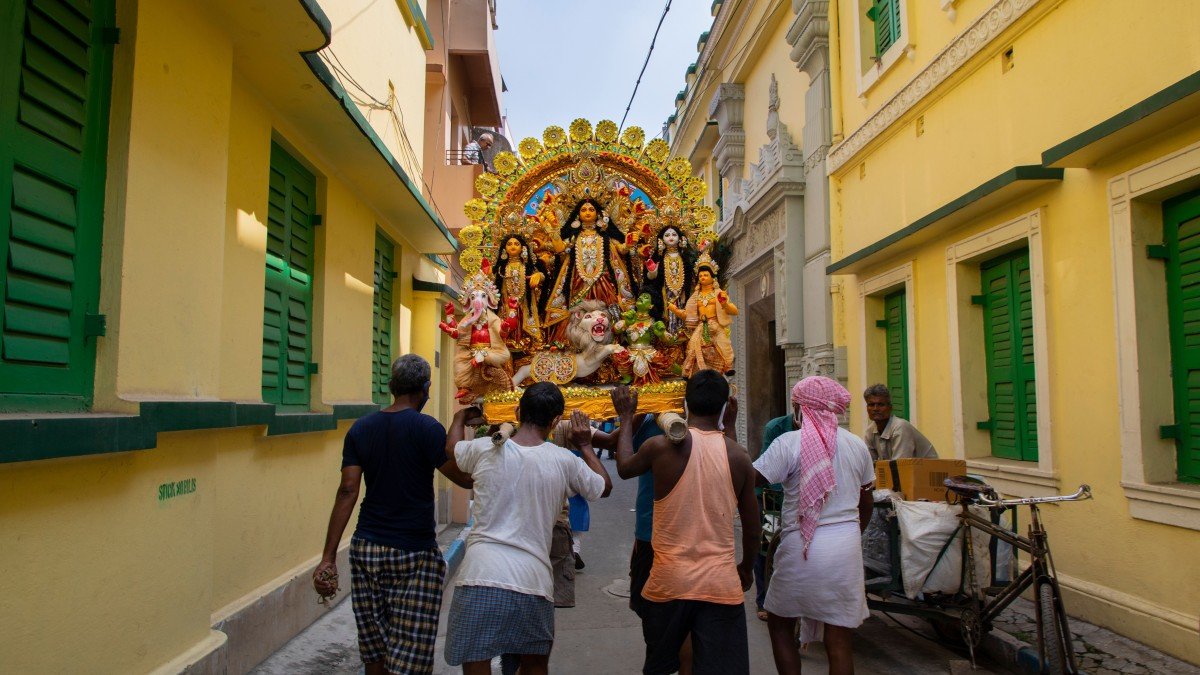
Navratri, nine days of a month, is said to span the three Gunas (attributes): tamas, rajas, and sattva, which are embodied as goddesses. Tamas, implying the goddess Durga, is perceived as the warrior who fought demons and the inner negativities of the human body, essentially becoming a mascot for the fight against social injustice, aggression, oppression, and other forms of evil. Rajas, implying the goddess Lakshmi, revolves around prosperity, resources, auspiciousness, and productive energy that sustains vibrancy in and around us. Sattva, implying the goddess Saraswati, is personified as knowledge, wisdom, and liberation from ignorance, which cultivates human conscience and righteousness. The last day, Vijaya Dashami, commemorates the victory by setting ablaze not merely an effigy of the devil, but all forms of evil rooted within, to foster a balanced society.
Nonetheless, humans have not risen above the cultural celebration and have jilted the very purpose for which a certain festival is solemnised. The explicit and obscene remarks by the BJP MLA in Madhya Pradesh have given the janta a taste of the fruit they themselves sowed and served.
On 21st September 2026, Rameshwar Sharma in Bhopal spewed his hatred for women and, obviously, Muslims by stating, “And just boys want to come? Bring your sisters and daughters from home. Our boys are also ready,” while targeting Muslims who celebrate Garba night. He simultaneously demanded that they chant “Jai Shree Ram” and apply tilak.
Clear-Cut Derivation and Direction for the Janta
The quoted statement by this MLA has led to many possible interpretations for society, either to become further deviated or to be directed towards reflection.

Firstly, how has it deviated?
This has not solely transcended the ethical boundaries that every minister is expected to uphold, but has also legitimised the normalisation of such disgrace by tagging it with the agenda of personal faith, which is presented as belonging only to fellow believers, while granting access to degrade non-believers.
When ministers in India speak the language of protecting a religion or any religious activity, the janta often nonchalantly crowns them with the authority to guard that religion. This results in the desire to avenge the actions of a rival community by bringing women into the frame, which has been a long-standing, ill-devised scheme of those in positions of power.
But since we call ourselves a modernised, liberated, progressive nation, shouldn’t such remarks attract stringent repercussions? Or has courage been locked on streets and stages only, rather than being exercised in Parliament or the courts? Verily, the power of the janta can influence these two institutions, but only when people rise above the graveyard of hate that is passed from one generation to another.
Secondly, how can this speech direct the public?
This has not solely instilled hatred, but can also awaken many acolytes to emancipate themselves from power-drunk and hate-mongering ministers who are in positions of power to challenge the very power of the people.
For political stalwarts, a simple utterance of a sentence may not be sufficient reason to analyse the ruptured vision a certain misfit politician can hold. But it becomes an answer to why we continue to find women’s dignity being razed even when we call ourselves a modernised, liberated, progressive nation.
We are yet to revolt against the cult of politicising politics for personal vendetta, which comes at the cost of contagious communal vendetta. Rules can regulate restrictions on festivities to maintain cultural discipline, but when the janta is misdirected into perceiving women as a means to exchange hostility, they begin to act as restrictions upon their own ethics, thereby orchestrating a chain of social evil.
What Laws Does India Have to Punish and Prevent? The Lost Sting
Indian laws are explicit about dealing with conduct that can alter public perceptions and ultimately influence public actions.
Section 196 of the Bharatiya Nyaya Sanhita (BNS) criminalises acts done to promote enmity, hatred, or disharmony between different groups in a heterogeneous society. The law provides for imprisonment of up to three years, or a fine, or both. But is it being properly implemented?
Indian law does not stop there. Section 79 of the BNS provides punishment for an explicit act in which a word, gesture, or act is used to insult the modesty of a woman, with imprisonment of up to three years. Many targeted women may have heard such demeaning remarks, but have such incidents been adequately addressed? Or have we become accustomed to allowing such attacks to happen physically, emotionally, and mentally to women?
This has not stopped at the mere emotional bruise. It has also intimidated communities, leaving women on both sides vulnerable: as targets and as those who may be used to seek revenge or retaliation. Criminal intimidation, in parallel, can be covered under Section 351 of the BNS. It requires a threat of injury to a person, reputation, or property, accompanied by the requisite intention to cause alarm or compel or prevent an act. So, the crime may be ticked off on paper, but the courage to treat it as a crime is missing.
If we hinge our understanding on what the custodians of the law have held previously in such situations, we may be relieved to witness the legal shield India has developed.
In the case of Dr. A.J. Faridi v. Union of India, it was held that being “likely to disturb communal harmony” does not imply that there has to be actual disharmony; it is sufficient that there is a potential to cause it. The provocation of feelings of enmity is prima facie, which denotes that an on-ground consequence is not always tangible.
Guarding modesty does not mean merely worshipping a goddess or raising pro-women slogans at different corners of the country. As aptly quoted in law, “Justice should not only be done, but seen to be done.”

The legal system has opened doors for such visibility. In 2012, Union Minister Sriprakash Jaiswal was drawn into a legal battle after his sexist remarks raised questions about the willingness to entertain such complaints even against sitting ministers and high-ranking politicians. A positive benchmark, scoffing at the present reluctance.
Reports also show the lost sting when ministers from ruling parties are perceived as being above the law. While crimes surge, laws surrender. The janta is left to be ruled by persons facing pending charges for offences against women, often with the support of ruling parties. A 2024 analysis by the Association for Democratic Reforms (ADR) stated that 251 of 543 elected Lok Sabha members had criminal cases against them. This suggests that the janta has begun to normalise such labels around its leaders, so it is no wonder that disgraceful remarks are not always treated as an awakening call.
Another component of the lost sting is lawlessness in the name of law: restrictions that jeopardise women’s modesty are presented as a benchmark of authority. The Ministry of Home Affairs’ report for 2024-25 confirmed a snowballing of 18.7% in assaults on women with intent to outrage their modesty.
Laws and lawlessness together depict a lost sting in which, in a republic under sovereign and democratic governance, power can ultimately be tied up by the janta itself.
This is a pattern that recurs to politicise hatred by establishing superiority through treating women’s bodily autonomy as a weakness of a rival community. This is also reflected in the work of Rita Segato, an Argentine anthropologist and feminist scholar, who wrote in her book La guerra contra las mujeres:
“It is the destruction of the enemy in the body of the woman. The female or feminized body is … the very battlefield on which the insignia of victory is signified, where the physical and moral devastation of the people, tribe, community, neighborhood, locality, family, or gang that this female body, through a process of signification typical of an ancestral imaginary, embodies, is inscribed.”
Same pattern, same grammar, same mens rea, but only a different number of recidivism.
Future Forewarns When the Present Groans
“Save Girl Child” is not merely a call to save her from illegal foeticide, but also from dignity-cide. It must change the outlook people hold towards women and their reduction to sexualised and objectified possessions, used to interchange political gains, communal hatred, and criminal intimidation.
The reverence of a festival is not solely a subject of pomp and events; it is actually a rejuvenation of what the history of that festival brings to the present, allowing society to reflect and learn. Goddess Durga, Goddess Lakshmi, and Goddess Saraswati all embody dignified living for women. Using women’s bodily agency to settle communal enmity in the name of restriction is contrary to what these goddesses stand for.
The future will not survive on sloganeering or pro-woman slogans; it will survive when accountability, responsibility, and dignity become a living duty beyond the charity of words.
Adeena Navaid is a final-year LL.B. student at the University of Mumbai and a part-time writer with an interest in law, society, and contemporary issues.
The views expressed in this article are the author’s own and do not necessarily reflect the policy of the platform.