





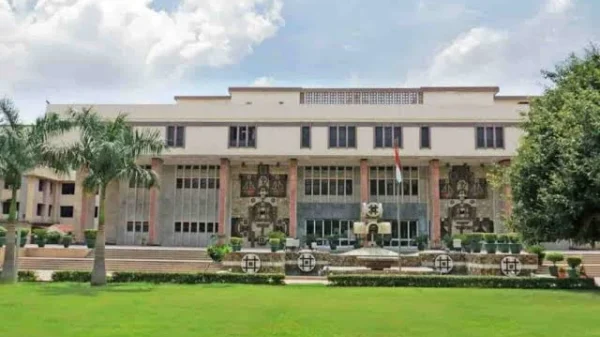






































The Gauhati High Court on Thursday issued notices to Assam Chief Minister Himanta Biswa Sarma, the state government, and the director-general of police after several public interest litigations (PILs) accused the CM of making repeated hate speeches against the Muslim community. The court has set 21 April for the next hearing in the matter.
The petitions were filed by prominent individuals, including Sahitya Akademi awardee Hiren Gohain, former Assam DGP Harekrishna Deka, senior journalist Paresh Malakar, as well as the CPI and CPI(M). They argue that Sarma’s statements and actions are deepening communal divisions in Assam. Earlier this month, the Supreme Court had declined to intervene, directing the petitioners to approach the high court instead.
Controversial Remarks and Viral AI Video
The legal challenge centres on Sarma’s recent statements targeting Bengali-origin Muslims, often referred to derogatorily as “Miyas” in Assam. In January, Sarma encouraged people to “give the Miya trouble,” suggesting small acts such as paying a rickshaw fare less than demanded to create hardship for the community. Petitioners argue that such remarks amount to social and economic harassment.
Adding to the controversy, an AI-generated video shared by Assam BJP in February, titled Point Blank Shot, appeared to show Sarma firing at Muslim figures, accompanied by phrases like “No Mercy.” The 17-second clip circulated widely on social media before being removed, but petitioners cited it as an example of symbolic incitement that could normalise hostility toward Muslims.
Senior Advocate Abhishek Manu Singhvi, appearing for the petitioners, told the court, “It is distressing that a constitutional authority in the state has repeatedly used words that amount to a campaign of hate. These actions create a climate of fear and discrimination for a section of citizens.”
Accusations of Targeting Muslims
The petitions allege that Sarma has consistently used derogatory language against Muslims, encouraged discriminatory behaviour, and released videos capable of inciting the public. They also claim that he directed party workers to file complaints against Bengali-origin Muslims with the purpose of creating harassment.
Senior Advocate CU Singh said, “The Chief Minister has been contributing to a disruptive and demeaning environment in Assam. This reflects on the entire state, not just the minority community.”
Meenakshi Arora, another lawyer representing the petitioners, added, “Sarma has repeatedly targeted a particular community, blaming Muslims for floods, economic issues, and even the loss of elections in other states. In a secular country, a Chief Minister cannot use religion to incite citizens or influence voting behaviour.”
Court Observations
During the hearing, the division bench of Chief Justice Ashutosh Kumar and Justice Arun Dev Choudhury noted that Sarma’s statements appeared to have a “fissiparous tendency.” The court observed that while some remarks might seem like bluster individually, taken together, they indicate a consistent pattern of targeting a minority community.
Chief Justice Kumar said, “We must consider the cumulative effect of these statements. They show a pattern that could disturb communal harmony.”
The lawyers highlighted that despite the widespread and publicly recorded remarks, no suo motu FIR has been registered by the Assam police, raising concerns about accountability at the state’s highest level.
Legal Action Demanded
The petitions seek directions restraining Sarma and his associates from making further hate speeches, the formation of a special investigation team led by a retired high court judge, and appropriate legal action against those responsible.
Singhvi emphasised, “When hate speech is made by someone holding the highest executive office in a state, the law demands swift action. Inaction risks emboldening such behaviour and undermines the constitutional guarantee of equality and secularism.”
The Gauhati High Court will hear the case again on 21 April, and the notices to Sarma and other respondents mark a significant step in addressing allegations of communal incitement at the state level.