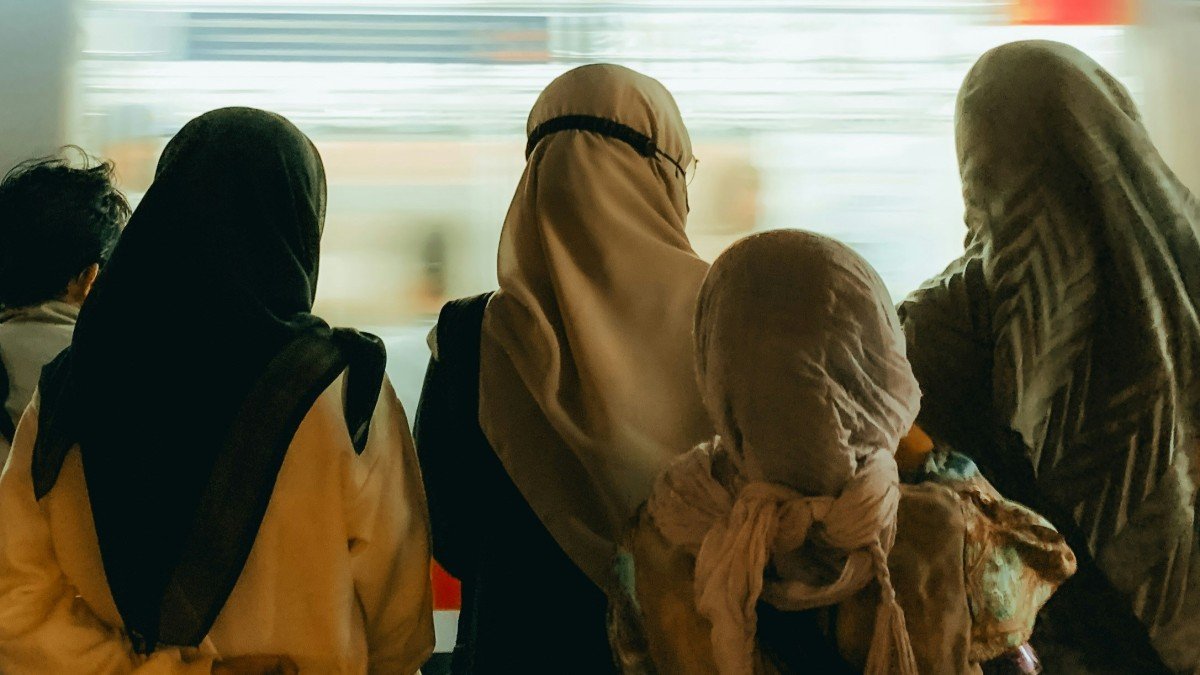
Azerbaijan’s revised school uniform rules have triggered protests after hijab-wearing students were reportedly denied entry to classrooms and teachers were asked to remove their headscarves.
The government has not explicitly banned the hijab by name. However, amendments to school uniform regulations prohibit additional clothing that conflicts with prescribed uniforms and the country’s principle of secular education.
The restrictions have sparked class boycotts, demonstrations and an online campaign, with students and parents demanding that girls be allowed to attend school wearing Islamic headscarves.
What Do the New Rules Say?
The amendments to Azerbaijan’s school uniform regulations were approved in September. According to the state-run Azerbaijani Press Agency, the changes aim to establish a common dress code reflecting the country’s secular principles.
The rules also allow clothing reflecting Azerbaijan’s history, culture and national traditions during celebrations, subject to approval by school authorities.
Azerbaijan’s Constitution defines the country as secular while guaranteeing religious freedom. Around 96 per cent of its population identifies as Muslim, according to Al Jazeera.
Critics argue that the revised rules effectively restrict the hijab without naming it directly, raising concerns about religious freedom and students’ access to education.
Teacher Zahra Hasanova told Al Jazeera that she had been informed she could no longer wear her headscarf at school.
“To be honest, I am a little emotional. I am hurt,” she said. “The hijab is a personal choice, and if one day I want to take it off, that should be my choice too.”
Students Boycott Classes, Teachers Raise Concerns
The restrictions have prompted protests at schools in Baku and other parts of the country. Videos circulating online showed students hugging teachers and crying after reportedly being turned away from classrooms.
Local media reported that students at several schools boycotted classes in solidarity with girls affected by the rules. Parents and demonstrators have also called on authorities to reconsider the restrictions.
Teachers have reportedly faced pressure to remove their headscarves or risk consequences at work.
Imprisoned journalist Polad Aslanov also announced a hunger strike against the new requirements. In a message shared on Facebook by his wife, Gulmira Aslanova, he said he was protesting what he described as violations of constitutional rights.
Azerbaijan Announces 37 Arrests
Azerbaijan’s Interior Ministry announced the arrest of 37 people in connection with incidents surrounding enforcement of the school uniform rules, according to local media reports.
The ministry accused those detained of confronting education workers, damaging educational institutions and attempting to disrupt school operations and traffic. It said a criminal investigation had been opened over alleged disturbances of public order.

Authorities have defended the enforcement of the uniform rules, while critics have questioned whether students should be denied access to education because of their religious clothing.
Reports of internet disruptions also circulated during the protests, with some users complaining of difficulties accessing social media platforms. However, reports of a wider internet blackout had not been confirmed by monitoring organisations cited by Al Jazeera.
Dispute Extends to Turkiye
The controversy has also prompted demonstrations in neighbouring Turkiye, where protesters gathered outside Azerbaijan’s consulate in Istanbul to oppose the restrictions.
Some demonstrators have compared the situation to Turkiye’s 1997 military-led intervention, when women wearing headscarves faced restrictions at universities and in public-sector employment.
Azerbaijani President Ilham Aliyev has warned against outside interference in the country’s way of life without directly naming Turkiye in his remarks.