MD Ali
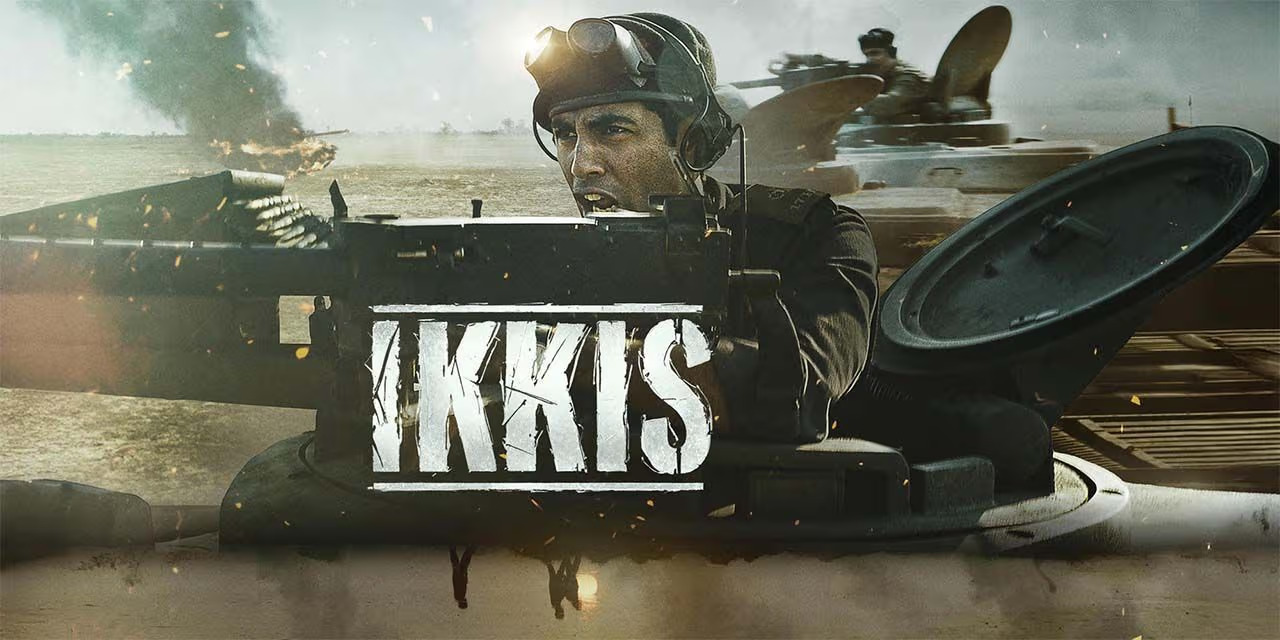
Ikkis, directed by Sriram Raghavan, is a period action drama tracing the life of India’s youngest Param Vir Chakra awardee, Second Lieutenant Arun Khetarpal, whose bravery during the 1971 Indo-Pakistan war became a legend. But what happens after the victory? Raghavan’s Ikkis traces the story that is not often told. The aftermath holds much more than the result of a war—a story of a young life, a story of humans beyond borders.
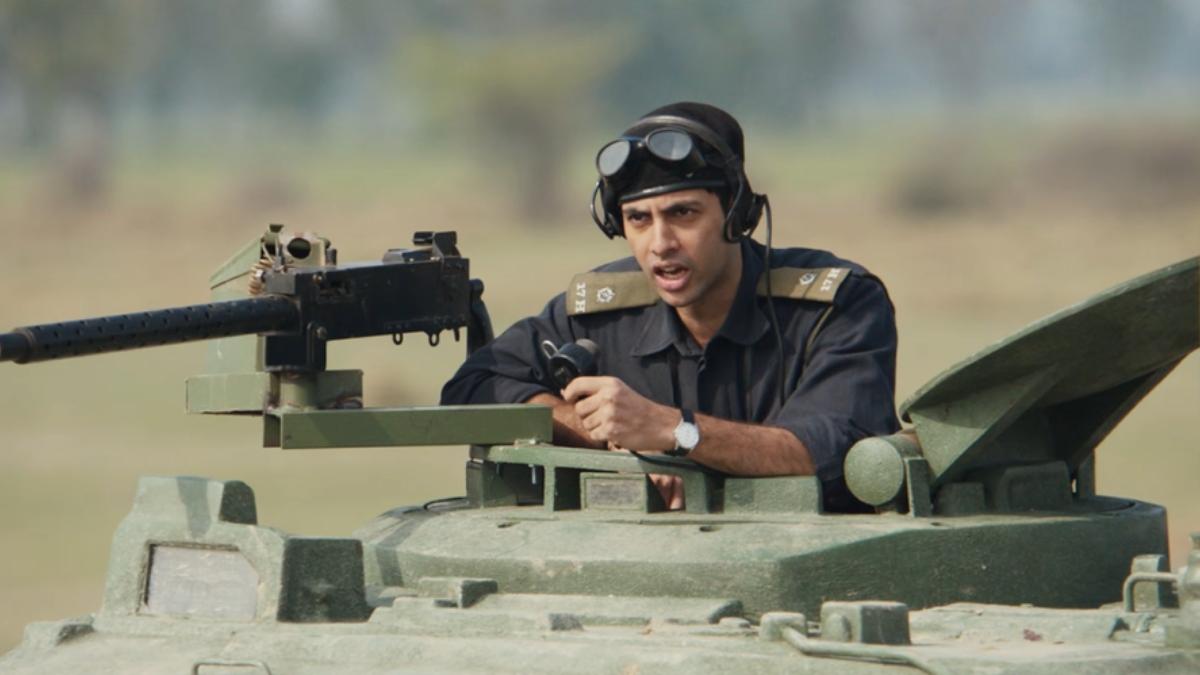
Agastya Nanda portrays the role of a 21-year-old promising tank commander. The film runs in two timelines: one set in the 1970s, when Arun is seen chasing his dreams and finding his love; on the other side, nearly three decades later, Brigadier Mohammad Chand Nesar of the Pakistan army (Jaideep Ahlawat) hosts retired Brigadier Madan Khetarpal (Dharmendra) for a visit to his ancestral home in Sargodha. In this film, Brigadier Nisar is a reliable narrator of conscience and regret.
Nesar does not narrate the war through the obvious language of victory and enjoying his institutional achievement. Instead, he frames the story through introspection and restraint, offering a perspective shaped by conscience rather than triumph. The late legendary Dharmendra becomes the ideal listener—despite suffering from his personal loss, he chooses to amplify the message of peace and duty.
Arun’s memory functions as an anchor that moves back and forth between past and present, where we witness the adventure of war that soon turns into a human-created tragedy imposed on people across the lines. The simplest dialogue carries meanings that leaders can contemplate to be responsible. When Khetarpal’s tank crosses the border and enters Pakistan, he says, “ Dekho Ye Pakistan Hai (See, this is Pakistan).” His junior replies, “Haan, Sab Ek Jaisa Hi to Hai. (Everything is like us)” “Haan, Sab Jaisa Hi Hai (Yes, Everything is Like Us), Aruns resonates with that.” This attaches itself to Dharmendra’s question when he asks, “Dushman, Kaun Dushman (Enemy, who is the Enemy)?” The dialogue drops as a quote laden with intellectual inquiry.
Do people of either nation choose their enemy, or is it imposed on them by players of power? When lands are alike, when all the salient features of culture are the same, how do we become enemies? The short, compassionate visit of retired Brigadier Khetarpal to Pakistan is under constant surveillance—an institutional practice that is more relevant in the present and has become part of our daily integral activity.

Yet, although the retelling of the story is set in 1971, Raghavan offers a realizational critique of media sensationalization when a correspondent jumps with his subordinates, asking how exciting the war is for them. A reference to the present, where the champions of Noida induce CGI to illustrate the aesthetics of war rather than a tragedy.
Dharmendra travels a long journey from Haqeeqat (1964) to Ikkis (2026) to offer a deconstruction of war. Where Haqeeqat is the spectacle of damage suffered by a nation recovering from centuries of subjugation, Ikkis shifts the focus to loss, stripping war of its triumphant excesses.
Where one might celebrate who inflicted more damage on others, Dharmendra embraces a man (Deepak Dobriyal) who comes protesting, having him on his soil. Aggrieved Dobriyal shows his amputated leg that he lost in the same war, and Dharmendra tells him that he lost his son in the war. Soon, his resistance fades away to reluctant recognition. In the glimpses of partition, the subtext explains that the Separation of a nation was not just the disintegration…it uprooted the lives of those who were not part of the political agreement. Brigadier Madan’s unannounced visit to his lost home in Sargodha receives a celebratory welcome and warm hospitality from everyone.
The production design of the film is not monumental and slow-paced, but it is loyal to its rhythm and eschews roaring background scores. If there were no wars, there would be green fields, ponds, and leaves swinging on the branches of trees instead of barren land, smog, and wreckage. The film celebrates sacrifice; however, it fairly operates on an emotional and sensible register. Ikkis, wrapped in generic expectations, interpolates serious questions through dialogues, remorse, orders, and identity. It certainly appreciates zeal and bravery, but discourages the comprehension of violence and its consumption.
The allegory of the film is didactic and provocative about the travesty of all kinds of conflict. It is a great matter of contemplation for docile bodies: when men come under orders, they become less human and more conquerors. The film has a protagonist, but fairly manages the absence of a villain, as it never feels like the vilification of a sect of people for the acts of others (leaders) is necessary. In a time when a series of films is intentionally subsumed in the quagmire of jingoism, endorsing the vilification of Muslims and manifesting masculine violence, Ikkis emerges as a counter-narrative—fighting Pakistan without bashing it as the all-time favourite enemy of Indian Cinema. Recently, in an interview, Raghavan stated that we would never make films like Dhurandhar (2025). He implicitly suggested the contemporary mood of the nation and said that “we must understand that we are living in different times.”
The views expressed in this article are the author’s own and do not necessarily reflect the policy of the platform.