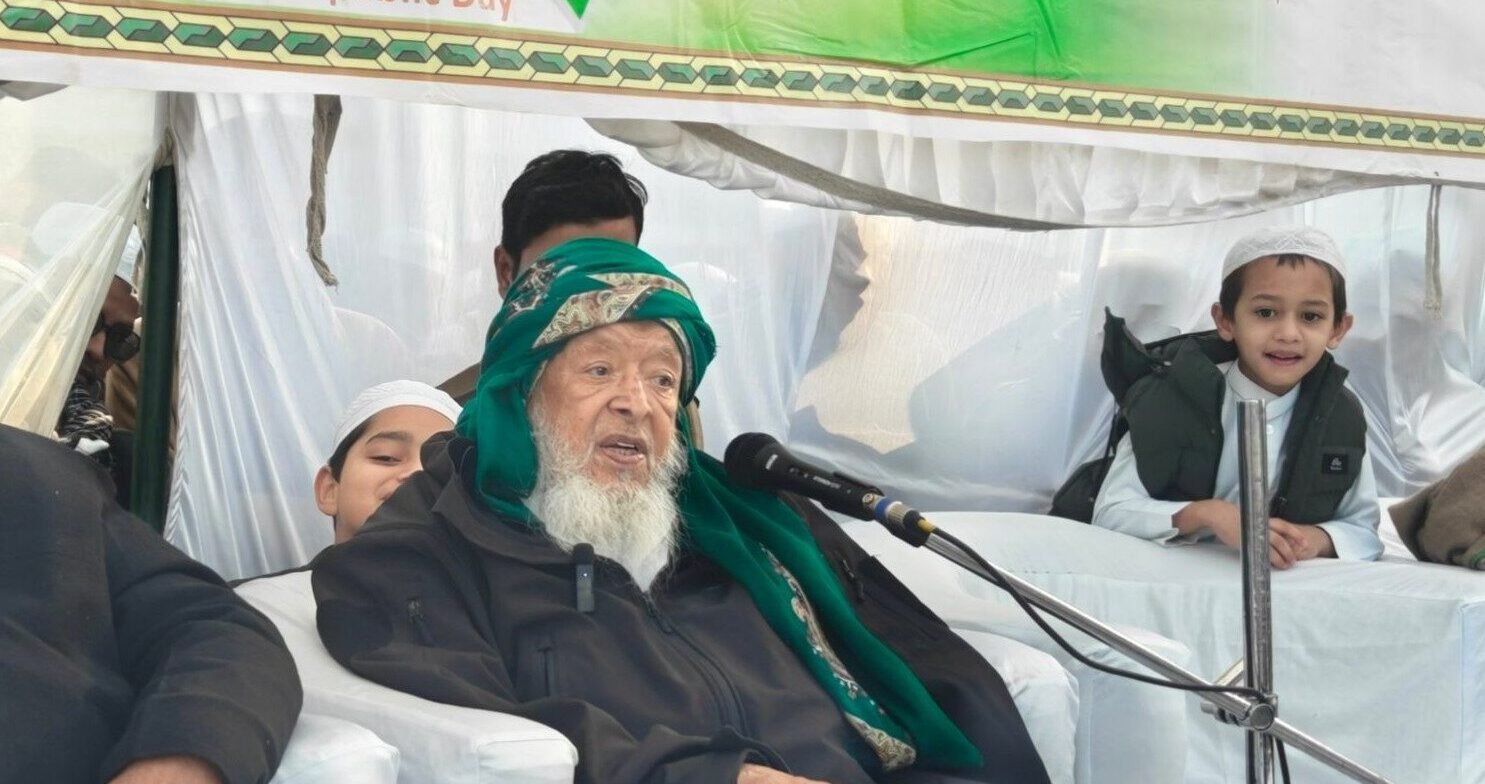
Maulana Syed Arshad Madani, the president of Jamiat Ulema-e-Hind, attended a State Executive Committee meeting in Kaliyar, a town near Roorkee in Uttarakhand’s Haridwar district on June 23, where he was invited as the chief guest.
He addressed a large gathering of Islamic scholars, Hafiz-e-Quran and members of the Muslim community. His speech focused on social harmony, democracy, religious freedom and the role of Muslims in India’s history. However, one of his remarks about “jihad” in the context of 1803 has triggered political and social controversy.
‘Jihad in 1803 for independence’ remark draws attention
During his speech, Madani referred to the colonial period and claimed that resistance against British rule was linked with religious duty.
He said, “In 1803, when the country was under colonial rule, a call for ‘jihad’ was issued for the nation’s freedom. It was therefore necessary for all Muslims to take part in this struggle to liberate the country.”
He further added, “At that time, every Muslim had a duty to participate in this fight against slavery. This movement started from madrasas. Those who do not know this history are unaware of it.”
His comments were made in the presence of a large audience and have since sparked debate due to the use of the term “jihad” in a political-historical context.
Allegations on demolition of mosques and treatment of Muslims
Madani also made strong remarks about the treatment of Muslims and their religious places in present-day India. He alleged that mosques and madrassas are being targeted.
He said, “The current government led by Narendra Modi is demolishing mosques. After independence, those in power started harming Muslims. Successive governments kept Muslims trapped in riots and unrest.”
He further said, “Today, not only Muslims but Islam itself is being targeted. Our religious places are being destroyed using bulldozers.”
He also claimed that incidents of mob lynching and the closure of religious institutions are increasing, raising concerns about safety and equality.
Appeal for peace, harmony and unity
Despite the criticism, Madani also stressed the need for unity, peace and love among communities. He said the country can only progress through harmony.
“A nation cannot survive without love and affection. If you love the country, you must give up the politics of hate and promote the politics of love,” he said.
He urged Muslims to live peacefully with people of all communities and said this is the true meaning of loyalty to the nation.
“Living with love and brotherhood is the real test of patriotism. Without it, no society can survive,” he added.
Reference to relief work during West Bengal floods
Madani also referred to past relief efforts by Muslim organizations. He recalled that during floods in West Bengal, Jamiat Ulema-e-Hind provided food and help to both Hindus and Muslims.
He said, “When floods came in Bengal, we served everyone without discrimination. But today, the same community is seeing its houses demolished and madrassas shut down.”
He also mentioned incidents of communal cooperation during crises, saying that ordinary Muslims have often helped others regardless of religion.