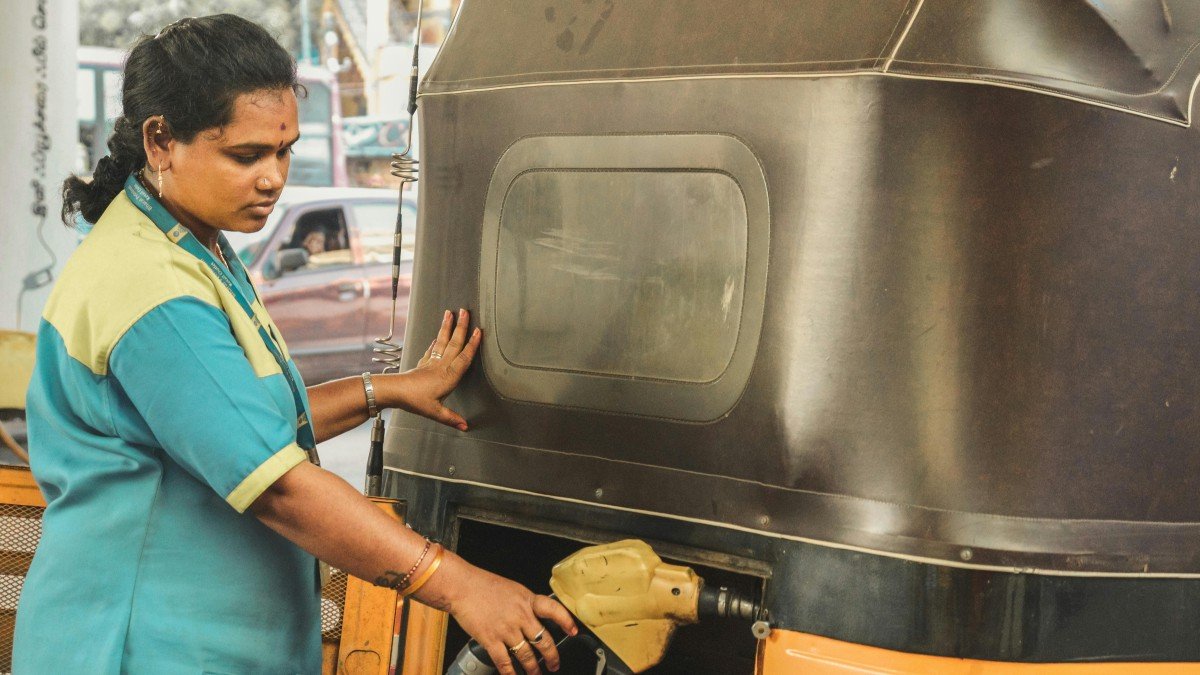
A consumer court in Chhattisgarh’s Raipur has directed Maruti Suzuki India Ltd. and its dealer to replace a customer’s Grand Vitara Strong Hybrid with a new E20-compatible vehicle, holding that the sale of a non-E20 compatible vehicle amounted to deficiency in service and an unfair trade practice.
The order, passed by the Additional Bench of the District Consumer Disputes Redressal Commission comprising President Prashant Kundu and Member Dr. Anand Varghese, is being described as India’s first known consumer court ruling linked to E20 petrol.
The Commission ordered the manufacturer and dealer to replace the vehicle within 45 days. If they fail to do so, they must refund ₹20,50,494, including the vehicle price, RTO charges and insurance premium.
Owner Claimed Vehicle Developed Repeated Faults
The complaint was filed by Raipur resident Dr. Premraj Devta, who purchased a Maruti Grand Vitara Strong Hybrid Zeta Plus manufactured in January 2023.
According to the complaint, the SUV began developing recurring problems within months of purchase, including repeated engine stalling. Dr. Devta alleged that the vehicle was taken to authorised service centres several times, where the fuel tank was cleaned after contamination was detected. However, the same issues continued to recur despite repeated repairs.
The complainant also relied on a government-recognised laboratory report, which allegedly found a white, curd-like substance identified as ethanol in the fuel. He claimed he had not been informed at the time of purchase that the vehicle was not fully compatible with E20 petrol.
Maruti Suzuki Denied Responsibility
Maruti Suzuki and the dealer denied that E20 petrol was responsible for the vehicle’s problems. They argued that the Grand Vitara was compatible with E20 fuel and maintained that the defects were caused by factors such as poor-quality fuel, routine wear and tear, maintenance issues or other unrelated reasons.
The Commission, however, noted that repeated repair attempts had failed to resolve the recurring defects.
It observed that the vehicle continued to develop the same problems despite multiple visits to authorised workshops, strengthening the consumer’s claim that the defects had not been effectively rectified.
The Commission also noted that E20 petrol has become the commonly available fuel at petrol pumps, leaving consumers with little practical choice.
According to the order, motorists cannot reasonably be expected to avoid E20 fuel when alternative fuel options are not readily available.
Compensation Awarded
Apart from directing replacement of the vehicle or a refund, the Commission awarded Dr. Devta ₹1 lakh as compensation for mental harassment and ₹10,000 towards litigation costs.
The compensation must also be paid within 45 days, failing which it will attract interest at the rate of 7% per annum.
Ruling Comes Amid Debate Over E20 Fuel
The order comes amid an ongoing debate over the Centre’s ethanol-blending programme.
The government has maintained that E20 fuel is safe for compatible vehicles and has dismissed claims that it causes engine damage. Union Road Transport and Highways Minister Nitin Gadkari has repeatedly said the government has not received complaints of engine damage due to E20 fuel, although he has acknowledged that ethanol has a lower calorific value than petrol, which can slightly reduce fuel efficiency.

The Ministry of Petroleum and Natural Gas has also defended the E20 programme, stating that it is supported by scientific studies, regulatory safeguards and international experience.
The Raipur Commission’s order could now become a significant reference point in future consumer disputes involving E20 fuel compatibility and vehicle performance.