Azaan Salahuddin
There is a peculiar kind of unease that is difficult to explain because ordinary life keeps contradicting it. A man goes to work, argues with his friends, buys a home, takes his children to school, votes in an election and prays without hiding. His neighbours may be Hindu. His closest colleague may be Hindu. Nothing about this life resembles persecution in the dramatic historical sense of the word. Yet the same man may notice that people bearing his name are increasingly spoken about as a demographic problem, an electoral problem, a security problem or an infiltration problem. He may begin to wonder whether something in the meaning of belonging is changing even while most of the furniture of ordinary citizenship remains exactly where it was.
That contradiction, more than any analogy with somebody else’s tragedy, seems to me the right place to begin thinking about Indian Muslims. They are sometimes compared with Jews in Nazi Germany and at other times with Palestinians. Neither comparison survives much scrutiny. Nazi Germany stripped Jews of rights and citizenship and ultimately murdered them through a machinery of genocide. Palestine raises questions of displacement, occupation, territory, settlements, refugees and sovereignty. Neither history describes approximately 200 million Muslims who are Indian citizens and whose families, languages, cities, professions and memories form part of India itself. Indian Muslims are not asking India to leave their homeland. India is their homeland. The relevant question is different. Can a minority remain formally equal while gradually becoming less equal in the political and social imagination of its country?
Muslim Disadvantage Predates 2014
Any honest answer must begin before 2014. The Sachar Committee reported in 2006 that Muslims already lagged behind other communities on education, employment, credit and several measures of socioeconomic wellbeing. Residential segregation, communal violence, prejudice and Muslim political underrepresentation also long predate the BJP government. Blaming every Muslim disadvantage on Narendra Modi would therefore be historically indefensible. But establishing that history settles only one question. It tells us that Muslim disadvantage did not begin in 2014. It does not tell us whether something changed afterwards in its intensity, political legitimacy or everyday acceptability. An old prejudice can acquire a new political permission.
Everyday Religious Freedom Does Not Answer Everything
Nor is contemporary Muslim life accurately described as pervasive state repression. A large Pew survey conducted in 2019 and 2020 found that 89 per cent of Indian Muslims said they were very free to practise their religion, while 95 per cent said they were very proud to be Indian. India remains a country in which millions of Muslims worship openly, vote, litigate against governments, build businesses and participate in public life. These facts matter. But they answer only part of the inquiry. Freedom to enter a mosque does not establish equality in a housing market. The ability to vote does not establish political representation. Access to courts does not mean executive power is always exercised equally before courts intervene. Above all, pride in being Indian does not contradict anxiety about one’s position within India. A person can love his country deeply and still wonder whether his country has begun to look at him differently.
Welfare Inclusion and Political Marginalisation
The government’s welfare record deserves the same fairness. Many major schemes operate according to economic eligibility rather than religion, while the Ministry of Minority Affairs continues programmes in education, credit and entrepreneurship. This makes any theory of comprehensive economic exclusion difficult to sustain. But comprehensive exclusion is the wrong test. A Muslim can receive the same ration, scholarship or government benefit as his Hindu neighbour while becoming less represented in the political coalition governing them both. Administrative inclusion and political marginalisation are perfectly capable of existing together.
Muslim Representation in Parliament
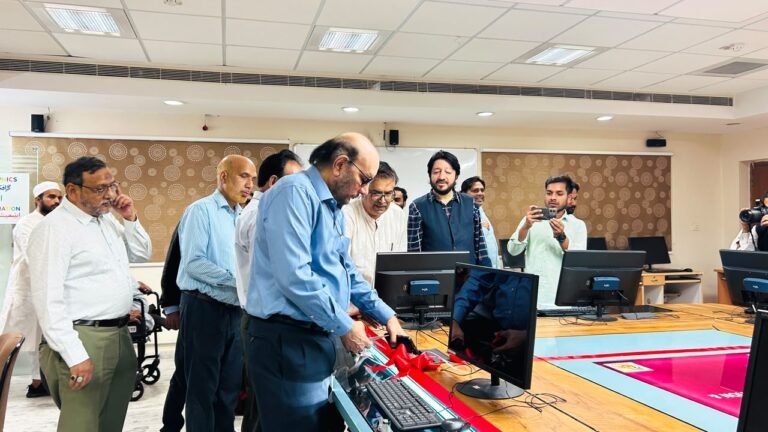
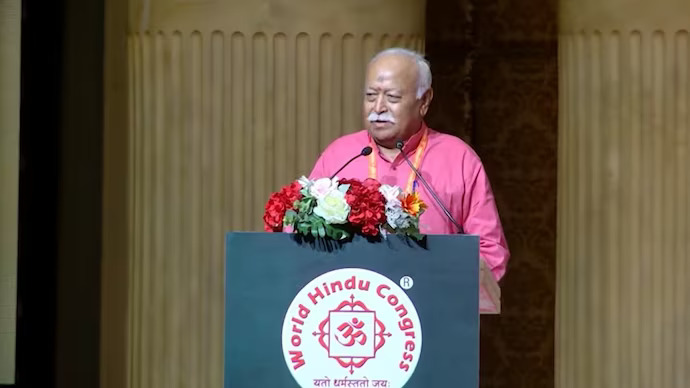
Political representation is therefore particularly revealing. Twenty-four Muslims were elected to the Lok Sabha in 2024, less than 5 per cent of the House against a population share recorded at 14.2 per cent in the 2011 Census. Underrepresentation alone does not prove discrimination, and opposition parties share responsibility for it. Yet none of those 24 Muslim MPs came from the BJP-led NDA. A community of approximately 200 million people can now be almost absent from the parliamentary ranks of the coalition governing India without preventing that coalition from winning national power. That does not make Muslims politically irrelevant everywhere. It does mean that India’s principal governing coalition has found a viable electoral route to national power requiring remarkably little direct Muslim representation. That is not persecution, but neither is it politically trivial.
How Political Language Shapes Belonging
The change is also visible in language. During the 2024 election campaign, Prime Minister Modi accused Congress of favouring Muslims and used language referring to “infiltrators” and people who have “more children”. The BJP’s defence was that he was attacking minority appeasement rather than Muslims themselves. That explanation should be recorded. Illegal immigration, forced conversion and national security are legitimate subjects of politics. But intent is not the only question. Effect matters too. When Muslims repeatedly appear in political discourse alongside infiltration, demographic anxiety, conversion, undeserved preference or doubtful national loyalty, the cumulative message can exceed the literal meaning of any one statement. What matters is what kind of citizen the repeated vocabulary teaches people to imagine when they hear the word Muslim.
Demolitions and the Question of Due Process
Demolitions show why cumulative evidence matters. A government is entitled to demolish an illegal structure. A Muslim owner does not transform municipal enforcement into persecution. But when demolition follows an accusation, protest or communal disturbance, one must ask about notice, timing, comparators and due process. In 2024, the Supreme Court laid down nationwide safeguards against punitive demolitions and made clear that the executive cannot determine guilt and destroy property as punishment. That judgment demonstrates two things simultaneously. The problem was sufficiently serious to require constitutional correction, and India’s constitutional institutions remained capable of providing that correction. The second fact should reassure us about Indian constitutionalism. It cannot erase the first.
Citizenship and the Anxiety Over Documentation
Citizenship brings the anxiety into even sharper focus. The Citizenship Amendment Act does not take citizenship away from Indian Muslims, and that legal fact matters. But the wider citizenship debate has exposed something peculiar about Indian documentation. India does not issue every ordinary citizen a single universal citizenship certificate. The Election Commission itself says there is no specific document that by itself proves citizenship, even though only citizens may lawfully be registered as voters. A voter identity card is principally evidence of electoral identity. More recently, the Ministry of External Affairs clarified that even an Indian passport should not be treated as standalone proof of citizenship, despite a passport being among the most authoritative documents an Indian ordinarily possesses.
There may be perfectly defensible legal reasons for each of those distinctions. Citizenship ultimately arises from the Citizenship Act and the circumstances of birth, descent, registration or naturalisation, rather than merely from possession of an identity document. But consider what this sounds like to an ordinary citizen who has spent his entire life believing the question of his nationality was settled. He may have an Indian passport, a voter card, decades of residence and a lifetime of participation in the republic, yet discover that documents he assumed demonstrated the obvious may not conclusively answer the legal question by themselves. For most Indians, this may remain an abstract technicality. For a Muslim hearing simultaneous political arguments about infiltration, citizenship registers and belonging, it can feel considerably less abstract. The anxiety does not prove that his citizenship is actually threatened. It explains why assurances that he still possesses formal rights may not entirely answer what he is worried about.
Discrimination Exists Beyond the State
Some discrimination does not originate with government at all. Experimental research in Delhi’s rental market found that applicants identifiable as Muslim received substantially fewer landlord responses than upper-caste Hindu applicants. Earlier research documented similar barriers. This prejudice predates the BJP, which is precisely why origin and political environment must be separated. A government need not create an old prejudice for political language to intensify it, legitimise it or reduce the social cost of expressing it.
India Contains Contradictory Muslim Experiences
India still refuses any simple description. The same country contains Hindu landlords who discriminate against Muslims and Hindu lawyers who defend Muslims. It contains politicians who weaponise religious suspicion and judges who restrain governments. Southern India can look very different from parts of northern and central India. Muslim experiences differ enormously according to class, caste, gender and geography. Millions of Muslims may feel secure, integrated and optimistic. Their experience is real. But the proposition works both ways. The security of one Muslim cannot invalidate the apprehension of another, and ordinary Hindu-Muslim friendship cannot by itself answer evidence about institutions, electoral incentives or political rhetoric.
When Citizenship Becomes a Question of Belonging
This is where citizenship becomes more intimate than statutes can capture. A citizen does not need to lose his passport, vote or right to worship before his relationship with the nation begins to change. He may continue going to work, owning property, voting, praying openly, building a business and loving Hindu friends and neighbours while repeatedly encountering people bearing his identity discussed as infiltrators, demographic threats or citizens whose loyalty requires demonstration. None of those things individually cancels his citizenship. Their accumulation can nevertheless alter what citizenship feels like. The deepest anxiety is not necessarily that the state will formally declare a Muslim less Indian. It is that being Indian and Muslim may increasingly require an explanation where the Indianness of others is simply assumed.
Looking at Patterns, Not Isolated Incidents
Law understands the difficulty. Discrimination is seldom proved because somebody records an intention to discriminate on official letterhead. Patterns, comparators, timing and disparate treatment matter because unequal treatment often presents itself through individually defensible decisions. A house is demolished and there was a planning violation. A Muslim candidate loses and elections have losers. A landlord refuses a tenant and private owners make choices. A politician says “infiltrator” and supporters say he meant illegal migrants. Every incident arrives with an explanation, and some explanations will be entirely true. The serious question begins after they have been heard. At what point does the accumulation itself become evidence?
The Case Against Overstatement
That does not entitle Muslims to convert every grievance into communal persecution. A false allegation against a Hindu, a policeman, a BJP government or India remains false even when made in defence of Muslims. The Qur’anic demand for justice includes justice when fairness becomes inconvenient to one’s own side. But intellectual restraint cannot become an elaborate method of refusing to see. After the reasonable alternative explanations have been considered, the evidence does point somewhere. It does not show the destruction of Muslim citizenship. It suggests something more gradual. Muslim political relevance has weakened, anti-Muslim political language has become more normalised, inherited social prejudice remains measurable and some exercises of state power have required constitutional courts to restore boundaries that should have operated before judicial intervention became necessary.
India Is Not Nazi Germany or Palestine
India today is plainly not Nazi Germany, and Indian Muslims are plainly not Palestinians living under an Israeli occupation. Those observations are historically correct but analytically almost useless. The danger worth examining is different. Formal rights can survive while political relevance diminishes. Constitutional equality can remain while social suspicion increases. Courts can continue functioning while abuses accumulate before being corrected. Elections can remain competitive while a national governing coalition discovers that meaningful Muslim representation is unnecessary to its success. None of this means Indian democracy has ceased to function. Together, however, these developments are serious enough that they should be examined on their own terms rather than measured against somebody else’s catastrophe.
What Happens Next Remains Uncertain
The future remains uncertain. Federalism, elections, courts, civil society and India’s immense pluralism are powerful counterweights, and the 2024 election itself demonstrated limits to political dominance. India may be passing through an intense but reversible period of majoritarian politics. It may instead be settling into something more durable, where Muslims retain every formal mark of citizenship while becoming progressively less necessary to the political conception of the nation. We do not yet know. But uncertainty about the destination should not require uncertainty about everything visible along the road.
A Question of Equal Citizenship
A minority should not have to produce a catastrophe before it is permitted to produce evidence. Indian Muslims need not prove that they are somebody else’s Jews or somebody else’s Palestinians. They need only be able to ask whether the equality promised to them in their own country is becoming thinner, one defensible explanation at a time.
The views expressed in this article are the author’s own and do not necessarily reflect the policy of the platform.