India has rejected concerns raised by the United Nations human rights office over the mass detention of protesters in Delhi, calling the remarks “unwarranted interference in the internal affairs of India”.
In a statement posted on its India at UN account on X, the Indian mission in Geneva said the concerns raised by the Office of the United Nations High Commissioner for Human Rights (OHCHR) were misplaced and urged the UN body to pay comparable attention to large-scale protests elsewhere.
“India is the world’s largest democracy, where the right to peaceful assembly is guaranteed by our Constitution and safeguarded by robust institutions, an independent judiciary, and a free media,” the statement said.
It added that citizens exercised their right to peaceful assembly subject to reasonable restrictions in the interest of public order, and that courts remained available to address grievances.
The response came after the UN human rights office expressed concern over reports of mass detentions of demonstrators, protest leaders, civil society members, lawyers and journalists during protests in the national capital on Saturday.

UN Calls for Release of Arbitrarily Detained Protesters
UN human rights spokesperson Thameen Al-Kheetan said the office was concerned about the reported detentions before and during the demonstrations organised by the Cockroach Janta Party (CJP).
“We call on the authorities to ensure that the right to peaceful assembly is fully respected and fulfilled,” the spokesperson said.
The UN office stressed that restrictions on peaceful protests must satisfy strict tests of necessity and proportionality. It also urged Indian authorities to ensure that law enforcement personnel exercised “utmost restraint” when responding to peaceful demonstrators.
The spokesperson further called for the immediate and unconditional release of anyone held arbitrarily and urged the authorities to engage in meaningful dialogue to address the concerns raised by protesters.
India, however, argued that the UN body’s comments were inappropriate.
“The OHCHR’s concerns are misplaced and constitute an unwarranted interference in the internal affairs of India,” the Indian mission said.
It added that the OHCHR should devote “comparable attention to large-scale protests elsewhere”, consistent with what India described as the body’s mandate of impartiality and non-selectivity.
Thousands Detained During CJP Protest in Delhi
The exchange followed a major security operation in Delhi on Saturday, when police detained thousands of people attempting to reach Jantar Mantar for a protest demanding the resignation of Chief Election Commissioner Gyanesh Kumar.
The CJP and opposition parties have alleged irregularities in the Special Intensive Revision (SIR) of electoral rolls. The Election Commission has rejected allegations of wrongdoing.
Delhi Police had denied permission for the proposed gathering and imposed restrictions on public assemblies. Security measures included barricades and restrictions affecting movement across parts of the capital.
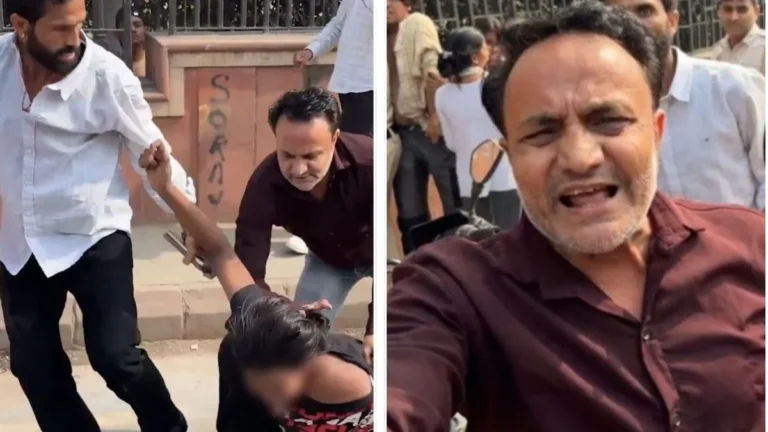
CJP founder Abhijeet Dipke and party leaders Saurav Das and Ashutosh Ranka were detained after arriving at Delhi airport from Mumbai ahead of the planned demonstration. They were subsequently placed under preventive arrest before being released by an executive magistrate on Sunday, according to reports.
Several opposition leaders, including former chief ministers Arvind Kejriwal, Mamata Banerjee, Pinarayi Vijayan and Manik Sarkar, were also detained during the crackdown.
Reports on the number of people detained varied, with some accounts putting the figure at around 3,000 and others reporting substantially higher totals.
Supreme Court Directs Authorities to Review Restrictions
The detentions and restrictions also prompted legal challenges before the Supreme Court.
During a special hearing on Sunday, the court directed authorities to remove barricades unless they were “absolutely warranted” and withdraw restrictions imposed under Section 163 of the Bharatiya Nagarik Suraksha Sanhita (BNSS), 2023, around the Supreme Court and other courts.
The bench also directed that metro and rail services should function normally unless restrictions were necessary to address public-order concerns. It said the free movement of people and traffic should be restored, subject to appropriate regulations.
The court issued notices to authorities, including Delhi Police, the Union Home Secretary and the Delhi Metro Rail Corporation, over the detentions and the circumstances surrounding them, and sought a compliance report by Tuesday.