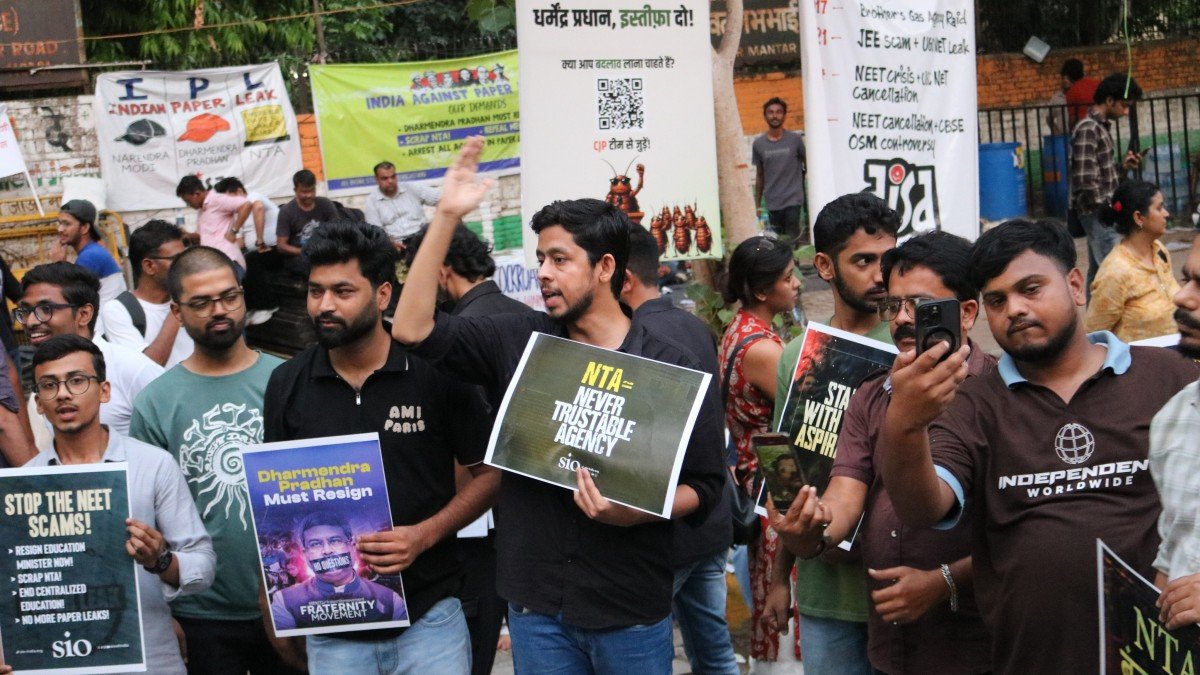
Academic freedom in India was “severely restricted” between July 2025 and June 2026, according to the annual Free to Think 2026 report by Scholars at Risk (SAR), an international network that monitors attacks on higher education.
The report placed India alongside Hong Kong, Indonesia, Pakistan, the occupied West Bank and Ukraine in the “severely restricted” category.
India’s Academic Freedom Index score fell to 0.14 in 2025 from 0.38 in 2022. The index measures freedom to research and teach, institutional autonomy, academic exchange and dissemination, campus integrity, and academic and cultural expression.
SAR documented 382 attacks arising from 321 verified incidents across 59 countries and territories during the reporting period. India recorded 42 attacks, the highest number among the countries covered, involving violence, imprisonment and loss of positions for academics and students.
Centre’s Influence Over Higher Education
The report said India’s central government had expanded its authority over higher education, influencing university governance, leadership appointments and academic priorities.

It also said the Bharatiya Janata Party government continued to use the University Grants Commission (UGC) as a major vehicle for state influence over universities.
“The UGC faced scrutiny in recent years for policies perceived to tighten government control over universities, including loosening academic qualification requirements for university vice-chancellors and accelerating the casualisation of academic labour by removing the 10% cap on non-permanent, contract faculty,” the report said.
SAR added that university administrators had taken steps to restrict campus discourse, including dismissing faculty members, cancelling academic events and introducing rules limiting student expression.
Faculty Members Face Disciplinary Action
The report cited several cases involving academics who faced disciplinary action over their views or teaching.
It highlighted the termination of South Asian University professor Snehashish Bhattacharya in September 2025 for “misconduct against university interests”. Bhattacharya and 14 other faculty members had earlier signed a letter expressing concern over the university’s handling of student protests in October 2022.
SAR also mentioned the dismissal of Lora Santhakumar, an assistant professor at SRM Institute of Science and Technology, after she posted criticism of Indian military action in Pakistan and opposed calls for war.
Another case involved Jamia Millia Islamia professor Virendra Balaji Shahre, who was suspended over an examination question asking students to “discuss the atrocities against Muslim minorities in India”.
Restrictions on Research and Publication
The report said government and judicial actions had also constrained academic research, teaching and publication.
It cited a March 2026 Supreme Court order that imposed a “life ban” on three academics from receiving public funding for curriculum development. The case involved scholars associated with an NCERT Class 8 social science textbook that referred to “corruption in the judiciary”.
The Court initially banned the textbook and directed governments to dissociate from the authors. One of the scholars, Michel Danino, a guest professor at IIT Gandhinagar and chairperson of the NCERT social science curricular group, was dismissed from his faculty position.
The Supreme Court later modified its order in May 2026, allowing public universities and state governments to decide independently whether the scholars could participate in future curriculum-related work.
SAR also noted that the Jammu and Kashmir government banned the sale, distribution and possession of 25 books on the region’s socio-political history, including works discussing enforced disappearances and feminist resistance.
Campus Events and Student Protests Restricted
According to the report, universities cancelled events because of invited speakers’ criticism of the BJP-led government. Banaras Hindu University and Mumbai University were cited as examples.
In another case, Delhi University cancelled a seminar titled “Land, Property and Democratic Rights” in February, citing “administrative reasons”.
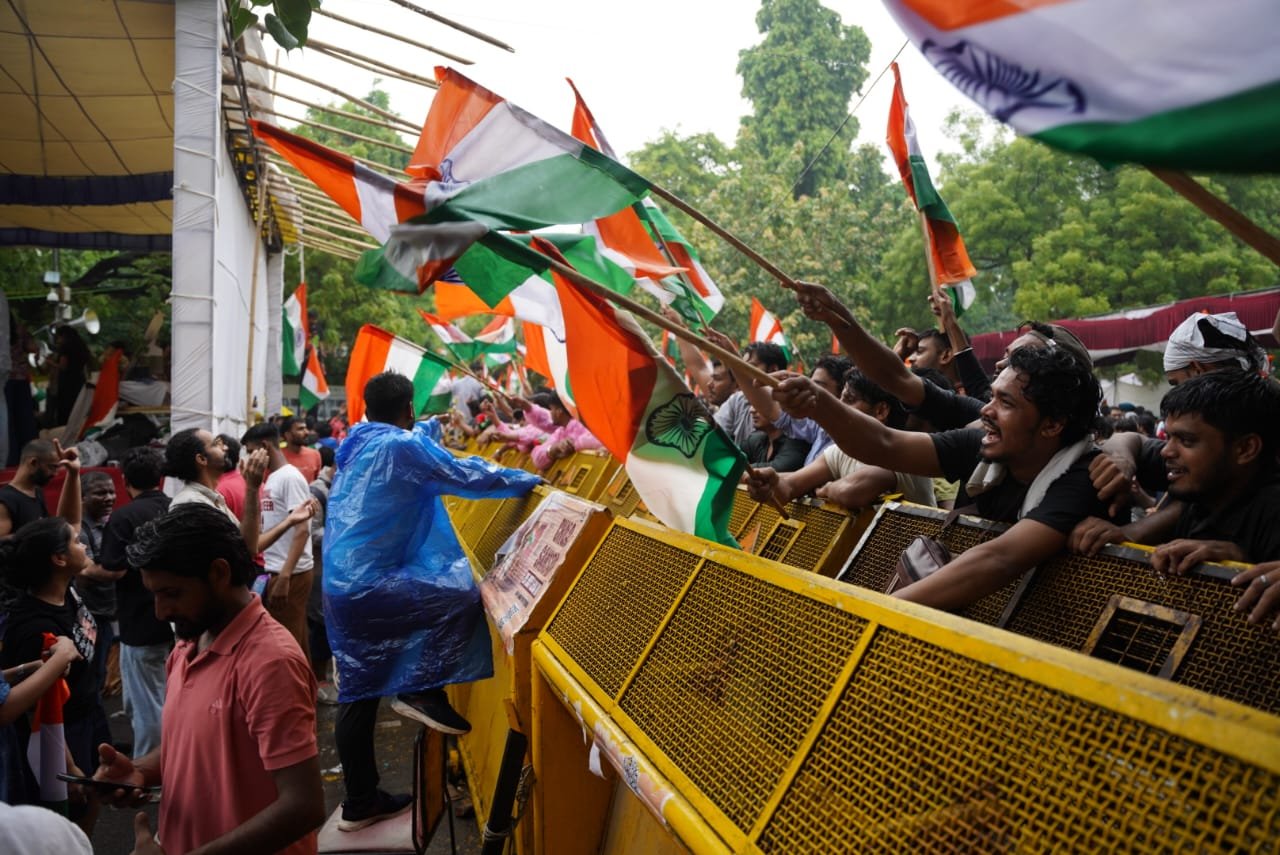
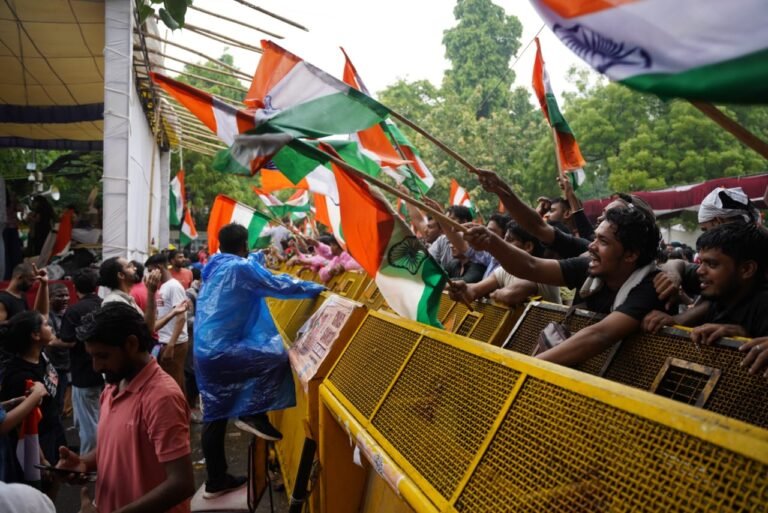
The report said student protesters faced pressure from university authorities, police and opposing student groups. It cited actions taken against students at the Tata Institute of Social Sciences and Jamia Millia Islamia over allegedly unauthorised gatherings.

It also referred to a Delhi University notification requiring students to obtain approval 72 hours before holding protests, with violations potentially leading to expulsion or police action.
Student Groups and Political Polarisation
SAR said ideological divisions between student organisations, particularly the right-wing Akhil Bharatiya Vidyarthi Parishad (ABVP) and the left-wing All India Students Association (AISA) and National Students’ Union of India (NSUI), had turned academic and cultural events into “political flashpoints”.
The report linked campus clashes to debates over national identity, caste, religion and historical interpretation.
Globally, SAR said academic freedom had declined significantly in 50 of 179 countries over the past decade, while only nine countries recorded improvements. Afghanistan, China, Gaza, Iran, Russia, Türkiye, Syria, Venezuela and Zimbabwe were placed in the “completely restricted” category.