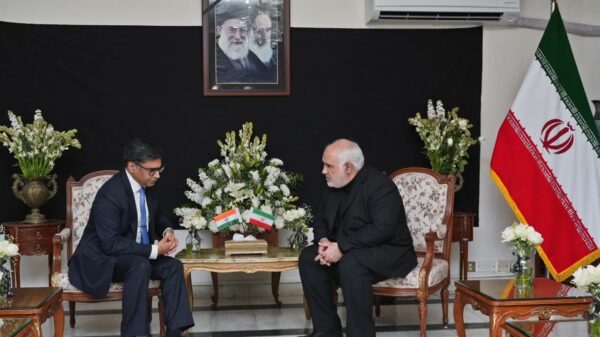





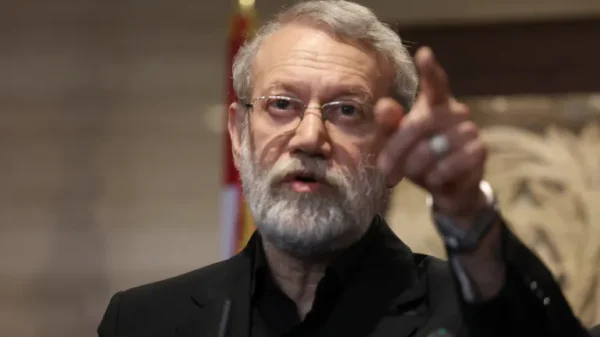
























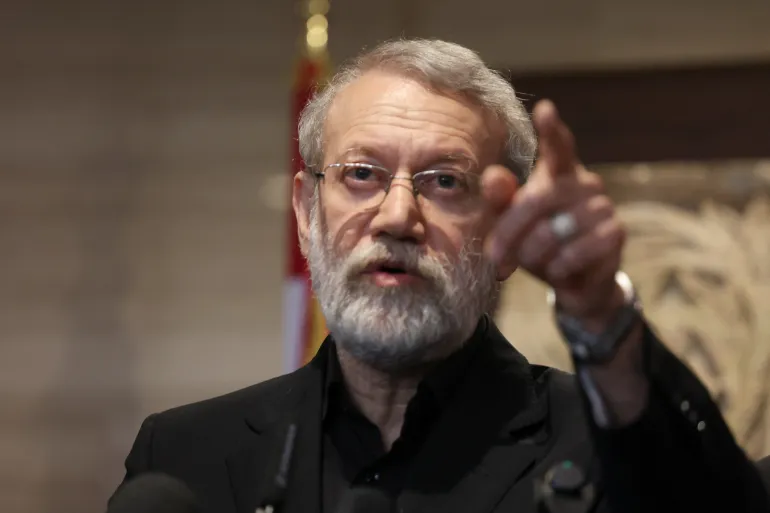
Israel’s Defence Minister, Israel Katz, claimed on Tuesday that Ali Larijani, Secretary of Iran’s Supreme National Security Council and the country’s de facto second most powerful figure, was killed in Israeli airstrikes carried out overnight. Iran has not confirmed or denied the claim. If verified, Larijani’s death would mark the most significant loss to Iranian leadership since Supreme Leader Ayatollah Ali Khamenei was killed on the first day of the conflict on February 28.
“Larijani and the Basij commander were eliminated overnight and joined the head of the annihilation program, Khamenei, and all the eliminated members of the axis of evil, in the depths of hell,” Katz said, according to his office.
Israel also claimed that Gholamreza Soleimani, commander of Iran’s Basij paramilitary forces, a volunteer militia operating under the Islamic Revolutionary Guard Corps, was killed in the same strikes.
Confusion Over Larijani’s Fate
The claim has been clouded by a post that appeared on Larijani’s social media account later on Tuesday, paying tribute to Iranian Navy personnel killed in the US submarine attack on March 4. The post read that the martyrs’ memory would forever remain in the heart of the Iranian nation and that their sacrifice would strengthen the armed forces for years to come. However, no direct confirmation was given about whether Larijani himself was alive or dead, leaving significant uncertainty over his fate.
Larijani was last seen publicly on March 13 at a rally in Tehran, where Iran’s President Masoud Pezeshkian was also present. On the same day, the United States announced a reward of up to ten million dollars for information on senior Iranian officials, including Larijani, along with others linked to the Islamic Revolutionary Guard Corps.
Who Was Ali Larijani?
Born on June 3, 1958, in Najaf, Iraq, Larijani came from one of Iran’s most powerful families. Time magazine described his family in 2009 as the Kennedys of Iran, with his brothers holding prominent positions across the country’s power structure. His father was a respected religious scholar.
Larijani began his career with the Islamic Revolutionary Guard Corps in the 1980s and served as Culture Minister between 1994 and 1997. He served three consecutive terms as Speaker of Parliament between 2008 and 2020 and played a key role in securing parliamentary approval for the 2015 nuclear deal between Iran and the West. He was appointed Secretary of the Supreme National Security Council in August 2025, returning to the heart of Iran’s security establishment just months before the conflict began.
Regarded as a calm, pragmatic and internationally experienced figure, Larijani had also served as Tehran’s chief nuclear negotiator and was a close ally of Ayatollah Khamenei. After the war began, he had warned the US and Israel of an unforgettable lesson and in his last known public communication expressed disappointment at what he suggested was insufficient support for Iran from Muslim nations.
A Leadership in Crisis
Larijani’s reported death comes at a devastating moment for Iran. With Khamenei dead and his son and designated successor Mojtaba Khamenei said to be in a coma and seriously injured, Larijani had been playing a central role in running the country alongside a transitional council. The simultaneous loss of the Basij commander adds further pressure on an Iranian leadership that has been systematically targeted since the first day of the US-Israel military campaign launched on February 28.