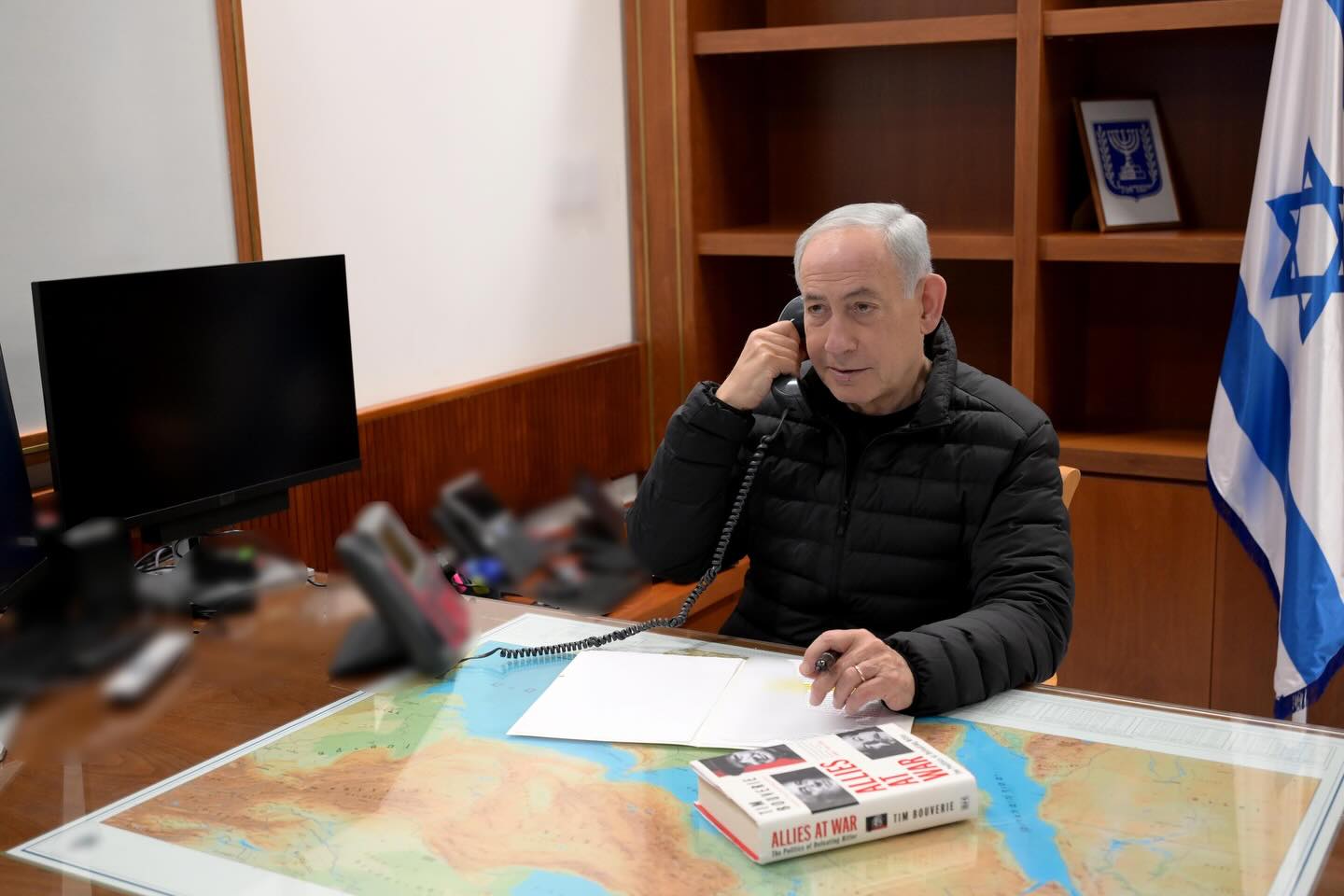
Israel’s parliamentary election may not produce a clear winner, with exit polls projecting Prime Minister Benjamin Netanyahu’s Likud party as the largest individual party but giving the opposition bloc a lead over his ruling coalition.
Projections released by Channel 13, Channel 12 and public broadcaster Kan put Netanyahu’s bloc at around 50 seats in the 120-member Knesset, below the 61 seats required for a majority.
The opposition bloc led by former military chief Gadi Eisenkot is projected to win 52 to 53 seats, while Arab-led parties are expected to secure 17 to 18 seats.
According to the Central Elections Committee, voter turnout reached 77.7 per cent, up 7.1 percentage points from the 2022 election and the highest since 1999.
However, a separate exit poll by i24NEWS offered a more favourable projection for Netanyahu, giving his bloc 55 seats against 49 for Eisenkot’s bloc. Arab-led parties were projected to win 16 seats.

The differing estimates suggest that forming a government could involve prolonged coalition negotiations. Exit polls are projections and may differ from the final results.
Likud leads individual party projections
Channel 13 projected Likud to win 25 seats, compared with 23 for Eisenkot’s centrist Yashar party.
Channel 12 put Likud at 24 seats and Yashar at 22, while Kan projected 25 seats for Likud and 21 for Yashar.
The i24NEWS exit poll gave Likud 27 seats and Yashar 20, maintaining Likud’s position as the largest individual party.
Arab-led parties could influence government formation
Arab-led parties, which oppose Netanyahu but are not formally part of the main opposition bloc, are projected to secure a significant number of seats.
Channel 13 and Kan projected 17 seats for Arab-led parties, while Channel 12 estimated their combined tally at 18.
The Joint List is projected to win 10 seats in Channel 13 and Kan’s estimates and 11 in Channel 12’s projection. The Islamist Ra’am party is expected to secure seven seats across all three polls.
Their support from outside a coalition, or abstention in a confidence vote, could influence efforts to form a minority government. However, both Netanyahu and Eisenkot have ruled out a formal partnership with Arab-led parties.
Naftali Bennett’s opposition alliance B’Yachad is projected to win 12 to 14 seats, while the left leaning Democrats, led by Yair Golan, are projected to secure nine to 10 seats.
Netanyahu faces coalition challenge
The three major broadcasters projected Netanyahu’s bloc, including Likud and its far right and ultra Orthodox allies, at around 50 seats.

The projections suggest that Netanyahu could struggle to assemble a governing majority.
One possible outcome is for the opposition to attempt to form a government, although ideological and political differences among its partners could complicate negotiations.
A failed coalition attempt could create another opportunity for Netanyahu to rebuild support, potentially leading to fresh elections.
A national unity government involving Netanyahu and Eisenkot also appears unlikely, given their strained relationship and Eisenkot’s opposition to partnering with the prime minister.
Rival leaders claim momentum
Eisenkot claimed victory after polling ended.

“The public has spoken, it has fired the Netanyahu government,” he said in a post on X.
He said his party would work with its partners to bridge differences and try to form a government.
Gideon Sa’ar, a political ally of Netanyahu, cautioned against treating the opposition’s projected lead as a decisive victory.
“The celebrations on the left are premature,” he said, adding that Likud remained Israel’s largest party.
What happens next?
The Central Elections Committee has begun counting ballots, with the final count expected by October 30 and official results scheduled for publication on November 4.
Under Israel’s proportional representation system, winning the most seats does not automatically guarantee the right to form a government.
Following the publication of official results, President Isaac Herzog will consult political factions and nominate the lawmaker he believes has the best chance of forming a government.
The nominee has up to 42 days to assemble a coalition backed by at least 61 lawmakers.