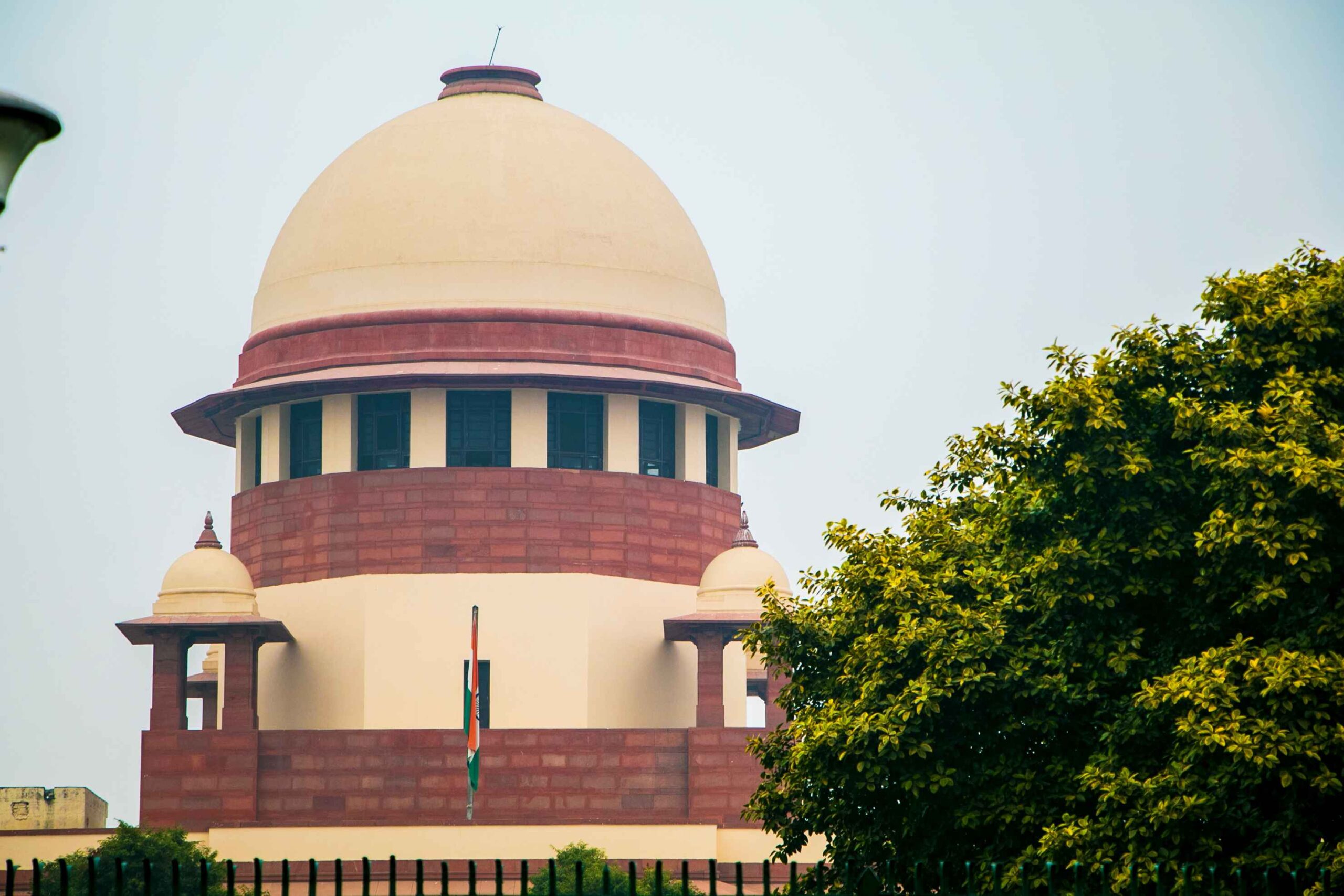
The Supreme Court on Tuesday held a heated hearing on the constitutional validity of the Waqf (Amendment) Act, 2025, with strong concerns raised over religious fairness and minority rights.
A lawyer, identifying himself as a Kashmiri Pandit, warned the Court about the dangers of giving unchecked powers to Waqf Boards.
“I come from Kashmir. I am a Kashmiri Pandit. We have temples there. Suppose the majority of Muslims come and say it’s their land—is that justified?” he asked.
“Now the Collector says, ‘I will decide and I am all mighty,’” he added.
The case was heard by a three-judge bench led by Justice Sanjiv Khanna. Petitioners have challenged several parts of the amended law, especially its provision that allows Waqf Boards to take over land based on revenue records—without giving people a fair chance to speak or defend their claims.
Justice Khanna questioned why non-Muslims are excluded from Waqf Boards, despite the boards performing public functions. He compared it to the Haj Committee, which has members from different communities.
“How can non-Muslims be excluded constitutionally?” he asked.
The Court made it clear that Waqf properties—especially those in use for a long time—cannot be denotified or changed without proper legal process.
“If a Waqf property—especially one established by long-standing usage—is denotified, there could be grave ramifications,” said Justice Khanna.
The discussion also focused on how District Collectors can now declare or remove Waqf land status without court approval, raising fears of misuse.
“If the Collector says this is Waqf land and he doesn’t hear anyone, it is a serious issue,” Justice Khanna said.
Solicitor General Tushar Mehta, representing the Centre, defended the law. He said that up to two non-Muslims can be included in the board, but this did not satisfy the bench entirely.
Outside the court, the Kashmiri Pandit Sangharsh Samiti (KPSS) expressed serious concern.
“If Muslim-majority bodies are empowered without balance, we will be compelled to approach the Supreme Court for protection of our own heritage sites,” said KPSS president Sanjay Tickoo.
The Court also said it would not allow historic Waqf sites, such as Delhi’s Jama Masjid, to be questioned or downgraded retroactively.
“History cannot be rewritten,” the Chief Justice remarked.