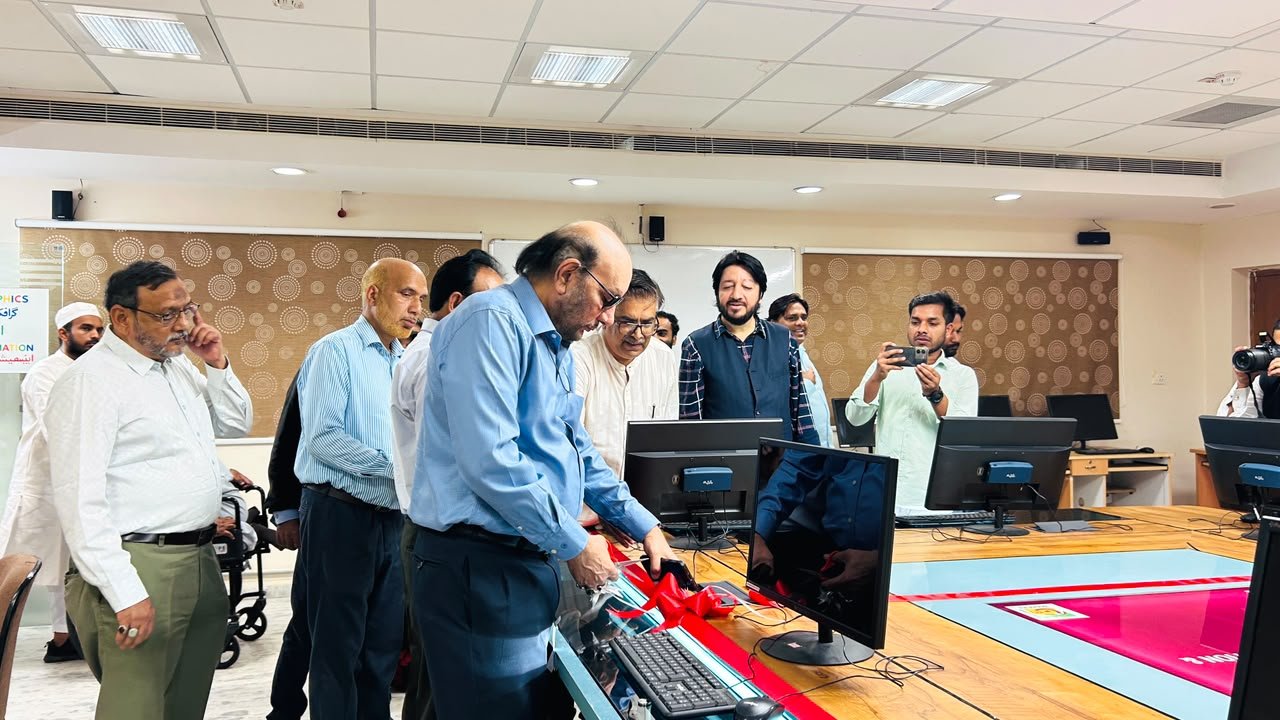
Maulana Azad National Urdu University (MANUU) inaugurated a Media Archival Display Unit, Radio Podcast Studio, Animation Lab, cafeteria and visual gallery at its Department of Mass Communication and Journalism on October 9, 2026, to strengthen practical learning and preserve the history of media and communication.
Vice-Chancellor Professor Syed Ainul Hasan inaugurated the Radio Podcast Studio and other facilities, while Registrar Professor S. K. Ishtiaque Ahmed inaugurated the Media Archival Display Unit, which has been named the Professor Syed Ainul Hasan Media Archival Display Unit in recognition of his contribution to the collection.
Faculty members, research scholars and students attended the inauguration.
MANUU Establishes Media Archive to Preserve Journalism’s History
The Media Archival Display Unit has been established to preserve and showcase the history, heritage and milestones of media and communication. The collection includes historical media equipment, musical instruments and other archival materials intended to help students understand how media technologies and journalistic practices have evolved.
Several items in the collection were donated by Vice-Chancellor Professor Ainul Hasan. The university named the unit after him in recognition of his contribution to developing the archive.
Addressing students, Professor Ainul Hasan encouraged aspiring journalists to understand society’s needs, identify their target audiences and develop a distinct professional identity.
He urged students to draw inspiration from the journalistic legacy of Maulana Abul Kalam Azad, particularly his publications Al-Hilal and Al-Balagh, which played an important role in public debate and awareness.
He stressed that journalists should address social concerns and communicate in simple, accessible language that ordinary people can understand.
The Vice-Chancellor also highlighted the importance of presentation, voice quality and on-screen performance, encouraging students to develop these skills alongside their journalistic abilities.
Registrar Stresses Importance of Media Preservation
Registrar Professor S. K. Ishtiaque Ahmed emphasised the need to document the history of mass media and preserve materials that can help future generations understand changes in communication technologies and practices.
He said the archival unit would provide students and researchers with an opportunity to explore the evolution of journalism and media.
He also appreciated the department’s efforts to introduce new academic programmes and improve its infrastructure. He called for further investment in practical training facilities, including filmmaking, and encouraged collaboration with other educational institutions to expand opportunities for students.
New Facilities to Support Journalism and Filmmaking Students
The newly inaugurated Radio Podcast Studio and Animation Lab are intended to give students greater exposure to practical media production and emerging communication formats. The visual gallery and other facilities will further support learning and creative work within the department.
Professor Ihtesham Ahmed Khan, Dean of the School of Mass Communication and Journalism, announced that the department had introduced an MA in Film Making programme from the current academic year.
The programme aims to familiarise students with filmmaking techniques, provide hands-on training and develop their creative skills for careers in the film industry.
The event was attended by Professor Sanam Fatima, Director of the Malaviya Mission Teacher Training Centre; Rizwan Ahmed Khan, Director of the Instructional Media Centre; Professor M. D. Shahid Raza, Head of the Department of Social Work; and faculty members, research scholars and students.