Nabiha Omar
Every textbook is a quiet promise made to a child: that what lies between its covers is the truth about where they come from. In India, that promise is largely kept by NCERT, whose books shape what millions of students in CBSE and several state-board schools learn about their past, from the Mauryas to the Mughals. Since 2023, NCERT has cut the chapter on the Mughal court from its Class 12 history book, dropped the Mughals entirely from Class 7, and recast them chiefly as conquerors and temple-breakers in Class 8. Such changes do not stay on the page. They travel into classrooms, into homes, and into the way a twelve-year-old looks at the classmate on the next bench.
Anyone who has studied the Partition of 1947 knows how quickly a story about the past hardens into a verdict on people in the present. That is why NCERT’s revisions deserve close attention. Each step has been explained as a matter of pedagogy, yet the questions they raise are not pedagogical alone. They concern what history is, who gets to write it, and what kind of citizen a nation wishes to produce. To answer them, one has to begin not with the Mughals, but with the discipline itself.
What Is History?
Sixty-five years ago, in the Cambridge lectures later published as What Is History?, E.H. Carr asked his readers to study the historian before they studied the facts. Facts, he argued, do not speak for themselves; the historian decides which of them are called upon, in what order, and in service of what argument.
That insight is not an invitation to relativism. Rather, it obliges us to ask of every narrative who selected these facts and why, which is precisely why professional history insists on method: on reading sources in their original languages, on corroboration, and on letting evidence unsettle comfortable stories. It is also why the history of a land cannot be written as the biography of a single faith. A subcontinent shaped by migration, conquest, trade, devotion and dissent deserves a history that accounts for all of it, including the parts present-day politics finds inconvenient. Read with Carr in mind, then, the new textbooks demand that we ask not only what they say, but what their authors chose to leave out.
What the New Textbooks Say
The revisions arrived in stages, and each stage carried a different justification. During the pandemic, NCERT “rationalised” its syllabus: accounts of the Tughlaqs, Khaljis, Mamluks and Lodis were trimmed from Class 7, and the Class 12 chapter Kings and Chronicles: The Mughal Courts was removed altogether. The stated reason was a lighter workload for students returning after lockdown, and NCERT’s director, Dinesh Prasad Saklani, insisted that the changes rested purely on expert advice.
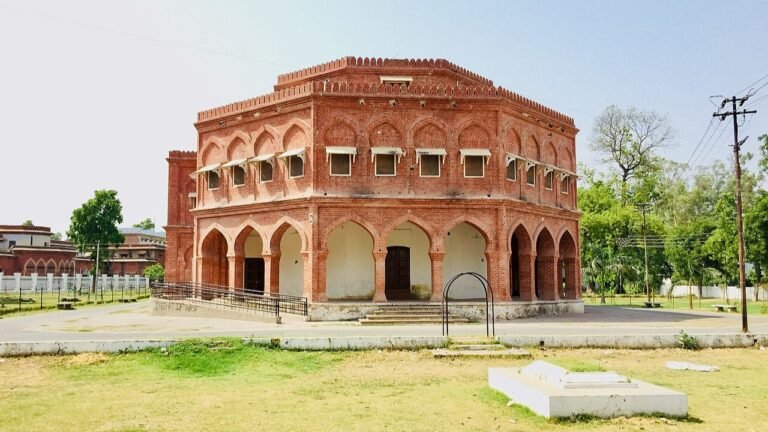
Two years later, the reasoning shifted from workload to vision. The new Class 7 book, Exploring Society: India and Beyond, released in April 2025, dropped every reference to the Mughals and the Delhi Sultanate while adding chapters on “sacred geography” and the Maha Kumbh. When the medieval centuries returned in the Class 8 book that July, they returned in a new register: Babur as a ruthless conqueror who slaughtered entire city populations, Akbar’s reign as a blend of brutality and tolerance, and Aurangzeb chiefly as a destroyer of temples and gurdwaras. The same book omits Tipu Sultan and the Anglo-Mysore wars while expanding its coverage of the Marathas.
NCERT has defended this approach, insisting that the events it describes did happen and pointing to a prefatory note which declares that no one today should be held responsible for the past. That disclaimer, however, is revealing. A textbook does not need to warn children against blaming their neighbours unless its authors expect the narrative to lead them there.
From Rulers to “Them”
No serious historian argues that medieval rulers were saints. Mughal violence, like Mauryan, Chola or Maratha violence, is a legitimate subject of study. The problem lies in selection and proportion. When a child encounters the medieval centuries first through massacres and broken temples, and only later, if at all, through revenue systems, Bhakti and Sufi traditions, or the courtly culture that gave the subcontinent Urdu, the lesson absorbed is not really about Babur. It is about who “they” were.
In that lesson, Turkic, Afghan and Mughal rulers, each with their own politics and rivalries, are folded into a single religious category, and that category has living members sitting in the same classroom. The slippage from ruler to community is not imagined. When the 2023 cuts were announced, BJP leader Kapil Mishra declared that Akbar, Babur, Shah Jahan and Aurangzeb belonged not in history books but in the dustbin, as though a deletion were a verdict on a people rather than an editorial decision about a period.
Historians saw the danger early. Around 250 of them, among them Romila Thapar, Irfan Habib, Upinder Singh and Mridula Mukherjee, denounced the deletions as the product of a divisive and partisan agenda, and Aditya Mukherjee described them as an attempt to erase the names and achievements of Muslims. In January 2026, Thapar called the removal of dynasties nonsense, insisting that history is a continuous evolution of peoples and ideas that cannot be broken into convenient pieces. An “us and them” history, after all, does more than misdescribe the past. It teaches a generation to see fellow citizens not as Indians, nor even as individuals, but simply as them.
The Cost of a Handicapped Education
The damage, moreover, does not end with prejudice; it extends to competence. History is cumulative. A student cannot understand the Marathas without the Mughal state they fought and inherited, colonial land revenue without the zabt and mansabdari systems that preceded it, or 1857 without knowing why rebel sepoys marched to Delhi to place Bahadur Shah Zafar at their head.
Irfan Habib’s The Agrarian System of Mughal India, built painstakingly from Persian revenue records, exists precisely because these centuries explain how the subcontinent’s economy and society came to be what they are.
Strip them out, and the result is an education that is not lighter but handicapped. Mridula Mukherjee has observed that the cuts were so careless that even the Industrial Revolution vanished from the Class 11 world history book, while the Democratic Teachers’ Front warned that the gap would be filled by “WhatsApp University”. Students leave school with fewer facts, fewer tools for weighing evidence, and fewer reasons to doubt the popular history that reaches them through their phones, the very history Thapar warns blurs the line between opinion and scholarship.
What India Loses When History Is Rewritten
What is being lost, in the end, is larger than a set of chapters. It is the history of a land, and of the people who ploughed it, built on it and prayed on it across centuries, whatever the faith of those who ruled them. Carr taught that every history carries the imprint of its makers, and the new textbooks are no exception: their makers have chosen a past that sorts Indians into those who belong and those who must be explained.
Nowhere is that sorting easier to see than in the case of Akbar. The Class 12 chapter that once introduced students to his reign through Abul Fazl’s Akbarnama is gone, and in the Class 8 book he is remembered above all for the massacre at Chittorgarh. With the chapter went his court, and with the court, as S. Irfan Habib has pointed out, the legacy of Todar Mal, Tansen, Man Singh and Birbal. Yet a textbook can make Akbar invisible; it cannot make his architecture invisible. Fatehpur Sikri still rises from its ridge outside Agra, the red sandstone walls of the Agra Fort he rebuilt still face the Yamuna, and Humayun’s Tomb, completed during his reign, still fills with school groups in Delhi. Kapil Mishra may consign Akbar to the dustbin, but no dustbin is large enough for the Buland Darwaza. The children who walk beneath it will one day ask why the man who built it is remembered in their books mostly for his cruelty, if he is remembered at all.
The task before students, teachers and parents is therefore Carr’s task: to set the official textbooks beside what historians have actually written, and to ask why certain facts were given the floor while others were sent out of the room. A nation can survive an uncomfortable past. What it cannot easily survive is a generation taught to mistrust half of its own people.
Nabiha Omar holds an MA in History from Aligarh Muslim University and writes on Partition, memory and Muslim social history in South Asia. This is an opinion piece, and the views expressed are the author’s own.
The information presented in this article represents the personal viewpoints of the author and does not necessarily reflect the opinions of The Observer Post.