Sayima Ahmad
For years, there were no major job recruitments in Kashmir, and distressed Kashmiri youth never stopped dreaming. They continued preparing, paid for coaching, and studied through curfews and harsh Chillai Kalan winters. They did everything they could, using whatever means were available to them with optimism that one day they would secure a job and that their degrees, gathering dust at home, would mean something.
Over the years, their age kept moving forward. Finally, on November 7, it felt like the long wait was about to culminate when the Jammu and Kashmir Bank announced 1800 job vacancies for probationary officers and banking associate posts. This moment should have brought joy and hope for unemployed people of Kashmir.
But they saw it as a closed door after reading the bank’s advertisement on its official social media handle, which revealed that nearly 60 per cent of the vacancies are earmarked for reserved categories, leaving only 40 per cent for open merit candidates without relaxation. On the ground, open-merit candidates feel they have been allotted only 30 per cent of seats, arguing that if reserved-category candidates also take open seats on merit, their share will shrink further.
Very few may be aware that the reservation matrix in Jammu and Kashmir, which differs from the rest of India, was quietly expanded. It is the only place where the reservation quota has been increased by 20 per cent, split equally between existing STs and new STs, bringing the total reservation to nearly 60 to 70 per cent.
Additionally, 15 new caste groups, including the Kolis and Gadda Brahmins, were added to the Scheduled Tribes (ST) list.
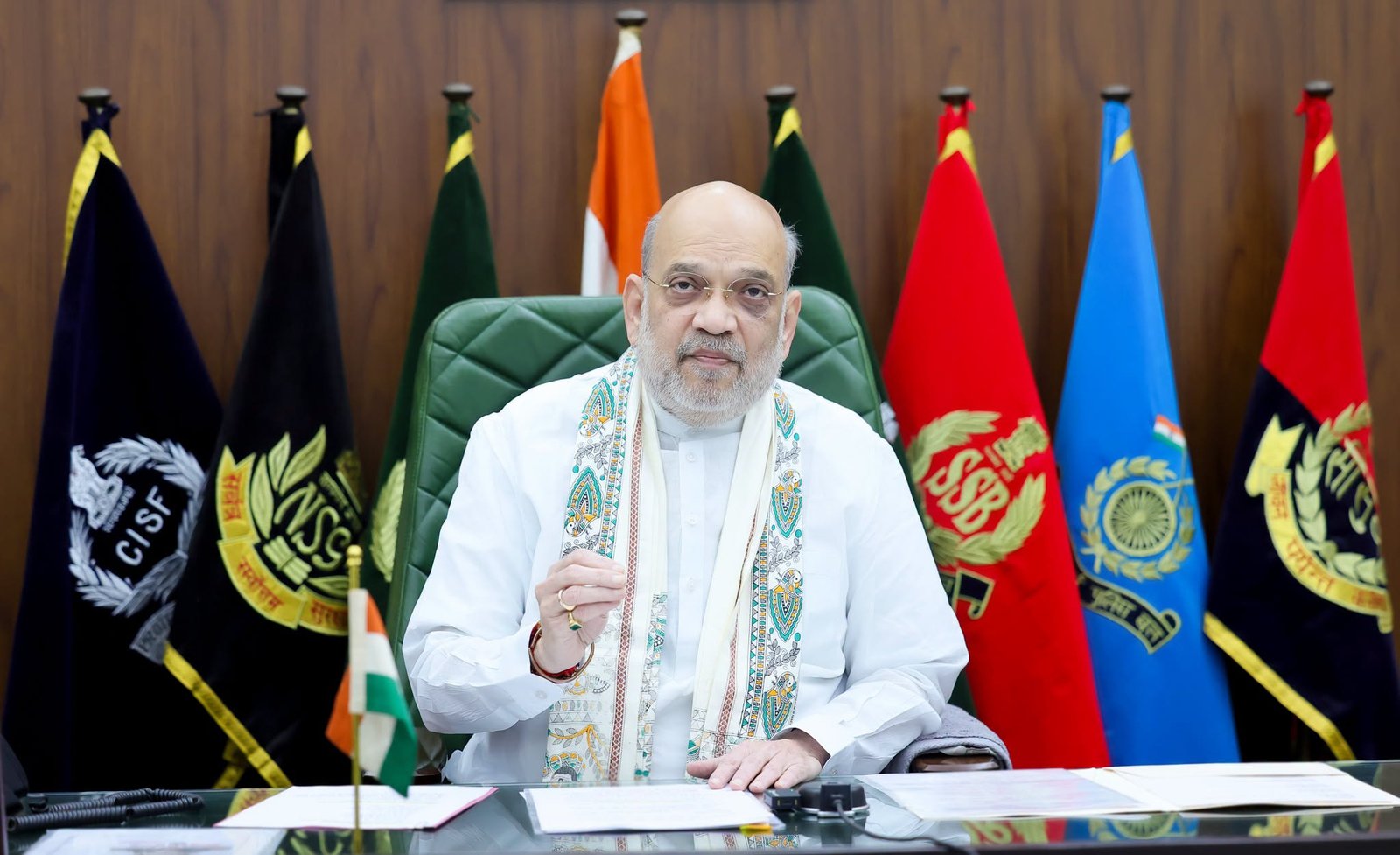
The BJP leader and Union Home Minister, Amit Shah, made these changes after the abrogation of Article 370. This move has left only 40 per cent of seats in public educational institutions and government jobs for open-merit candidates, despite this category making up 69 per cent of the total population of the erstwhile state, as per the 2011 census.
Think about it. The Supreme Court of India already set a 50 per cent ceiling on reservations in the landmark Indra Sawhney case (1992), viewing reservation as a balancing measure rather than an absolute exception; but in J&K, the exception has become the rule, and merit has become the exception.
The reservation quota was increased, but even that decision was unfair to the people of Kashmir. Most of the castes that were added belong to communities from Jammu. In fact, the figures show that the benefits of the increased reservation have gone mainly to Jammu-based communities.
Only a few groups and castes from Kashmir were included in the new reservation policy, including the Gujjar and Bakarwal communities. Even in this, there are no major benefits for Kashmiris because the Gujjar and Bakarwal communities are not ethnically Kashmiri. They came from other places and settled here in the mountainous areas.
It is crucial to highlight some of the metrics that will elucidate how much prejudice and trivialization the Muslim-majority Kashmir province is enduring.
According to data presented in the Assembly, roughly 81 per cent to 86 per cent of reservation certificates across various categories have been issued in the Jammu region.
In comparison, only about 14 per cent to 19 per cent have been issued in Kashmir, as reported by The New Indian Express.
According to The Hindu, 100 per cent of the SC reservation certificates and beneficiaries have historically been recorded in the Jammu region, with zero in Kashmir. Additionally, over 90 per cent of EWS certificates have been issued in Jammu, compared to a small fraction in Kashmir.
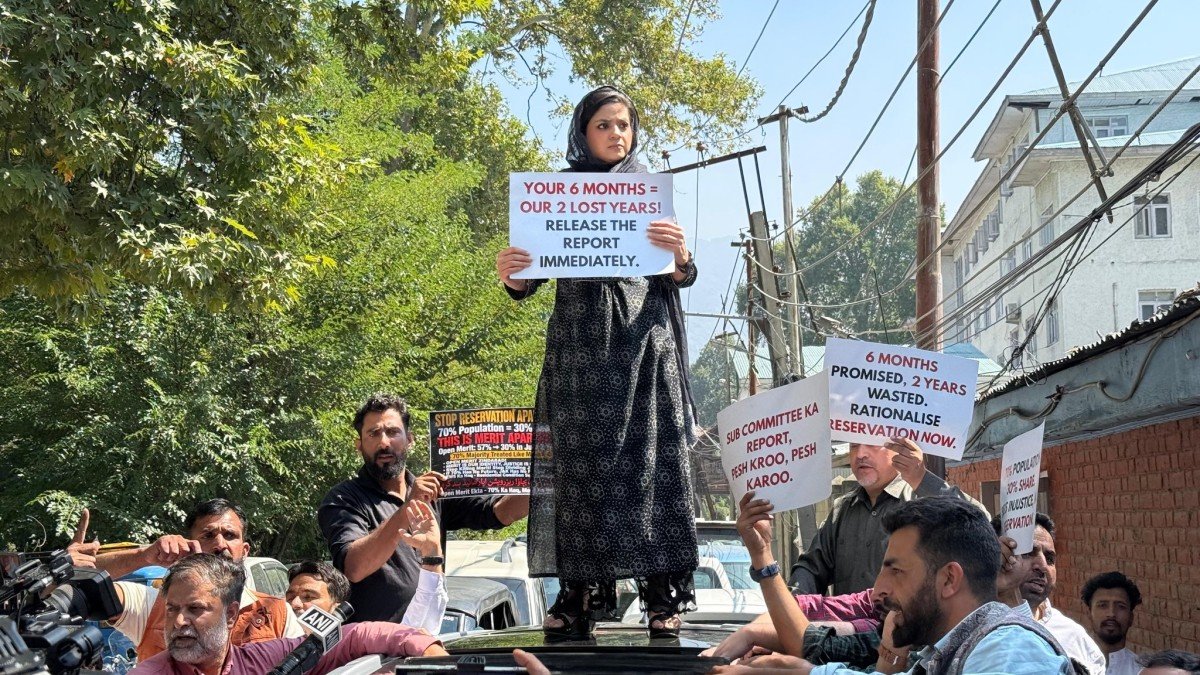
This disparity has contributed to rising unemployment and escalating resentment in Kashmir. Opposing these systemic changes, Kashmiri youth staged massive protests in 2024, holding books and playcards and assembling at Press Colony in Srinagar. Kashmiri youth knew this long before Gen Z protests became a global trend.
At that time, the voices of Kashmiri young people were suppressed, and no one listened to their grievances. The BJP leaders even labelled them “anti-national, anti-Dalit, anti-Bahujan, and anti-Adivasi”.
In 2024, during an election campaign rally in Jammu, Amit Shah challenged, stating, “As long as the BJP exists, no one can touch the reservation in Jammu and Kashmir”.
As it gets twisted every time, Kashmiris were never against reservation; no one here is against helping a poor, backwards or deserving student. They were raising their concerns and grievances regarding the inequity they face in education and employment. Their demands were simple: keep reservations within the SC’s prescribed limits rather than increase them and undermine open merit. They argue that disproportionate benefits are given to many groups and communities at the expense of meritocracy.
They wanted opportunities, not rejection. As I already mentioned, the open-merit population is the majority here. So how is it fair to allot 60 or 70 per cent of posts to reserved categories? That is not social justice but a reverse injustice.

In response to these youth protests, the J&K government formed a three-member Cabinet Sub-Committee to review and rationalise the reservation policy. The case, however, was continually delayed with one hearing after another. No decision was issued in the last three years because the report is stuck between Raj Bhavan and the Home Ministry. This is the first betrayal Kashmir’s new generation has felt and faced.
Perhaps the reservation trauma wasn’t enough for educated unemployed youth of Kashmir; that is why they are hit with another blow, that is, the age limit cut. According to the notification, only those job aspirants aged between 20 and 30 years are eligible for these posts. There is no age relaxation for open-merit candidates, while reserved categories are provided with age relaxation.
Imagine a job aspirant who completed his\her graduation in 2018 or 2019 and is 31 years old now? The last big job recruitment was in 2020. In the same year, the Lieutenant Governor-led administration scrapped J&K Bank’s recruitment process for 250 probationary officers and 1,200 banking associates over “legal infirmities”. They spent their entire 20s preparing and waiting for this opportunity. And now, after six years, when it finally comes, they are told: “Sorry, you are too old for this job”.
What do you think? Whose fault is this: the youth of Kashmir or the government? Who has failed to stop corruption in their departments, leading to the cancellation of exams and long delays in job recruitment drives? Should the job aspirants be punished for the government’s failures?
The sentiments were echoed by Health and Medical Education Minister Sakina Itoo, who wrote, “Dreams shouldn’t have an expiry date! Thousands of J&K Bank aspirants have lost precious years waiting for recruitment opportunities. They must not be punished for delays beyond their control.”
It should have been exactly what the People’s Democratic Party MLA Waheed Ur Rehman Para argued. He said that commercial institutions like JK Bank should prioritise merit over reservation and increase the upper age limit to 40 years. Even the JKSSB, the government’s own recruitment board, allows candidates up to 40 years. Is the JK Bank not supposed to follow the same rule and logic?
What will Kashmiri youth do now? To sit at their homes, depressed and hopeless, while watching their parents grow old and wondering if their degree was a mistake or they were born in the wrong place.
Official estimates and employment portal figures show about 4.73 lakh people registered as unemployed across Jammu and Kashmir; that makes roughly 2 lakh in the Kashmir division alone. The government that does not fear unemployed and hopeless youth is a government that does not understand history.
With these inequitable policies and rules, you will make Kashmiri youth feel subjugated. They will eventually comprehend that merit doesn’t matter, and age doesn’t forgive. This partisanship will prompt them to move to other states like Delhi and Bangalore or abroad. The valley will lose its brightest minds.
Kashmiris are not demanding favour but a fair chance to compete. History is a witness that the system has always lacked fairness towards Kashmiris.
The information presented in this article represents the personal viewpoints of the author and does not necessarily reflect the opinions of The Observer Post.