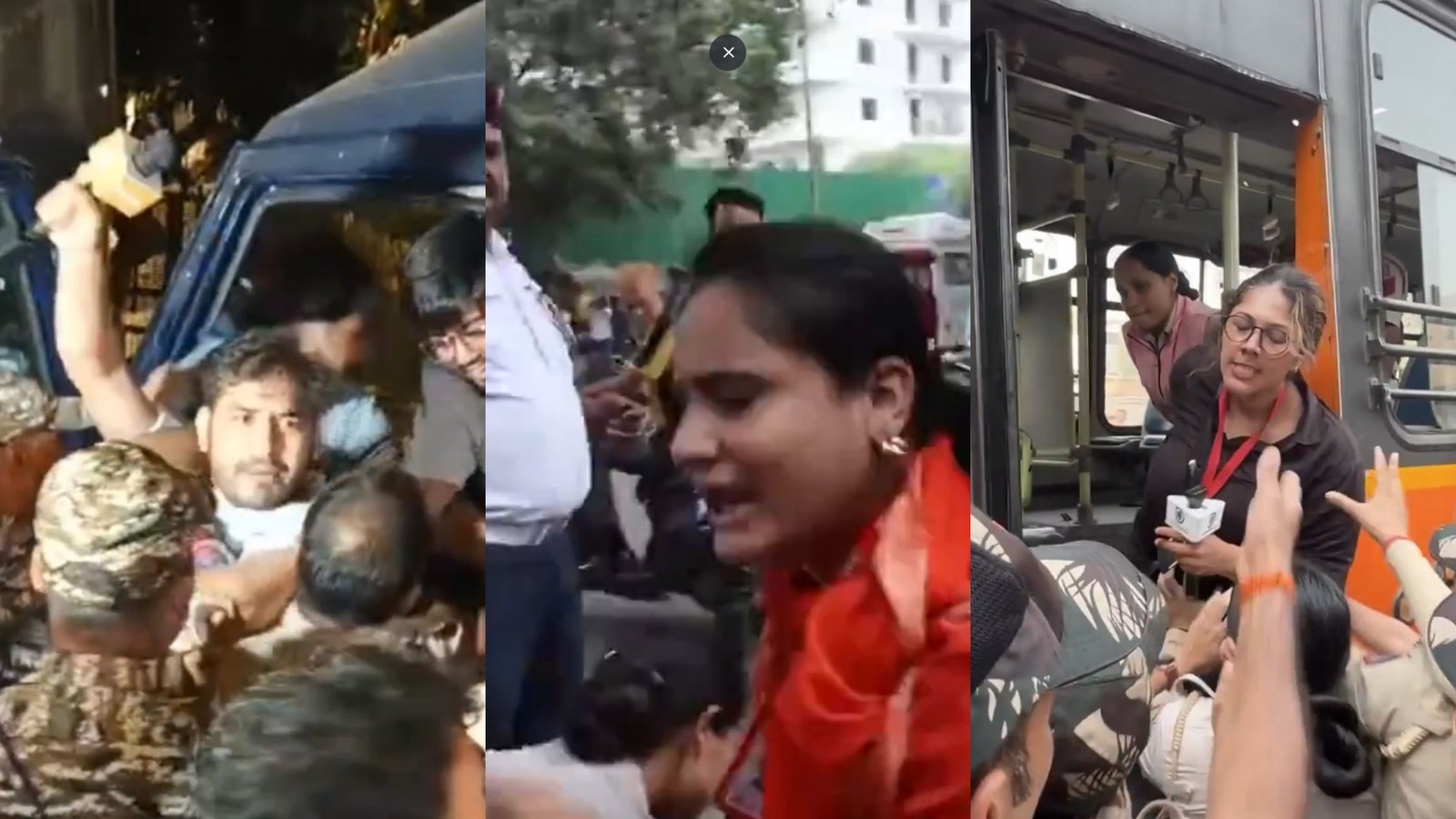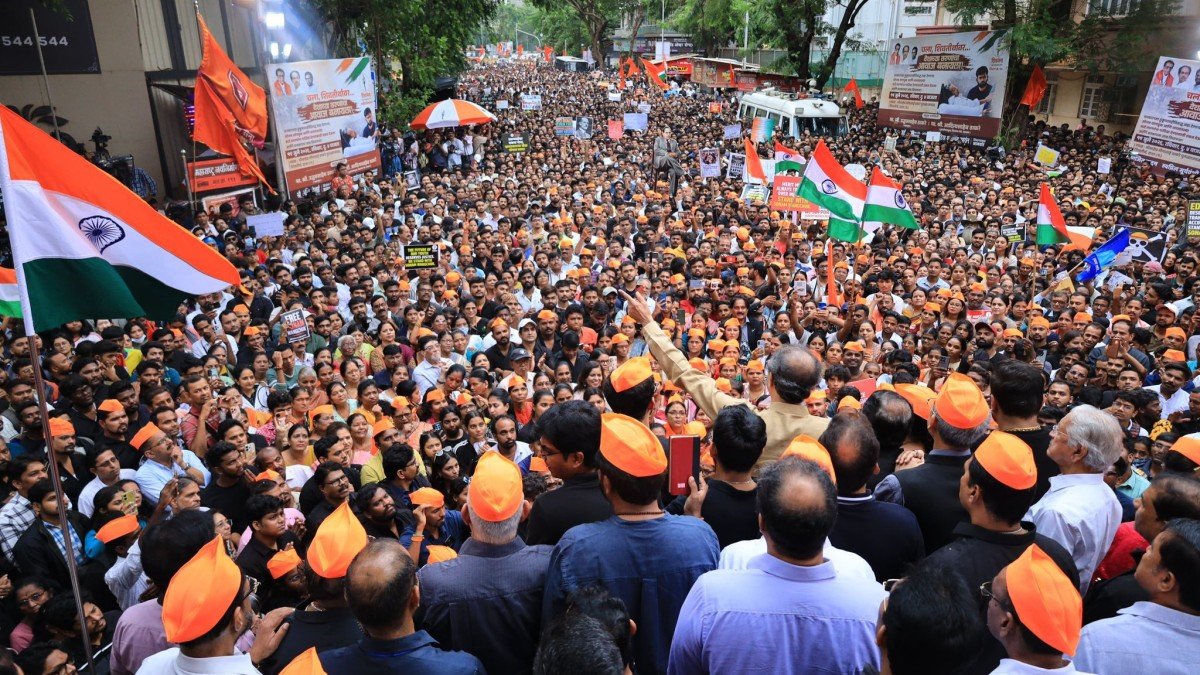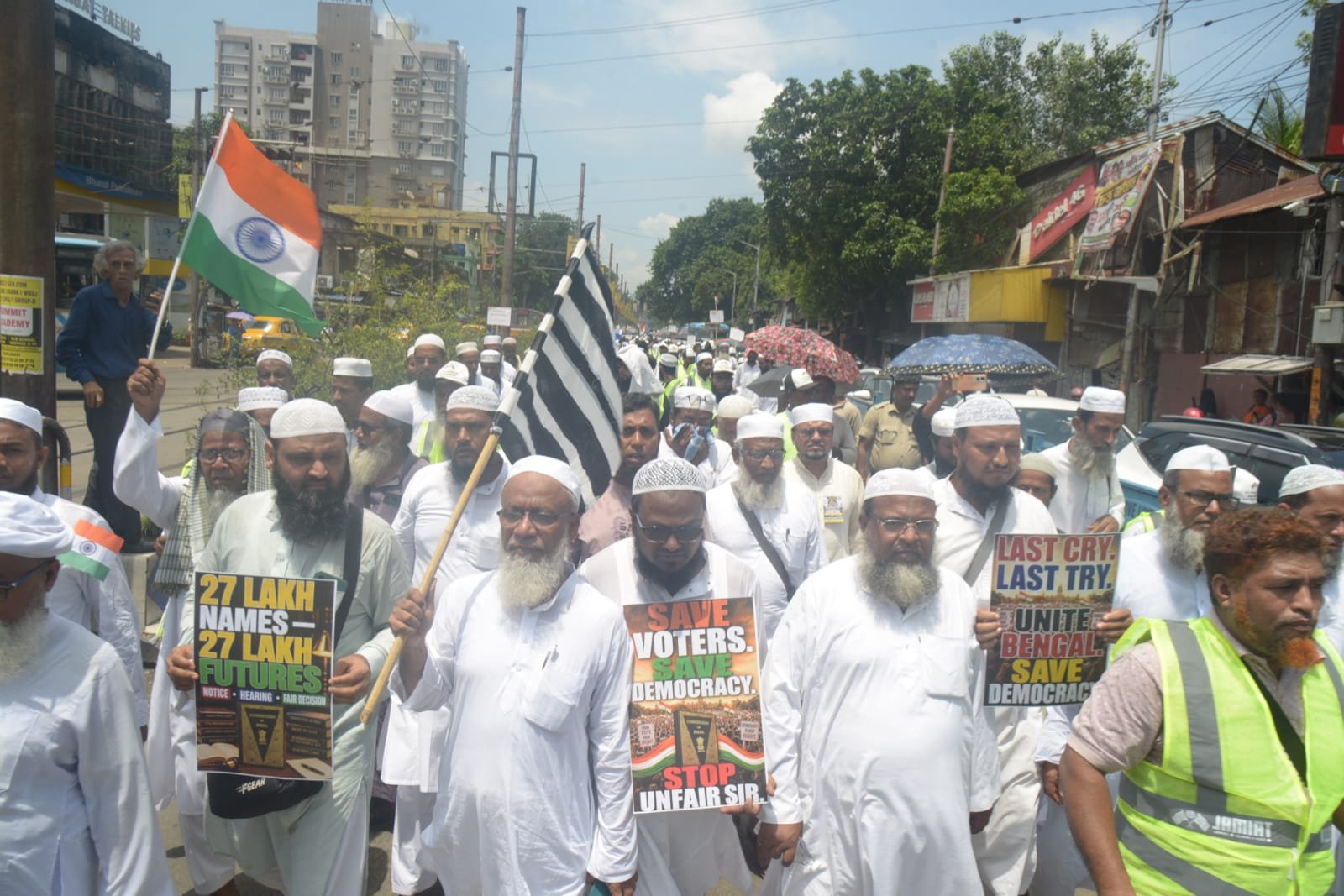
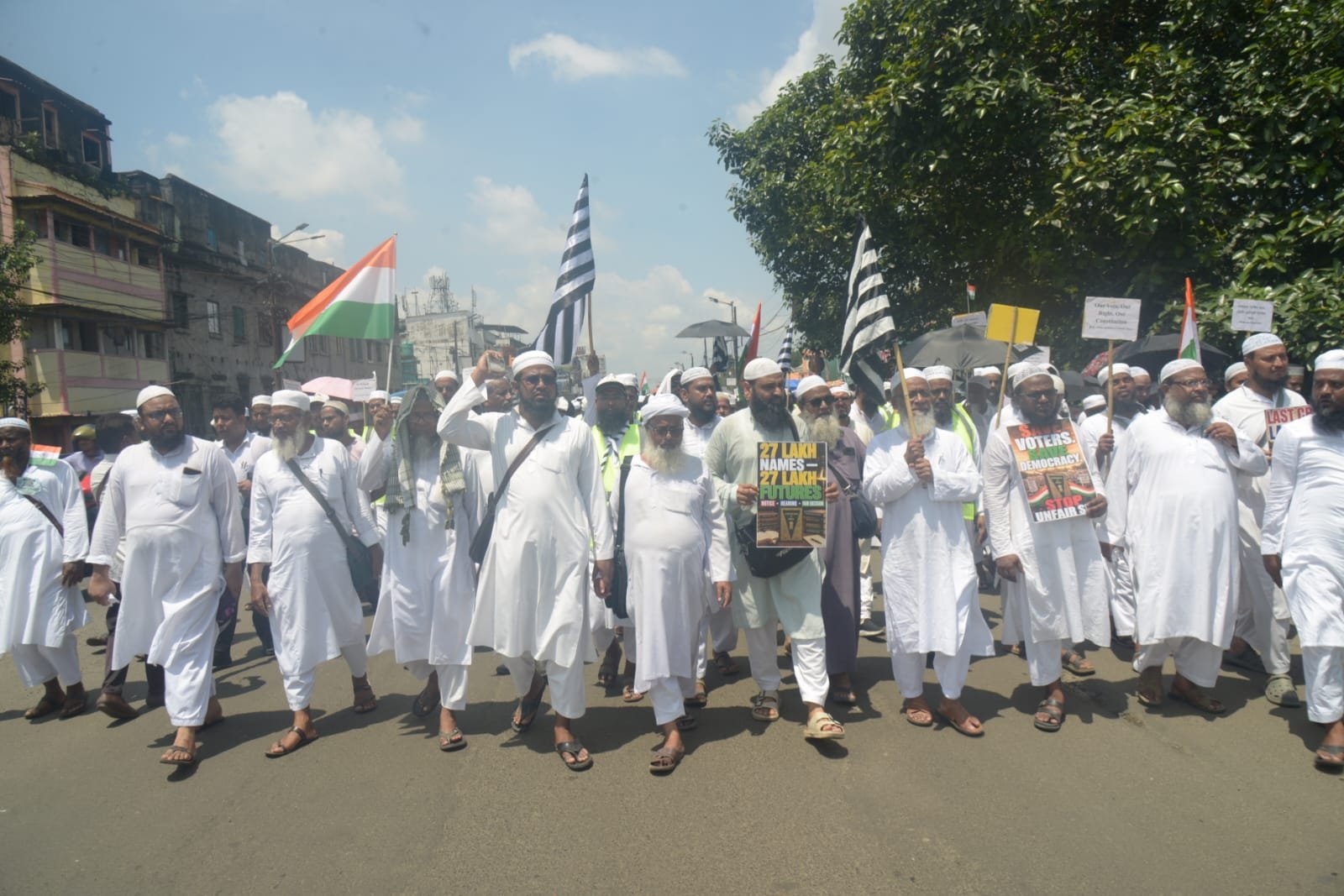
The Jamiat Ulama-e-Hind on Tuesday organised a protest march in Kolkata demanding the restoration of the names of around 27 lakh voters allegedly excluded from West Bengal’s electoral rolls following the Special Intensive Revision (SIR) process. The march, led by Jamiat’s West Bengal president Maulana Siddiqullah Chowdhury, began in the Rajabazar area and proceeded towards Moulali. Religious leaders, human rights activists and members and supporters of the organisation participated in the demonstration.
Protesters Demand Action on Excluded Voters
The protesters alleged that the exclusion of voters from the electoral rolls was creating difficulties for affected people in accessing various government and administrative services, including passport-related services and educational opportunities. They demanded that the cases of excluded voters be resolved at the earliest and called for tribunals to be established in every district to expedite the process.
Among those present at the demonstration were Mufti Abdus Salam, Mufti Ibrahim Qasemi, Maulana Badrul Alam, Maulana Abdus Samad and Mufti Maidul Islam, besides other Jamiat leaders and supporters. Addressing the protesters, Mufti Abdus Salam said that more than 2.7 million names had been excluded from the electoral rolls following the SIR process. He alleged that uncertainty had increased among people whose names had either been excluded or remained “under consideration”, as well as those whose cases were pending before tribunals.
Jamiat Seeks District-Level Tribunals
The protesters claimed that the uncertainty was affecting people’s dealings with various government departments and administrative processes. They demanded that the authorities establish mechanisms at the district level to ensure the speedy disposal of such cases.
“This protest march is to demand the restoration of the names of the excluded voters. We will submit a memorandum to the Election Commission seeking the speedy settlement of these cases. If necessary, we will launch a larger movement in the future,” Siddiqullah Chowdhury said.
Concerns Over Alleged Removal of Mosque Microphones
The protesters also raised concerns over reports that police personnel were allegedly asking mosque committees in different parts of West Bengal to remove microphones. Siddiqullah Chowdhury alleged that police officials had visited several mosques and either removed microphones or verbally instructed mosque committees to take them down without showing any written order.
“We are receiving reports from several districts that local police are going to different mosques and removing microphones without any legal notice or threatening members of mosque committees to remove them,” Siddiqullah said.
Jamiat Questions Restrictions on Fajr Azan
He also claimed that there had been reports from some areas where mosque committees were allegedly told that the Fajr azan, or dawn call to prayer, could not be broadcast through microphones. According to Siddiqullah, mosque committees had already reduced microphone volume in accordance with the applicable noise-pollution regulations.
“According to government instructions, the volume of mosque microphones has already been reduced in accordance with the Noise Pollution (Regulation and Control) Act. But this alleged coercive behaviour by the police has created panic, anxiety and confusion among people,” he said.
Siddiqullah Seeks Written Order From Police
Siddiqullah further alleged that when mosque committee representatives asked police officials to show the government order authorising the removal of microphones, no written directive was produced.
“When we asked the police officer to show us the government instructions regarding the removal of the microphones, they could not produce any written instruction or order. The directions were given verbally,” he claimed.
He called on the state police to clarify whether any formal instruction had been issued regarding the removal or closure of microphones at mosques.
Protest Brings Together Two Key Demands
The march thus brought together two major demands raised by the organisation—speedy resolution of cases involving voters excluded during the SIR process and clarification of the administration’s position on the use of microphones at religious institutions.