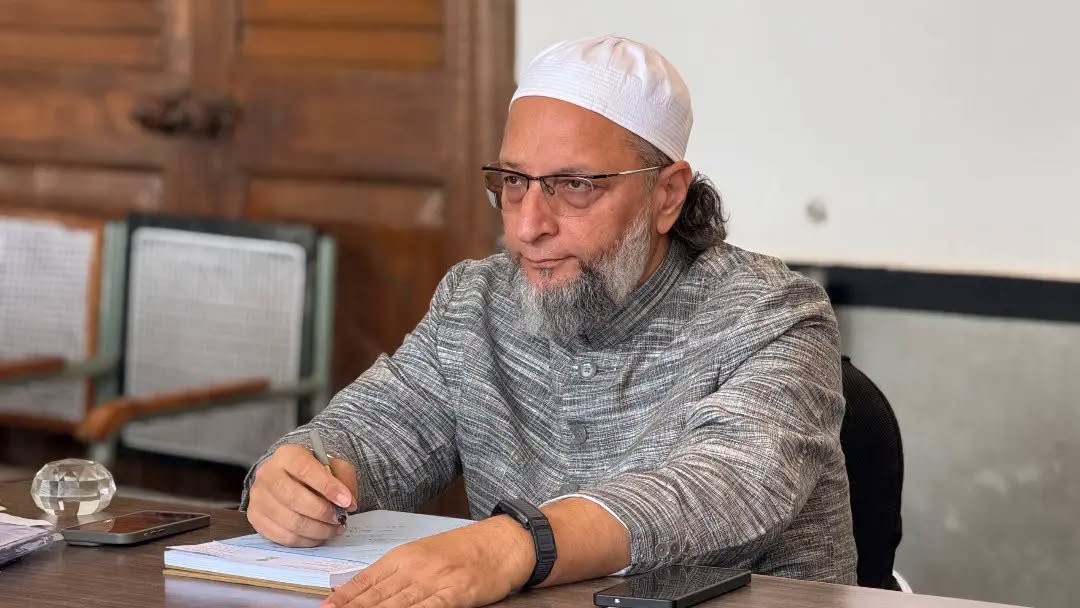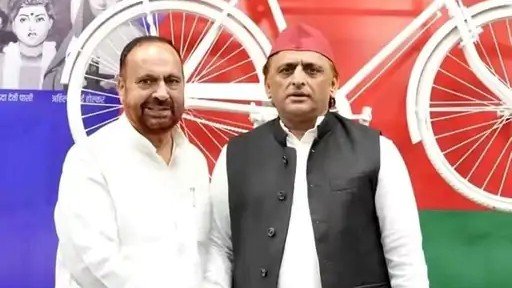
The Samajwadi Party has appointed Abdul Mateen Siddiqui as the president of its Uttarakhand unit, signalling a renewed effort to strengthen its organisation in the state ahead of the 2027 Assembly elections.
Siddiqui, 66, is a businessman from Nainital district who previously served as the party’s state general secretary and in-charge. He contested the Haldwani Assembly seat on the Samajwadi Party ticket in 2007 and 2012 but lost both elections.
His appointment comes less than five months before the expected Assembly elections in neighbouring Uttar Pradesh and as political parties prepare to consolidate support across Uttarakhand’s plains and western Uttar Pradesh.
Siddiqui replaces Shubham Giri, a mahant who was appointed the party’s working president in January this year. Siddiqui is the first Muslim leader to head the Samajwadi Party’s Uttarakhand unit.
Siddiqui Dissolves Existing Party Committees
Soon after taking charge, Siddiqui announced the dissolution of all existing state, district and city-level executive committees, along with the party’s frontal organisations and previously appointed office-bearers.
In a statement, he said the decision had been taken on the instructions of Samajwadi Party national president Akhilesh Yadav, with the 2027 Assembly elections in mind.
Siddiqui said he would soon tour the state to identify committed and active workers and assign them responsibilities in the new state, district and city committees and party organisations.
He also said the party would work to strengthen its presence at the booth level and prepare for the elections. Sonam Bagwadi and Abha Barthwal have also been appointed as state in-charges or observers for the Uttarakhand unit.
Speaking at the party office in Dehradun after his appointment, Siddiqui said the Samajwadi Party was prepared to contest all 70 Assembly seats in Uttarakhand.
Focus on Muslim-Concentrated Constituencies
Siddiqui has said he will focus on around 20 Assembly constituencies with significant Muslim populations across Haridwar, Udham Singh Nagar, Dehradun and Nainital districts.
He also plans to work in neighbouring western Uttar Pradesh districts, including Bareilly, Rampur, Moradabad, Bijnor and Saharanpur, where Muslims form a substantial part of the electorate.
“Our first priority is to ensure the formation of the Samajwadi Party government in Uttar Pradesh,” Siddiqui said, adding that he would work to strengthen the party in constituencies across both states.
Samajwadi Party spokesperson Rajendra Chaudhary has also cited the presence of a sizeable Muslim electorate in the plains of Uttarakhand as a factor behind Siddiqui’s appointment.
Muslims account for around 14% of Uttarakhand’s population, according to the 2011 Census. Haridwar has the state’s highest Muslim population share, followed by Udham Singh Nagar, Nainital and Dehradun.
Muslim voters in several of these constituencies have traditionally supported the Congress and the Bahujan Samaj Party. The Samajwadi Party’s decision could intensify competition among opposition parties for their support.

From Shubham Giri to Siddiqui
Giri’s appointment earlier this year came amid a political dispute over the treatment of Swami Avimukteshwaranand Saraswati during the Magh Mela in Prayagraj. The seer had alleged that Uttar Pradesh police prevented him from taking a holy dip at the Triveni Sangam on Mauni Amavasya. The Prayagraj administration denied the allegation.
Akhilesh Yadav and the Congress had criticised the Uttar Pradesh government over the incident. Giri’s appointment was also viewed as an attempt by the Samajwadi Party to counter allegations that it focused excessively on Muslim interests.
Giri has since been appointed a co-in-charge of the Uttarakhand unit. He said he had asked the party leadership to relieve him of the working president’s responsibilities so he could focus on contesting the Piran Kaliyar Assembly seat in Haridwar district.
Samajwadi Party’s Electoral Challenge
The Samajwadi Party faces a significant organisational challenge in Uttarakhand. In the 2022 Assembly elections, it contested 55 of the state’s 70 seats but failed to win any.
The BJP won 47 seats, while the Congress secured 19 and the BSP won two, both in Haridwar district.
In Uttar Pradesh, where the Samajwadi Party is a major opposition force, the party won 111 seats in the 2022 Assembly elections against the BJP’s 255.
The Samajwadi Party and Congress are allies in the INDIA opposition bloc and are preparing for the next Uttar Pradesh election, though a similar arrangement is not expected in Uttarakhand.