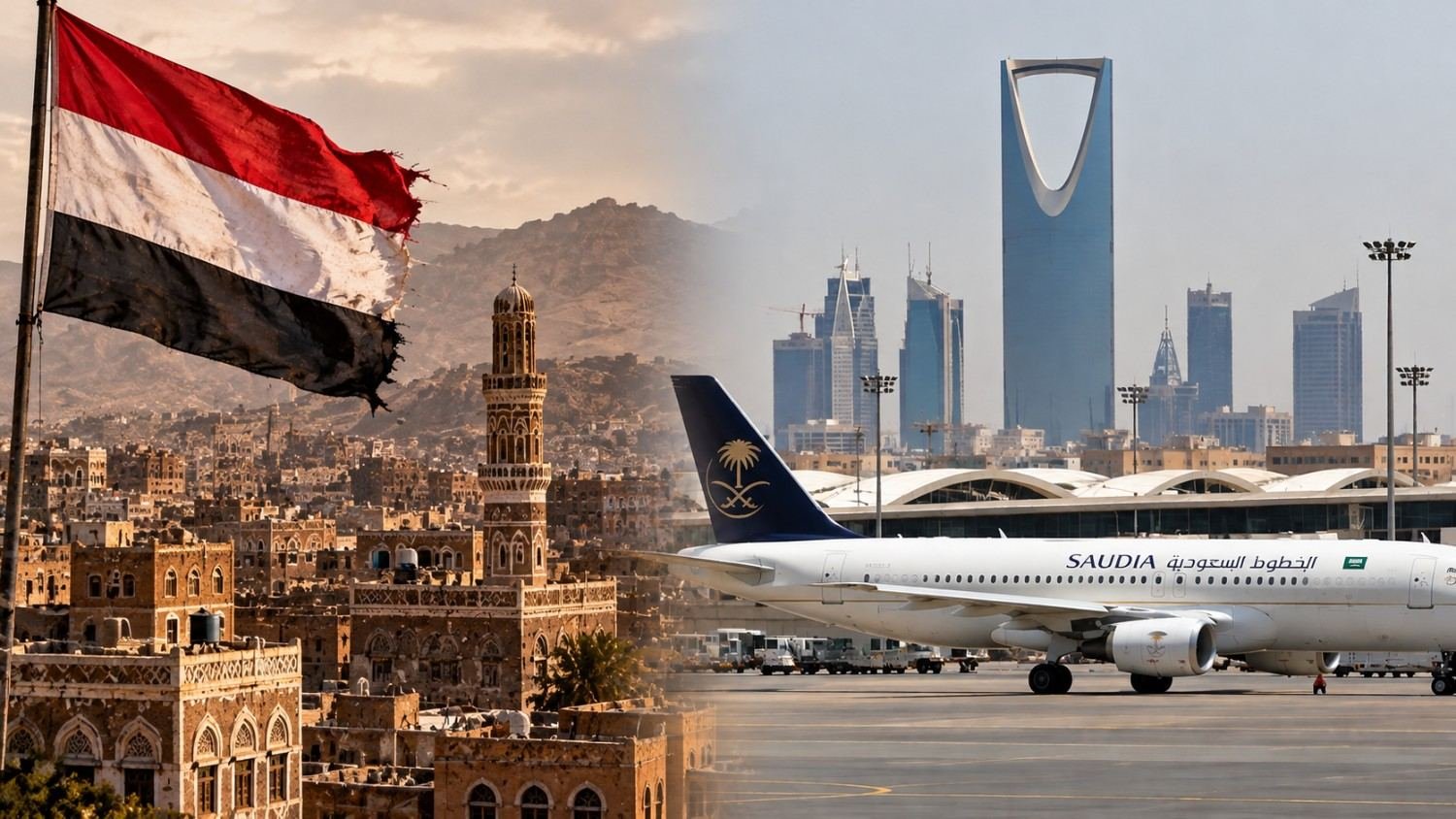
Saudi Arabia’s air defence forces intercepted a ballistic missile fired towards the capital, Riyadh, as attacks by Yemen’s Houthi group continued to raise security concerns across the kingdom. The interception came amid renewed fighting between the Saudi-led coalition and the Iran-aligned rebels, who have warned airlines and passengers against using Saudi airports and airspace.
According to the Saudi-led coalition supporting Yemen’s internationally recognised government, the missile was intercepted and destroyed early on Friday, October 23. Coalition spokesperson Major General Turki Al-Maliki said the missile was shot down shortly after 4 am. The coalition also reported intercepting two drones aimed at Saudi Arabia’s southern region earlier that day.
The latest interception followed a series of missile and drone attacks targeting Saudi airports, military installations and energy facilities. The attacks have raised concerns about the safety of civilian infrastructure and air travel in the kingdom.
The Houthis have repeatedly warned airlines, aviation workers and travellers against using Saudi airports, claiming that the facilities and the country’s airspace could be targeted in further attacks.
Yahya Saree, the group’s military spokesperson, said in a statement that Saudi airports and airspace were “unsafe” and urged airlines and passengers to take the warning seriously. He said airports in Mecca and Medina, Islam’s two holiest cities, were excluded from the warning, according to Anadolu Agency.
The warnings followed a series of attacks on King Khalid International Airport in Riyadh and other Saudi facilities in October. The Houthis claimed responsibility for an attack on Riyadh airport, while Saudi authorities reported casualties and damage from strikes and falling debris.
The escalation has disrupted air travel, with airport operations suspended following attacks and airlines cancelling or changing flights. Saudi authorities have also carried out safety inspections at affected facilities.
The renewed hostilities come as Saudi Arabia intensifies its military campaign against the Houthis, who control Yemen’s capital, Sanaa, and other densely populated areas. The group has been fighting Yemen’s internationally recognised government for more than a decade.
The latest escalation has also heightened concerns about the wider regional conflict and its potential impact on aviation, energy infrastructure and international transport routes. Both sides have continued military operations, raising fears of further cross-border attacks.