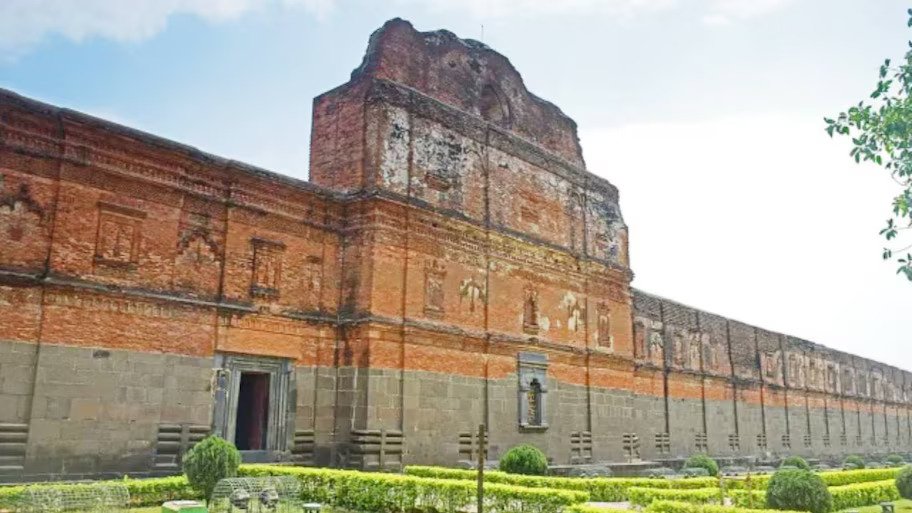
A Shivalinga has been installed near the historic Adina Mosque in West Bengal’s Malda district ahead of a Rudrabhishek ceremony scheduled for Monday, reviving a long-running dispute over the monument’s historical identity.
The religious event is being held at a temple located around 50 metres from the mosque. Organisers say devotees have worshipped Lord Shiva at the site for more than a century.
The Adina Mosque, one of the largest medieval mosques in the Indian subcontinent, was built in 1373 CE by Sultan Sikandar Shah of the Bengal Sultanate. It is a protected monument under the Archaeological Survey of India (ASI).
Temple Claim Revives Historical Dispute
Some Hindu organisations claim that the Adina Mosque was originally an ancient Adinath (Shiva) temple and have demanded that it be recognised as such.
The claim is based on the presence of architectural fragments and carvings depicting Hindu deities that are visible in parts of the mosque complex. Supporters of the claim allege that these artefacts indicate the existence of a pre-existing temple at the site.
The matter is currently the subject of legal proceedings before the Calcutta High Court.
Organisers Say Worship Has Continued for Over 100 Years
Event organiser Kajal Goswami said the Rudrabhishek would take place at a temple located outside the mosque premises and not inside the disputed structure.
“It is a temple where Adinath Shiva has been worshipped for more than 100 years. It is not inside the disputed place as is being claimed. The temple is located about 50 metres away, and devotees have been offering prayers here for generations,” Goswami said.
He also claimed that archaeological findings and architectural remains in the area contain evidence of Hindu deities, including Lord Shiva and Goddess Durga, and argued that the mosque was originally an Adinath temple.
ASI Recognises Site as Adina Mosque
According to the Archaeological Survey of India, the monument is the Adina Mosque, constructed by Sultan Sikandar Shah in 1373 CE. The ASI protects and maintains the site as a monument of national importance.

The planned Rudrabhishek near the mosque has once again drawn attention to the long-standing dispute over the monument’s history, with the issue continuing to remain before the courts.