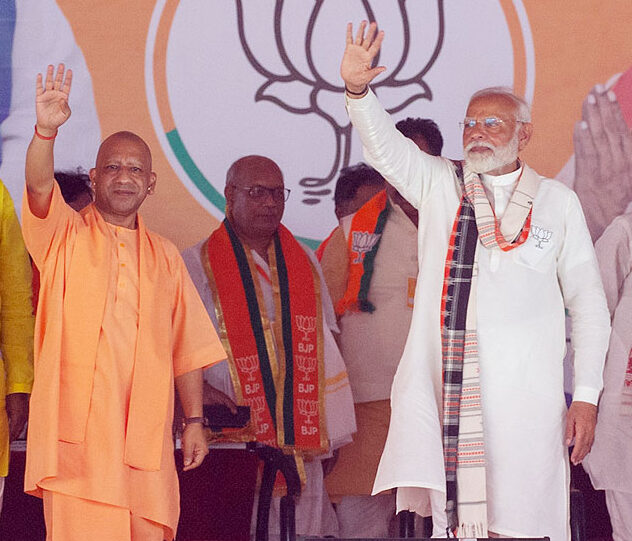
Uttar Pradesh Chief Minister Yogi Adityanath has warned people in the state to stay alert and take security seriously. He said the government has already taken strict action against Rohingya and Bangladeshi infiltrators who were found living illegally in different parts of Uttar Pradesh.
In a post on X, the Chief Minister said that keeping Uttar Pradesh safe and maintaining social harmony and law and order are the state’s biggest priorities. He urged residents to verify the identity of anyone they hire for work at home or for business. “The security of Uttar Pradesh, social harmony, and robust law and order are our utmost priority. Strict and decisive action has been initiated against Rohingya and Bangladeshi infiltrators illegally residing in the state,” he wrote. He added, “I appeal to the vigilant public of the state to remain alert and ensure the identity verification of any individual before employing them.”
Yogi Adityanath said that protecting the state is a collective responsibility and that true development can only happen when citizens feel safe.
Earlier government surveys from 2018 estimated that around 1,000 to 1,080 Rohingya refugees were living in Delhi NCR in temporary settlements in Madanpur Khadar, Kalindi Kunj, Shaheen Bagh, Vikaspuri, Yamuna Bazaar, Bhalswa Dairy, and Sonia Vihar. Older figures also said that the total number of illegal Bangladeshi migrants and Rohingya in Delhi could be around five lakh, especially in areas such as Jahangirpuri, Seemapuri, Ali Village, Dayal Basti and Najafgarh. The number of arrests reportedly declined after the COVID-19 pandemic, although earlier special cells had detained thousands.
Officials say the presence of illegal migrants continues to be a concern for security agencies, especially after the 2020 riots in Delhi and the 2022 violence in Jahangirpuri, where some individuals from these communities were reportedly involved. The Indian government has expelled many people in recent months, saying that Rohingya are not recognised as refugees under Indian law, even though around 40,000 are estimated to live across the country.
Delhi Police, which created a special Bangladeshi cell in 2003, continues to monitor such cases closely.