


















































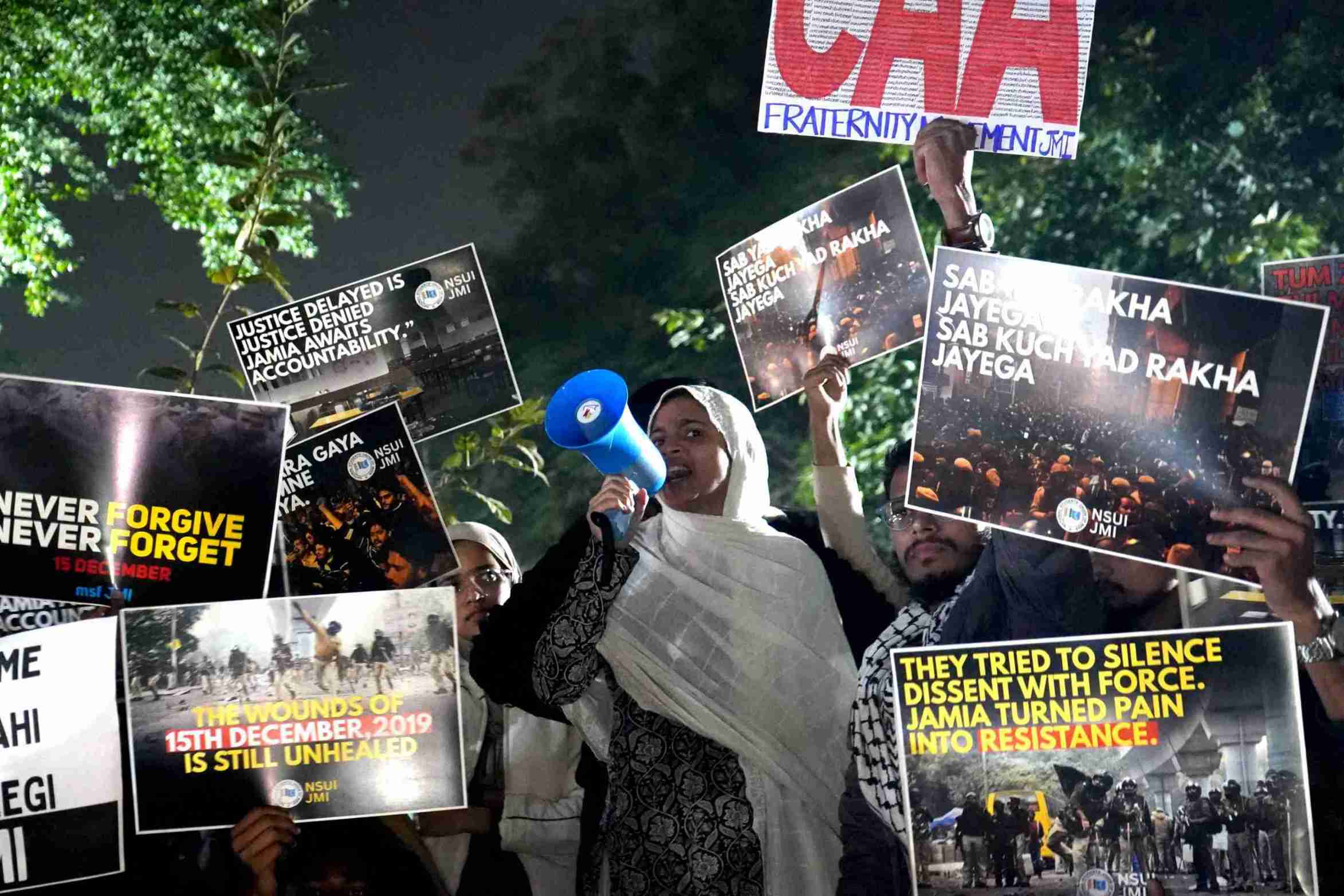
The Supreme Court on Thursday set the final hearing for over 250 petitions challenging the constitutionality of the Citizenship (Amendment) Act, 2019 (CAA), beginning the week of May 5, 2026. The hearing will continue back-to-back until May 7 and resume on May 12 to hear rejoinder arguments before the court reserves its judgment.
“Cases Will Be Listed Sequentially”
A bench headed by Chief Justice of India Surya Kant said, “The cases shall be listed sequentially for final hearing beginning the week of May 5, 2026.” During the hearing, the court outlined how the petitions will be taken up. “We can first take up the pan-India batch, followed by the Assam and Tripura cases,” the bench added.
CJI Surya Kant explained that the petitions are divided into two clusters: matters concerning Assam and Tripura, and those relating to the rest of the country. “Separate hearings for matters pertaining to Assam and Tripura will follow immediately after the rest of the cases, but the hearing will conclude on May 12,” the court said.
The bench also allowed petitioners to submit additional material or documents on record within four weeks, but clarified that no new writ petitions on these submissions would be permitted.
Petitions Question the CAA and Its Rules
The petitions, filed by individuals, political parties, and associations, challenge the law and its rules, which provide a fast-track path to Indian citizenship for non-Muslim migrants from Afghanistan, Bangladesh, and Pakistan who entered India before December 31, 2014.
Senior advocate Kapil Sibal, representing petitioners including the Indian Union Muslim League (IUML), said the 2019 Act and the 2024 Rules undermine proper scrutiny and discriminate based on religion. “Once the process of grant of citizenship starts under this Act, it cannot be reversed,” Sibal submitted during an earlier hearing.
The petitioners argue that the new Rules reduce oversight by state governments and remove the three-tier scrutiny previously required under the Citizenship Rules, 2009. “There is no scope for the State government to give recommendations or for the Central government to conduct an inquiry about the suitability of the applicant,” the IUML noted.
Concerns Over Assam and Tripura
Several petitions highlight concerns in Assam, arguing that 27 districts were brought under the CAA unnecessarily. They contend that the Act ignores provisions under the Sixth Schedule for tribal areas in Assam, Meghalaya, Mizoram, and Tripura, and areas under the Bengal Eastern Frontier Regulation, 1873. The cut-off date of December 31, 2014, they argue, conflicts with Section 6A of the Citizenship Act, 1955, which provides deportation for migrants entering after March 25, 1971.
Alleged Religious Discrimination
The petitions also claim that the CAA discriminates against Muslims. Advocate Asaduddin Owaisi, representing petitioners, said, “While the NRC exercise would result in identification of persons as ‘illegal migrants,’ the Amendment Act seeks to simultaneously offer illegal migrants who are Hindu, Sikh, Buddhist, Jain, Parsi, or Christian citizenship on the presumed ground of persecution.”
The petitioners argue that the law grants citizenship faster to non-Muslim migrants while Muslim migrants face stricter requirements, including proof of residence for 11 years, compared to five years for others. They contend that this violates the right to equality and the secular principles enshrined in the Constitution.
Who Is Involved in the Petitions?
The petitions include politicians like Jairam Ramesh, Mahua Moitra, and Asaduddin Owaisi, regional parties like the Asom Gana Parishad, lawyers’ associations from Assam, and Kerala’s IUML. Even actors and political activists, including Kamal Haasan’s Makkal Needhi Maiam, have joined the challenge.
Solicitor General Tushar Mehta will represent the Union government in defence of the CAA, including challenging the locus standi of some petitioners.